From our perspective in the cosmos, we can look in any direction we like, as far as our instruments can see, and see objects not as they are today, but as they were long ago. All of the light that we collect, from anywhere in the entire Universe, only arrives at our eyes and in our instruments after journeying across the vast expanse of space that separates us, the observer, from the emitting source. For stars within our own galaxy, those distances are measured in light-years, up to tens-of-thousands of light-years for the most distant Milky Way stars. For other galaxies, those distances range from hundreds-of-thousands of light-years to billions of light-years. And for the leftover glow from the Big Bang itself, that distance corresponds to 46.1 billion light-years: the farthest we can see, at present.
The reason we can’t see farther isn’t because the Universe just ends after a certain point in space, but rather because our Universe — even though it’s expanding — has a finite age: an age set by the onset of the hot Big Bang. That’s why, from our perspective, the Universe appears to be 13.8 billion years old, and why the farther away we look, the farther back in time we’re seeing. However, if we were located anywhere else, the Milky Way would look younger, and we’d see that location as 13.8 billion years old. At least, that’s what our intuition tells us. But is that correct? That’s what Steven Dzik wants to know, inquiring:
“One thing I was curious about is, we always say the Universe is 13.8 billion years old. That implies every place in the Universe is on the same clock. We know it is not. What is the frame of reference in which the Universe is that age?”
Of course, we only have one perspective to view the Universe from: our own. It’s in our own frame of reference that we see the Universe as 13.8 billion years old. Here’s what determines what an observer would see.

To start, let’s talk about what we, ourselves, actually see, and why we see the Universe as having the age that we observe: 13.8 billion years. When we look out at the distant objects in the Universe, whether it’s:
- stars, galaxies, and other cosmic events located at all different distances throughout the Universe,
- the leftover light from the Big Bang, seen as the cosmic microwave background that we observe today,
- or the growth of various features imprinted in the cosmic web, like the likelihood of finding two galaxies separated by a particular distance (the acoustic scale),
they enable us to paint a picture of our cosmic history.
That picture includes some pretty profound things about our existence, and about our reality in the here-and-now. Those measurements reveal what our Universe is made of (what the various types of energy are, and in what ratios), how it’s expanded over time (how quickly it’s expanding today, and how that expansion rate evolved over time), and both the maximum distance we can see through space and the total amount of time that’s elapsed since the onset of the hot Big Bang. Once we have those measurements, all we have to do is apply Einstein’s equation for a Universe that’s isotropic (the same in all directions) and homogeneous (the same in all locations) on large-scales, and also expanding, and the unique answers for the Universe’s composition, expansion history, age, and size all directly emerge.

This is straightforward physical cosmology: first derived all the way back in 1922 by Alexander Friedmann, whose equations still form the foundation of our modern understanding of the Universe. From all three of these methods, either combined or in isolation, we get the same consistent picture of the Universe today.
- It’s expanding at a rate of around 70 km/s/Mpc (despite small disagreements over the Hubble tension).
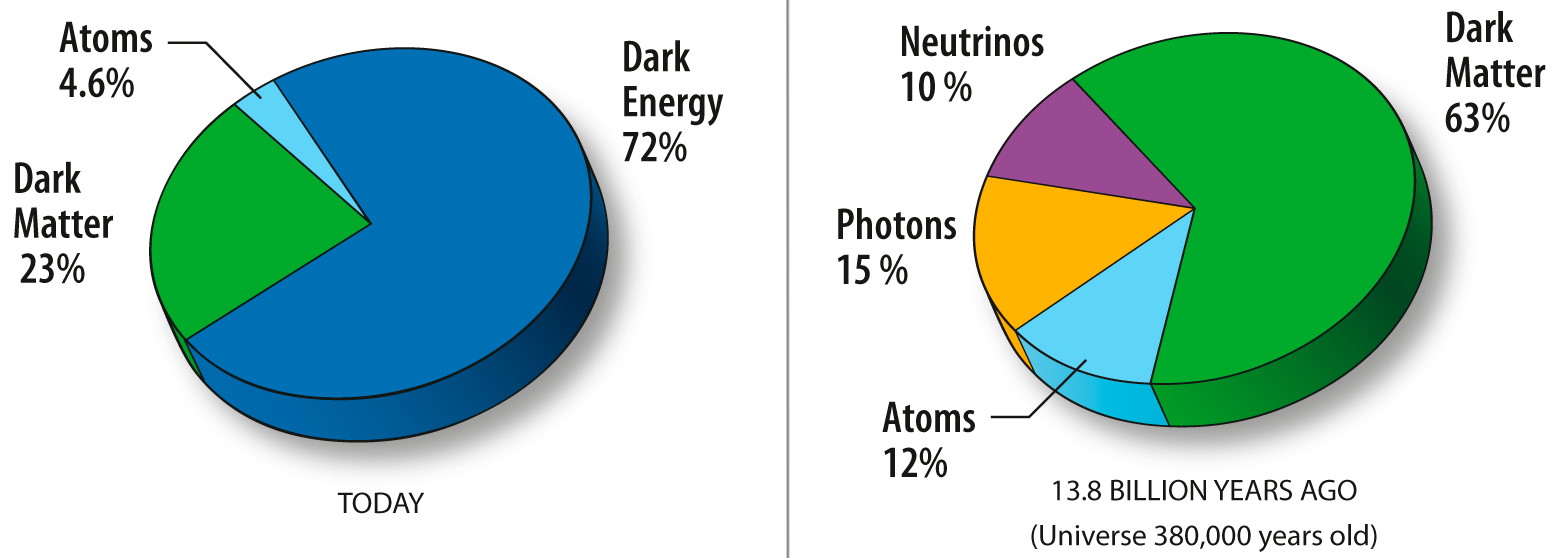
- It’s dominated by dark energy (about 70%), then by dark matter (about 25%), with normal matter (4.9%), neutrinos and photons (0.1%), and pretty much nothing else (no trace of spatial curvature, cosmic strings, domain walls, or other exotic sources of energy).
- The most distant light that we can see today — arriving only now if it was emitted all the way back at the start of the hot Big Bang — is currently 46.1 billion light-years away.
- And the age of the Universe, or the time that’s elapsed since the initial onset of the hot Big Bang, is 13.8 billion years.
That’s our standard picture of the Universe: one that’s been with us for approximately the past 28 years: since the discovery of dark energy. Although we’ve measured the parameters better and reduced the uncertainties significantly, there’s a good reason our picture hasn’t changed significantly since 1998. As Nobel Laureate and dark energy co-discoverer Adam Riess once put it in an interview, “Only once in the history of humankind can we literally discover most of the Universe!”
However, there are always assumptions made when we draw any sort of conclusion, and for our 13.8 billion year age of the Universe, we rely on a few key assumptions that are only rarely stated.
- First, we assume that the Universe really is isotropic and homogeneous on large cosmic scales, and that it is indeed governed by Einstein’s general relativity. This one seems safe and entirely consistent with our observations, but it’s worth stating for completeness.
- Then, we assume that gravitational time dilation, which would change the rate at which an observer’s clock ticks based on the gravitational potential at their location, plays a negligible role as far as the passage of time is concerned throughout the Universe.
- Next, we assume that all of the redshifts we see, relative to ourselves, are 100% due to cosmic expansion, and not due to either our own local motion through space or due to the local motion of those distant objects through space.
- And additionally, we assume that there aren’t extra laws, rules, species of energy, or transitions of types of energy in the Universe over cosmic history. This includes scenarios like decaying early dark energy, evolving dark energy, or tired light cosmologies.
Each of these deserves a little more attention, but first, let’s assume that all of these assumptions (plus all other underlying ones) are true. Even then, what we see when we look across the Universe reveals something interesting about the “ages” of what we’re observing.

We only observe the “now” that we do — with an age for the Universe of 13.8 billion years — because “now” is when we happen to exist. If we had come along earlier, either earlier on in Earth’s history or elsewhere in the Universe, around a planet and star that formed before our own Solar System, we would have seen the Universe as it was when it was:
- younger,
- smaller,
- denser,
- and hotter,
because less time would have elapsed since the start of the hot Big Bang. That means there would have been less cumulative expansion, less of an increase in the volume of space (or less “creation of new space,” depending on how you look at it), and less redshifting of light, resulting in a lengthening of its wavelength, as it travels through the Universe.

Each observer, right where they are, observes an “age” for the Universe that’s elapsed for them since the start of the hot Big Bang. They can infer this by looking out at the objects and signals in the Universe around them, from nearby to extremely far away, to figure out the expansion rate, the evolution of the expansion history over time, the contents of the Universe, the size of the observable Universe, and the age of the Universe. For us, it happens to be 13.8 billion years, but someone who came along earlier would have seen a different (younger) age, and someone who comes along later in cosmic history will observe an older age, even though that time has yet to elapse.

However, as you look out farther and farther away, every object you see would indeed appear “younger” to you than you appear to yourself. In the parts of our Universe that aren’t expanding relative to us — the things bound to us within our Solar System, galaxy, and Local Group — an object a certain number of light-years away will appear as it did that same number of years in the past. We implicitly “think” this when we talk about what an object is or looks like today, including for the following objects.
- Red supergiant star Betelgeuse, which is around 640 light-years away, and which may have already gone supernova, but if it has, the light from that cataclysm is still on its way and hasn’t arrived yet.
- The Pillars of Creation in the Eagle Nebula, which is around 7000 light-years away, could have been destroyed by a supernova that occurred within the last 7000 years, but we don’t know: those signals would be on their way, and haven’t arrived yet.
- Galaxy IC 10, located around 2.3 million light-years away, is a part of our Local Group and is the only known starburst galaxy within the Local Group. It’s probable that thousands of new stars have formed inside of it compared to what we see “now,” because we see it as it was 2.3 million years ago in the midst of a star-forming event.
And for galaxies even farther away, that are caught up in the expansion of the Universe relative to us, even more time separates their “now” from how we see them, but the “number of light-years away” is even greater than the time difference between how we see them and how they experience their “now” at the same moment as us: 13.8 billion years after the start of the Big Bang.

If our Universe weren’t isotropic and homogeneous, however, there could be regions that experienced the “passage of time” very differently from how we’ve experienced it here. If there were a significantly overdense region of space on large cosmic scales, where many times the average cosmic density of matter had accumulated inside of it, then the gravitational time dilation that occurs inside of that region could be extremely significant, leading to a Universe where time ran slower in those regions, and hence the Universe “ages” by a smaller amount for observers within it. If we lived in a “normal density” region, someone in an extremely overdense region might not have experienced 13.8 billion years passing since the Big Bang, but several billions of years less.
Conversely, if we lived in such a tremendously overdense region, we’d experience the passage of time more slowly than observers who lived in a normal density or underdense region of the Universe. Our 13.8 billion years could be what we experience, but a distant observer who didn’t have that extreme gravitational time dilation would experience time passing at its regular, non-dilated rate, which could translate to billions of additional years of cosmic age.
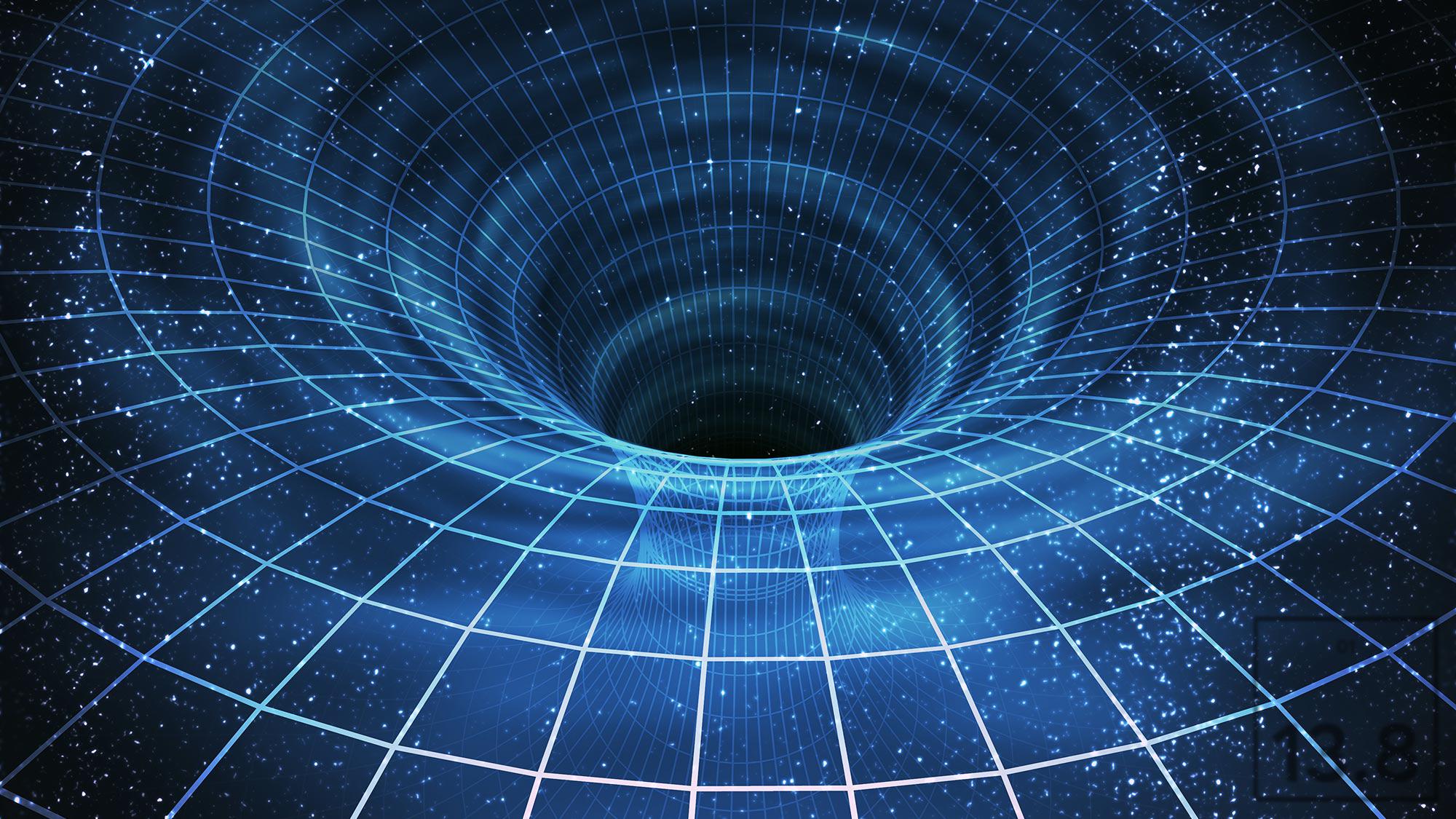
This effect was alluded to in the movie Interstellar, as observers very close to a black hole’s event horizon would, in fact, experience that type of gravitational time dilation directly: where they experience very little time passing deep inside that gravitational potential well, while an outside observer experiences time passing as normal, which is very fast relative to the observer who’s deep in that gravitational field.

This theoretical scenario rose to prominence about a year and a half ago, when New Zealand astrophysicist David Wiltshire proposed his timescape cosmology, and an accompanyingly lumpy Universe, based on this idea. However, the actual data we’ve collected from the Universe itself gives us confidence that this theoretical scenario doesn’t actually reflect the Universe we live in.
- On the observational side, we can measure stars, galaxies, gas, dust, and the overall effects of matter through gravitational lensing, allowing us to construct 3D mass maps of the Universe. We can use the quantitative data from those mass maps to determine the mass densities within those regions, and to infer the amount of gravitational time dilation that those regions experience.
- Theoretically, we can take the initial spectrum of seed fluctuations that are predicted by cosmic inflation (and confirmed to be imprinted in the cosmic microwave background and the large-scale structure of the Universe), and evolve them to determine how “overdense” or “underdense” the Universe is on all sorts of cosmic scales. We can then use those simulations and theoretical predictions to determine how much gravitational time dilation comes from these regions.
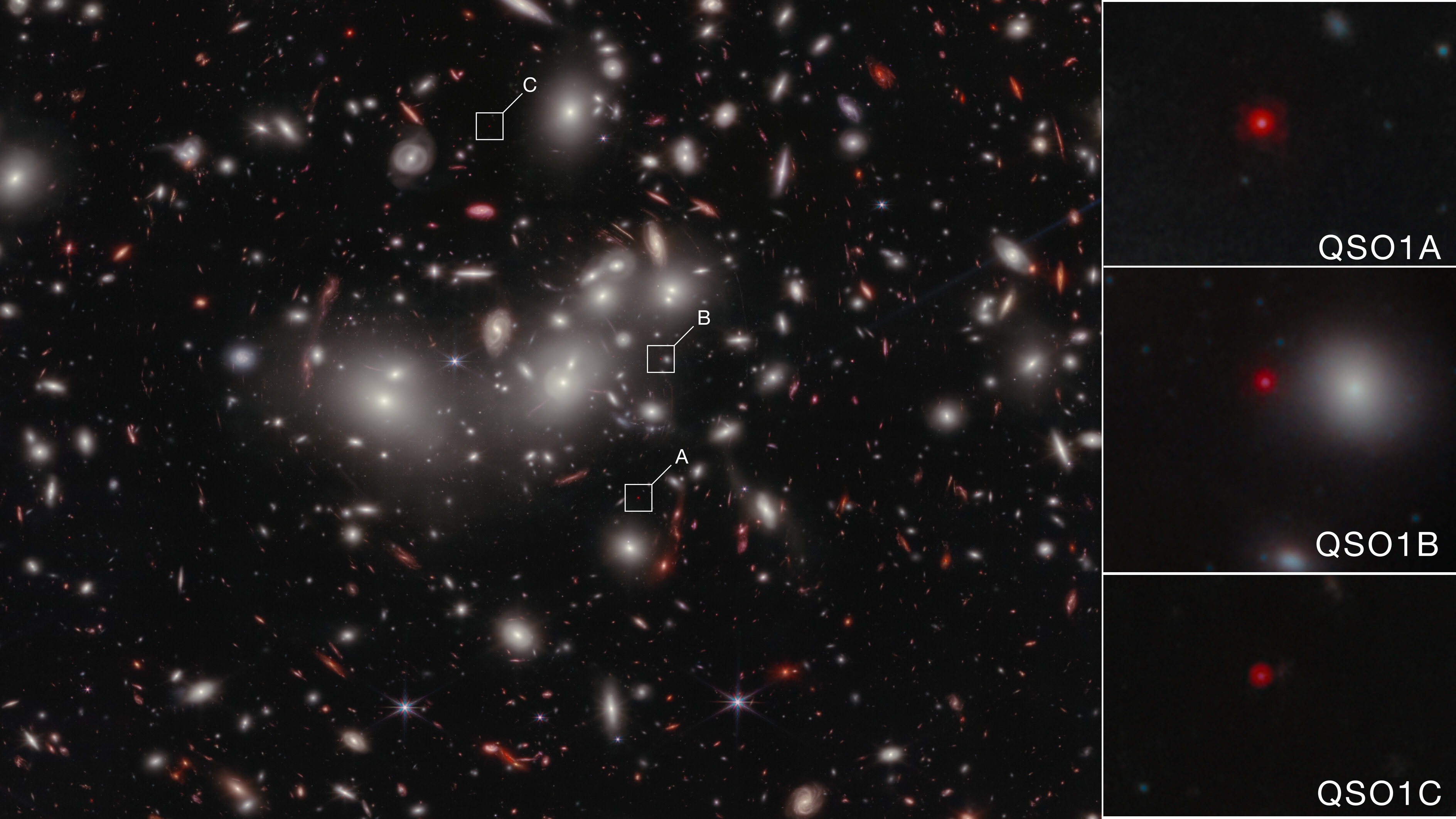
In both cases, the maximum effect we see or expect comes out to centuries or millennia: hundreds or thousands of years. But that’s relative to 13.8 billion years, implying that these effects show up only at the ~0.00001% level or less. More recently, on the observational side, we’ve discovered multiply-lensed objects with JWST, as light passes through the richest galaxy clusters we’ve ever targeted. This directly reveals the “time difference” effects between different light-paths, with SN Ares providing the greatest time difference ever directly observed: about 60 years.
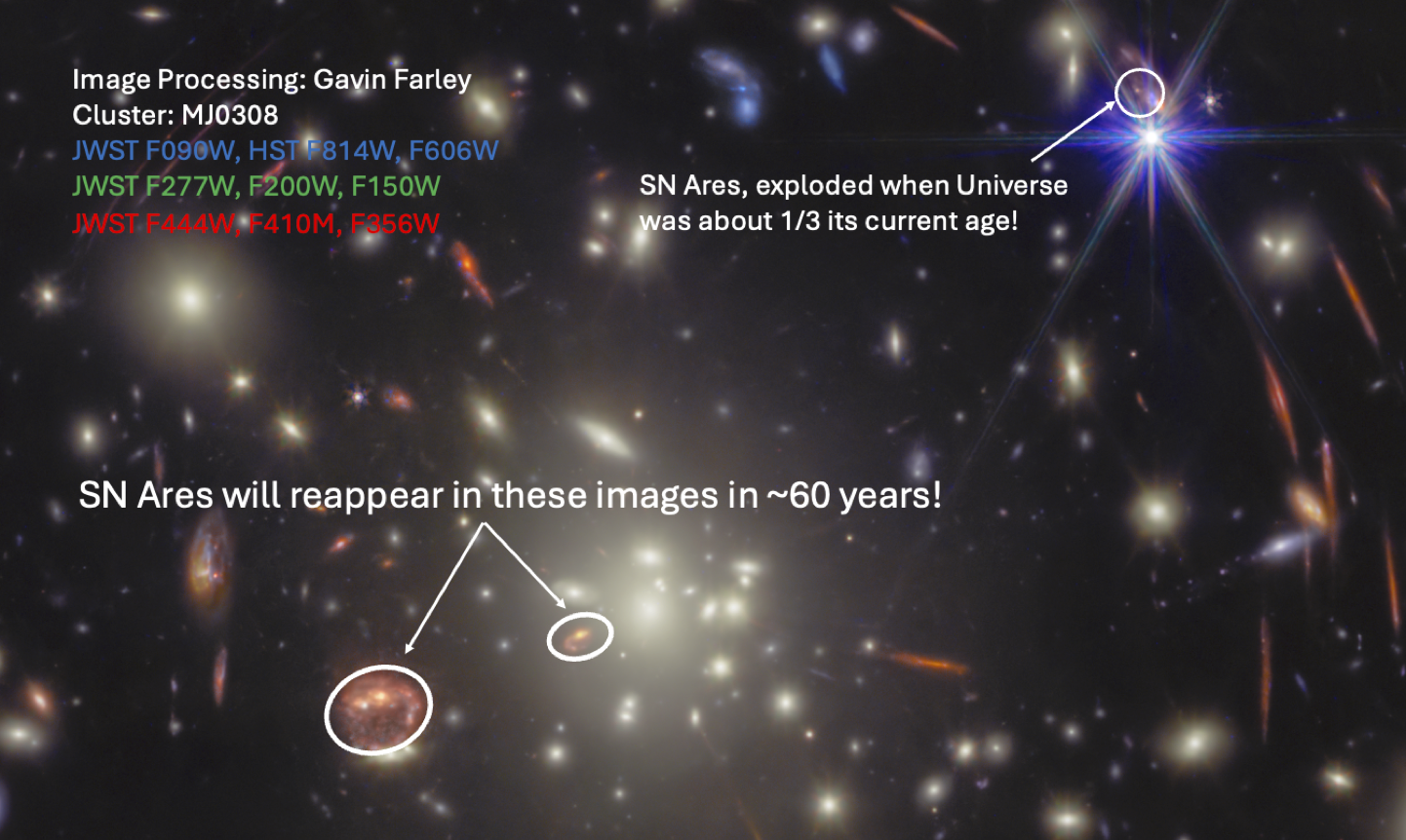
So gravitational time dilation, or a Universe that’s “extra lumpy,” doesn’t provide substantial differences in the passage of time between different regions. You’d have to go extremely close to a black hole to experience substantial differences in the age of the Universe, and that only makes less time pass for whoever happens to be located very deep in that gravitational potential well.
But there’s also the fact of cosmic motion: where objects don’t just exist within the backdrop of the expanding Universe, where they move through space as well. We move through space, as does everything in our galaxy, as do individual galaxies and galaxy groups and galaxy clusters. The effects of the expanding Universe represent the largest-scale effects, but “relative motion” still exists.
Just as general relativity gives us cosmological and gravitational time dilation, it also includes the special relativistic effect of motion-based time dilation: where an object in motion experiences a slower passage through time the faster their motion through space is. If galaxies truly moved at a substantial fraction of the speed of light through space, they could experience a much smaller amount of time passing than the 13.8 billion years we’ve experienced for ourselves. However, they don’t; this is something we can be certain of, as we addressed this topic just a couple of weeks ago in an earlier Ask Ethan column.
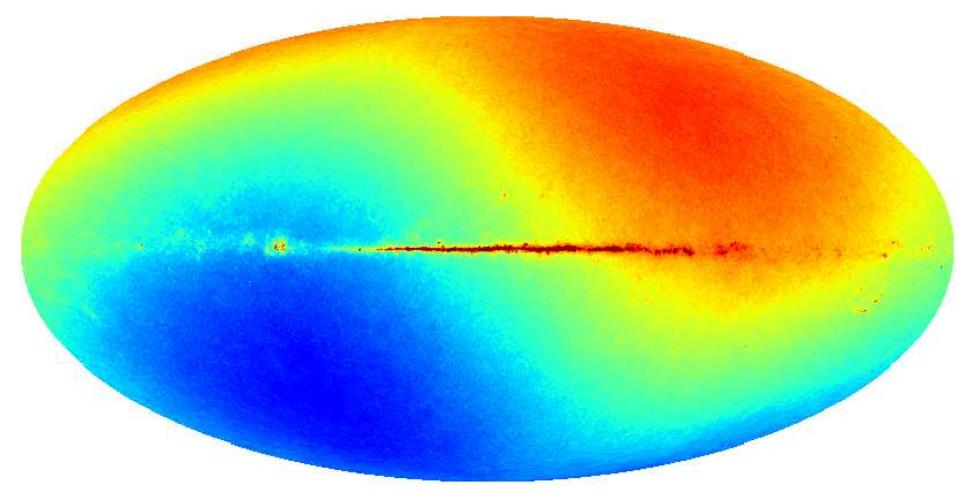
Instead, we can measure the motions of galaxies — including our own galaxy — relative to the Hubble flow, and find that those speeds are typically only hundreds to thousands of km/s: around 1% the speed of light or less. Our own motion through space is even less: 368 km/s for the Sun relative to the rest-frame of the cosmic microwave background, as imprinted in the cosmic microwave background’s dipole temperature anomaly. If you assume an object has, for all of cosmic history, always been in motion at 1% of the speed of light, relative to the Hubble flow, you’d find that it would indeed have a “younger” clock than 13.8 billion years: by about 700,000 years. The magnitude of that effect, of 0.005%, is again negligible in comparison to the great amounts of cosmic time that have actually passed.
If we live in a Universe that’s isotropic and homogeneous (and the evidence supports that we do), that’s governed by Einstein’s general relativity (and the evidence supports that it is), that has the gravitational overdensities and underdensities that we observe (and not millions of times more severe), that has objects moving through it at the speeds that we see (and not at speeds a hundred times greater), and that has the species of energy we observe it to have (and not something exotic that the evidence hasn’t yet revealed), then yes: objects in the Universe would have aged differently over the past 13.8 billion years than we have. However, those age differences will be measured in decades, centuries, or millennia: not in hundreds of millions or billions or tens of billions of years.
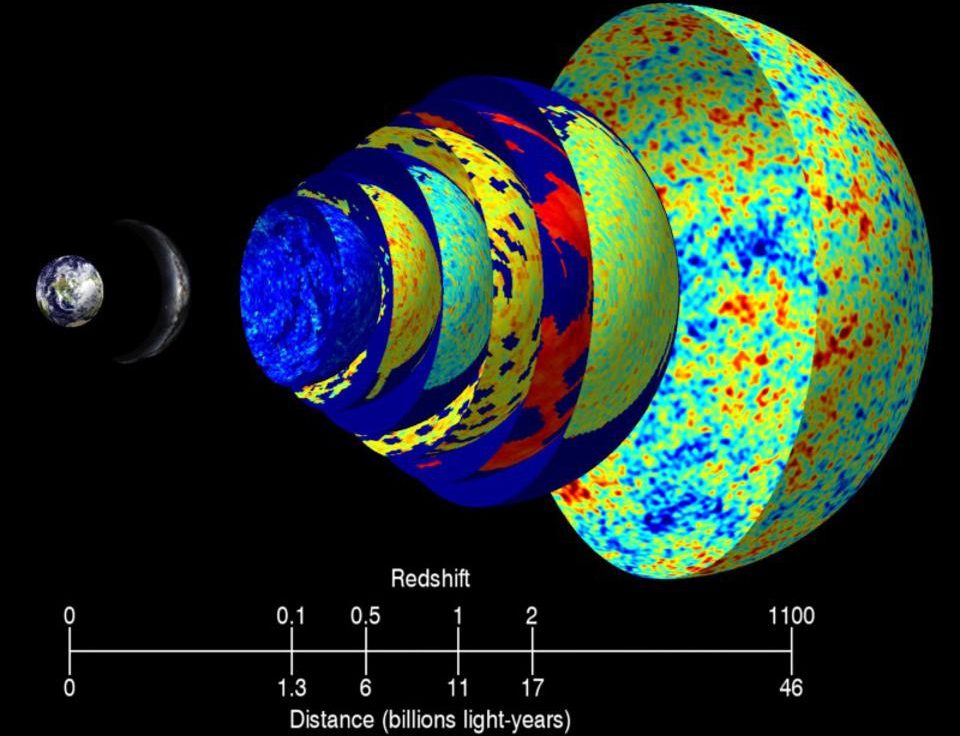
Even though we can’t take direct measurements of what the Universe looks like from a location where we ourselves aren’t located, we can use the laws of physics that we know and the observations we can take from afar to calculate in some cases, and to observe in other cases, quantitatively, by just how much different regions are “older” or “younger” than each other. On all scales, except perhaps just outside the event horizons of black holes, the dominant effect of what looks younger or older is governed by the speed of light and how long it takes to traverse distances within the expanding Universe.
If you were to place an observer anywhere in the Universe precisely 13.8 billion years after the Big Bang had elapsed, they’d see the same Universe, on large scales, that we see today. That, in and of itself, is not only profound, it showcases how small the departures are from the Hubble flow, and how slowly even the fastest-moving galaxies move relative to the rest-frame of the cosmic microwave background: the leftover glow from the Big Bang. Things might not be exactly identical everywhere, but when you’re talking about 13.8 billion years, differences of decades, centuries, or even millennia don’t really amount to very much at all.
Send in your Ask Ethan questions to startswithabang at gmail dot com!

The Power of Play