So let’s now speak about the future. You may have heard about the asteroid Apophis, which is about the size of the Rose Bowl Stadium. It’s said that the large asteroid will streak by the Earth sometime around 2029. The NASA website states that “The future for Apophis on Friday, April 13 of 2029 includes an approach to Earth no closer than 29,470 km (18,300 miles, or 5.6 Earth radii from the center, or 4.6 Earth-radii from the surface) over the mid-Atlantic, appearing to the naked eye as a moderately bright point of light moving rapidly across the sky. Depending on its mechanical nature, it could experience shape or spin-state alteration due to tidal forces caused by Earth's gravity field... Using criteria developed in this research, new measurements possible in 2013 (if not 2011) will likely confirm that in 2036, Apophis will quietly pass more than 49 million km (30.5 million miles; 0.32 AU) from Earth on Easter Sunday of that year (April 13).”

We are also amazed at the meteor showers when we are able to see them. The local news usually let’s you know when you will be able to catch a glimpse and you will find all kinds of people running outside to peer at the night sky. Perhaps one of the most famous meteor showers took place in 1833, the Leonid meteor shower (image below). This particular shower gave us several hundred thousand streaks per hour across the night sky. It was so brilliant and awe-inspiring that several religious cults can in some sense trace their lineage to the panic that was created as a result of this particular shower. So, speaking about the doom and gloom and mysticism surrounding these things, you may remember when Hale Bopp sailed through the heavens when we heard about the famed “Doomsday Cult” that believed the comet was a sign ofthe Second Coming. The cult believed that they were going to be beamed up to a flying saucer which they thought was on that comet and the members all ended up committing suicide as a result. This just goes to show that these types of things really stir deep seated fears andemotions in people.

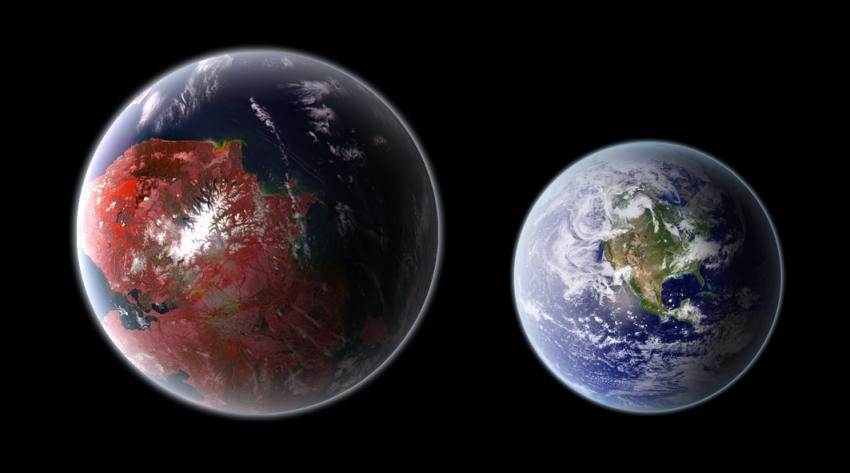
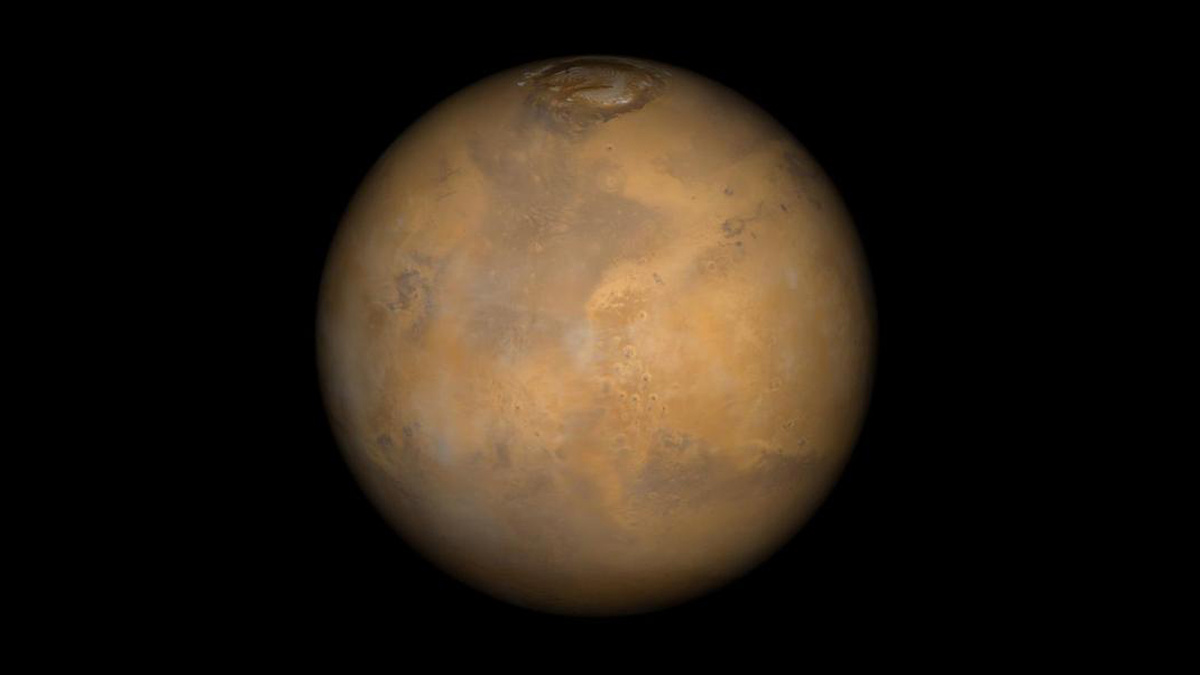
If you caught my Second Season premiere of my show Sci-Fi Science on the Science Channel which aired September 1, you would have seen an episode called Earth 2.0 which shows that the future of the human race may be the destruction that we fear here on Earth. The episode went into detail about the process of terraforming Mars, and featured ideas from Chris McKay, a NASA research scientist and even Bob Zubrin of the Mars Society. Chris McKay of NASA suggested the possibility of building huge solar mirrors the size of Texas to melt the Martian ice caps, and I even went into detail about how we could possibly heat up Mars by shooting asteroids at the planet’s surface essentially jump-starting the terraforming process. First, the heat ofthe impact would be that of millions of atomic bombs which would heat up the surface. Second, asteroids contain frozen gases which would help to thicken the atmosphere and finally set off a runaway greenhouse effect.

NASA is in a catch 22 situation. Five years ago, Congress mandated by law that NASA should track 90% of all of the dangerous asteroids and comets that may threaten the Earth by 2020. Just last month, though, the National Academy of Sciences announced that NASA may be out of money to meet this mandate. I think it would be short sighted and unwise not to fund NASA's continued monitoring of extraterrestrial objects that could potentially destroy all life on Earth.
I go back to the perception that Hollywood has gave us all these years in the movies. Anyone who has watched films like Armageddon gets the impression that there are all kinds of tracking stations and professional astronomers combing the skies looking for these dangerous objects. Well, not so fast; in reality, most researchers are in fact amateurs who do the thankless job of hauling out their telescopes on a cold night and taking pictures of the sky and comparing it to the previous days photographs.
On July 19th, an impact mark on Jupiter was spotted by an amateur astronomer in Australia which “drew the attention of scientists at NASA’s Jet Propulsion Laboratory to the change in Jupiter’s south polar region." NASA posted both images and explanations on their website, and stated: “Following up on a tip by an amateur astronomer, Anthony Wesley of Australia, that a new dark 'scar' had suddenly appeared on Jupiter, this morning between 3 and 9 a.m. PDT (6 a.m. and noon EDT) scientists at NASA's Jet Propulsion Laboratory in Pasadena, Calif., using NASA's Infrared Telescope Facility at the summit of Mauna Kea, Hawaii, gathered evidence indicating an impact.“

This just goes to show that incidents like these have in fact caught us off guard where no one necessarily knew that it was going to happen. If you compare this incident to the Shoemaker-Levy comet, for example, there was warning, and it was tracked by both professional astronomers and amateurs alike. This time, the astronomical community was in a sense caught with its pants down because we only saw the end result (the point of impact) and we still don’t know if it was a comet or a meteor. The object that hit Jupiter is probably less than a mile across (if it’s similar to the Shoemaker-Levy comet). However, the fireball the was created by the impact was nearly the size of the Earth—or it least the size of the Pacific Ocean—and so it’s humbling to realize that even small objects can create enormous destruction.
For example, the Meteor Crater in Arizona was formed about 50,000 years ago and is about 4,000 ft in diameter with some areas reaching 570 feet deep and is surrounded by a rim that rises over 100 feet above the surrounding plains. Based on recent research, the impact was substantially slower than originally thought (about 28,000 mph) and itis believed that about half of the impact’s 330,000 short tons bulk was vaporized during descent before it actually hit the ground.

To be continued later this week...
We of course have the two robot landers on the surface of Mars (Spirit and Opportunity). The Spirit Rover recently went into hibernation mode and is no longer communicating with us—the Mars Exploration Rover website states that “Spirit remains silent at her location on the west side of Home Plate. No communication has been received from the rover since Sol 2210 (March 22, 2010). It is likely that Spirit has experienced a low-power fault and has turned off all sub-systems, including communication, and gone into a deep sleep, trying to recharge her batteries.” The Opportunity Rover however is still making her way to Endeavor crater and drove on the planet five times within this past week.
These rovers have found evidence that once upon a time, water did flow freely on the surface. In fact, just a few years ago the Mars Reconnaissance Orbiter sent us photographs of layering on the bedrock. On the surface of the Earth, if you have flowing water it produces the same type of layering effect which looks like rings of halos that permeate the bedrock. This indicates that water can still flow on the surface of Mars. Many people would say “So what? Even if we find evidence of tiny little pockets of water on the surface; this certainly does not indicate that there is life. Mars seems to be a lifeless planet unless there are hot springs under the surface." However, there is some good news to this. If there proves to be large quantities of water of Mars, it means that one day we could possibly use that for things like rocket fuel. We could use electrolysis to break apart water into hydrogen and oxygen and then use the re-combination as a form of rocket fuel. Some people have even suggested that we should give our astronauts a one-way ticket to Mars which would give them an added incentive to figure out a way to create enough fuel for a return trip back home.
Even while we search for evidence of liquid water on Mars, there are still almost a billion people here on Earth that lack a reliable source of clean drinking water. Earlier this year at the UN water conference, a NASA scientist (Essam Heggy) suggested using a ground-penetrating satellite radar originally developed for Mars to find water in the desert areas such as the Middle East and Africa. According to Heggy, the NASA radar can penetrate down (up to half a mile) to find liquid water with hopes of construction efforts to tap into them for the creation of wells.
So, in closing, we have learned that the most advanced satellites created strictly for purposes of searching for liquid water on other worlds have started to become beneficial to searching for water on desert ravaged lands here on Earth. We have hopes that in the future, with the help of NASA technology, clean drinking water can be provided to nations that have otherwise struggled to have something as simple as clean drinking water.

I am proud to announce that the second season of "Sci Fi Science: Physics of the Impossible," debuts next Wednesday, Sept. 1, at 9 pm, on the Science Channel (check your local listings for details). It was a pleasure working for six months with the Science Channel to produce 12 exciting episodes that I am sure will fascinate and educate the audience. Here are a sample of the new technologies and fantastic sci-fi concepts we explore in the second season: ** Terraforming Mars. Within this century, will it be possible to turn this barren planet into a new Garden of Eden? We interview some of the world's top scientists who think so.
** Exploring the Galaxy. In the distant future, how can humanity possibly explore a galaxy with 100 billion stars which is 100,000 light years wide? We explore cutting-edge ideas how this seemingly impossible feat might be accomplished
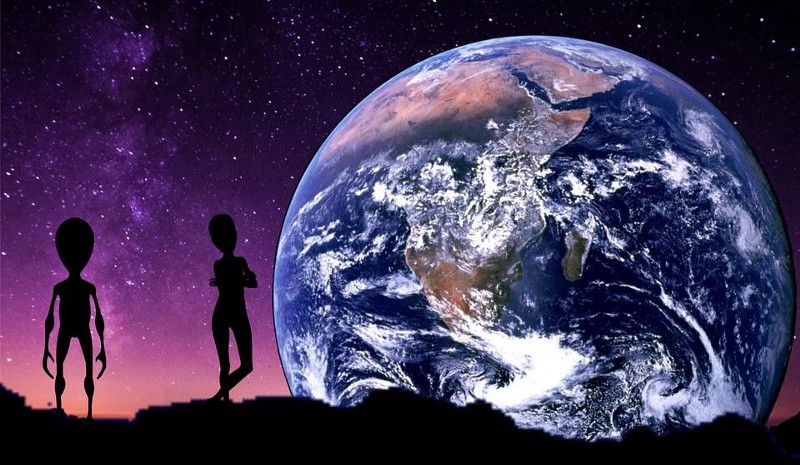
** Alien Invasions. What happens if the Earth is invaded by hostile aliens? Hollywood gives us totally unrealistic scenarios of how we will defeat a hypothetical invading force that might be thousands of years ahead of us. So how do scientists believe we will confront this threat?
** Robot Domination. What happens if robots take over the world? Science fiction writers love to describe what happens when the robots finally become smarter than us, and possibly take over. But what do the experts in artificial intelligence believe? How do they think we will face this crisis?
** "Star Trek"-Style Holodecks. At first, physicists shook their heads when the holodeck was first introduced by the "Star Trek: Next Generation" series. It seemed impossible to create an imaginary world which appears totally realistic. Yet we interview the scientists who laying the scientific groundwork of a real holodeck.
** Building a Transformer. Kids love to play with Transformer toys, yet we investigate research which might make possible something even more advanced: shape-shifting.
** Meteors and Comets. We've all seen the movies where astronauts on the Space Shuttle save us from a meteor or comet impact. However, the Space Shuttle is being mothballed, and cannot even reach deep space. So how will we actually prevent a meteor or comet impact?
These are just a sample of the exciting episodes that will unfold over the next 12 weeks on the Science Channel!
Visit the new Sci-Fi Science mini-site

According to a new study by scientists at the Astromaterials Research Science Directorate at NASA’s Johnson Space Center, “Mud volcanoes themselves are an indicator of a fluid-rich subsurface, and they bring up material from relatively deep parts of the subsurface that we might not have a chance to see otherwise." The scientists used photography equipment from the Mars Reconnaissance Orbiter to examine the structure of some of these mounds and their flow-like features. They are convinced that there is a possibility that the mounds were caused by other processes (see last image). They believe that these features “occur elsewhere in the northern plains of Mars, were good places to search for signs of life.” As you may or may not know, one of the main goals of the two Mars Rovers (Spirit and Opportunity) was to determine whether life ever arose on Mars. As the NASA Web site states: “From the tiniest bacterium to the largest tree, all life as we know it requires water. Though we don’t yet know if life ever existed on Mars, within weeks of arriving, NASA’s Mars Exploration Rover Opportunity discovered that the plains of the Meridian surface were once a water-soaked place.”

Liquid Water—Can We Find It on Mars?
Detectives sometimes say “Follow the money when you want to crack a case.” Scientists, by contrast, say “Follow the water.” Water is plentiful throughout the Universe, mainly in the form of ice—but liquid water is both rare and precious. In our solar system for example, liquid water is only found in large quantities here on Earth and perhaps on a moon of Jupiter, under its ice cover.
You may have heard the saying liquid water is “The Universal Solvent”. It is in some sense the amniotic fluid of life, it can dissolve most minerals and chemicals besides certain oils and non-soluble compounds and it also serves as the mixing bowl for organic chemistry. Carbon has four bonds and because of that we can create chains of carbon atoms, sometimes called hydro-carbons, out of which you can form amino acids and proteins. So, in other words, where we find liquid water we have the tantalizing possibility of finding, eventually, DNA.
Looking at photographs of its geological structure, we know that Mars once had flowing water. We see remnants of evidence of an ocean bed perhaps the size of the United States. We see river beds, especially river beds (image below) that have emanated from craters. We also know that there is water on Mars however in the form of ice at the poles and also in the permafrost underneath the Martian surface.

Well, if Mars once had these great oceans and lakes and streams, what happened to them and where did they go? Mars is a small planet, it has small gravity and it cannot cling onto an atmosphere, so eventually atmospheric pressure began to drop on the surface until it hit the boiling point of water. Liquid water on the surface of Mars will boil all by itself because the atmospheric pressure there is only 1% that of Earth. In fact, in outer space; a glass of water will boil all by itself. If a human, for example, were to walk on the surface of Mars without the aid of a spacesuit or specialized equipment, first the blood within the body would begin to boil, pressure would build out at about 15 lbs per square inch and sadly the person would explode in all directions and the blood would crystallize into ice crystals. If you remember, we saw similar scenes in the movie "Total Recall" and also "Mission to Mars."

Some scientists think these domed features (above) on Mars are mud volcanoes, and could provide windows into Mars' astrobiological past. Image: NASA/JPL/University of Arizona.
To be continued...
Dr. Kaku's Universe is written by Michio Kaku, a theoretical physicist at C.U.N.Y. and a popular radio host and television personality. The blog explores paradoxical and counterintuitive oddities of the physical world, including string theory, time travel, parallel universes, and black holes.