What is Big Think?  

We are Big Idea Hunters…

We live in a time of information abundance, which far too many of us see as information overload. With the sum total of human knowledge, past and present, at our fingertips, we’re faced with a crisis of attention: which ideas should we engage with, and why? Big Think is an evolving roadmap to the best thinking on the planet — the ideas that can help you think flexibly and act decisively in a multivariate world.

A word about Big Ideas and Themes — The architecture of Big Think

Big ideas are lenses for envisioning the future. Every article and video on bigthink.com and on our learning platforms is based on an emerging “big idea” that is significant, widely relevant, and actionable. We’re sifting the noise for the questions and insights that have the power to change all of our lives, for decades to come. For example, reverse-engineering is a big idea in that the concept is increasingly useful across multiple disciplines, from education to nanotechnology.

Themes are the seven broad umbrellas under which we organize the hundreds of big ideas that populate Big Think. They include New World Order, Earth and Beyond, 21st Century Living, Going Mental, Extreme Biology, Power and Influence, and Inventing the Future.

Big Think Features:

12,000+ Expert Videos

1

Browse videos featuring experts across a wide range of disciplines, from personal health to business leadership to neuroscience.

Watch videos

World Renowned Bloggers

2

Big Think’s contributors offer expert analysis of the big ideas behind the news.

Go to blogs

Big Think Edge

3

Big Think’s Edge learning platform for career mentorship and professional development provides engaging and actionable courses delivered by the people who are shaping our future.

Find out more
Close

Is History Cyclical?

May 29, 2011, 12:00 AM
1929_crash

What’s the Big Idea?

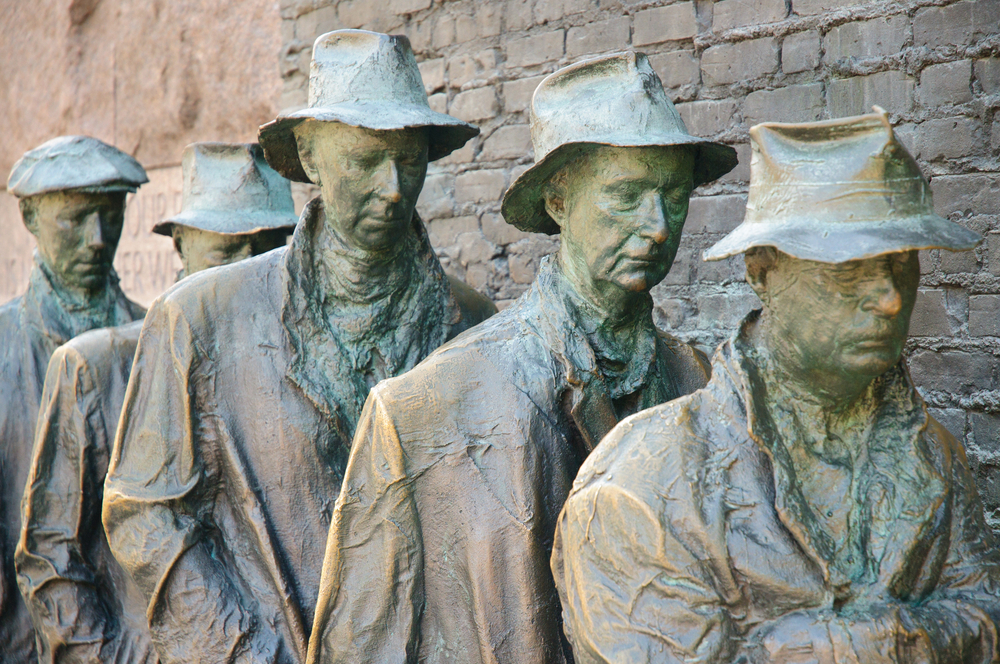
John Gray, a British philosopher notable for being one of the only public intellectuals to anticipate the economic collapse of 2008, told Big Think that boom times are deceptive because history is cyclical, rather than progressive. “We’re not moving to a world in which [crises] will never happen or [will] happen less and less.  We are in a world in which they happen several times during a given human lifetime and I think that will continue to be the case in any future that we can realistically envisage.”

Political and economic upheavals, Gray argues, are not the exception but the rule. “The events which we’ve been taught are abnormal are in fact normal. Normal collapses, normal breakdowns, normal crises occur within most human lives.” He points to the fall of the Soviet Union as another instance in which an entity that seemed “too big to fail” disintegrated suddenly. “In the 1970’s and 80’s, I was unusual in thinking that the Soviet regime could and would collapse,” he says. “Most diplomats and political scientists said ‘Of course it won’t collapse, that’s fantastic, apocalyptic. It’s too strong: it’s been around since 1917.’ All that turned out to be complete nonsense. It vanished within the space of a couple of years.”

What’s the significance?

While we can’t predict the future, we can prepare for it. “Don’t listen to financial planners who tell you that you’re going to get six or seven percent or even two or three percent every year from investing in a certain way. They don’t know that. History has never been steadily cumulative or if it has, it has been for periods or 5 or 10 or 15 or at most 20 years, and then some kind of great punctuation occurs and a lot of the wealth you thought you had vanishes up in smoke before your eyes.”

The key to securing your financial future may lie in anticipating the safest place to stash your savings. “Over a whole lifetime, over several decades, over your active life there will be great punctuations and disruptions. You’ve got to think of strategies which can survive such punctuations. You’re trying to really pit your wits against history. But we’re all in that situation.”

 

More from the Big Idea for Wednesday, October 24 2012

Today's Big Idea: Scientific Historiography

Was the U.S. War of Independence caused by a bad harvest? Were hallucinations the cause of the Salem Witch Trials?  These are both examples of how science can not only lend insight but also cha... Read More…


Is History Cyclical?

Newsletter: Share: