


Have you ever wondered how life could possibly be meaningful in this absurd and seemingly arbitrary world? If so, you’re not alone. The question of whether life has purpose has been debated since at least Ancient Greece, and some of the greatest minds in philosophy and literature have grappled with it and its implications.
On one side of that debate is nihilism, a group of philosophies that center on rejecting the foundational ideas of other philosophies. Its most famous manifestation is existential nihilism, which holds that life is meaningless and lacks intrinsic value.
This particular form of nihilism will be our focus here, but it’s worth noting that others are out there. For instance, moral nihilism rejects the idea that acts can be objectively right or wrong, a stance the philosopher J.L. Mackie argued for in 1977. Meanwhile, epistemic nihilism holds that knowledge is impossible. Plato claimed the pre-Socratic thinker Protagoras held this point of view.
Exploring nihilism can be distressing. It often requires us to face the possibility that what we hold dear rests on nothing tangible. However, a number of classic texts manage to do so in a way that both grapples with the gravity and philosophical depths of the problem while remaining accessible.
These five books explore existential nihilism, both practically and philosophically, and where a person confronting it might go.
Thus Spoke Zarathustra: A Book for All and None by Friedrich Nietzsche (1883–85)
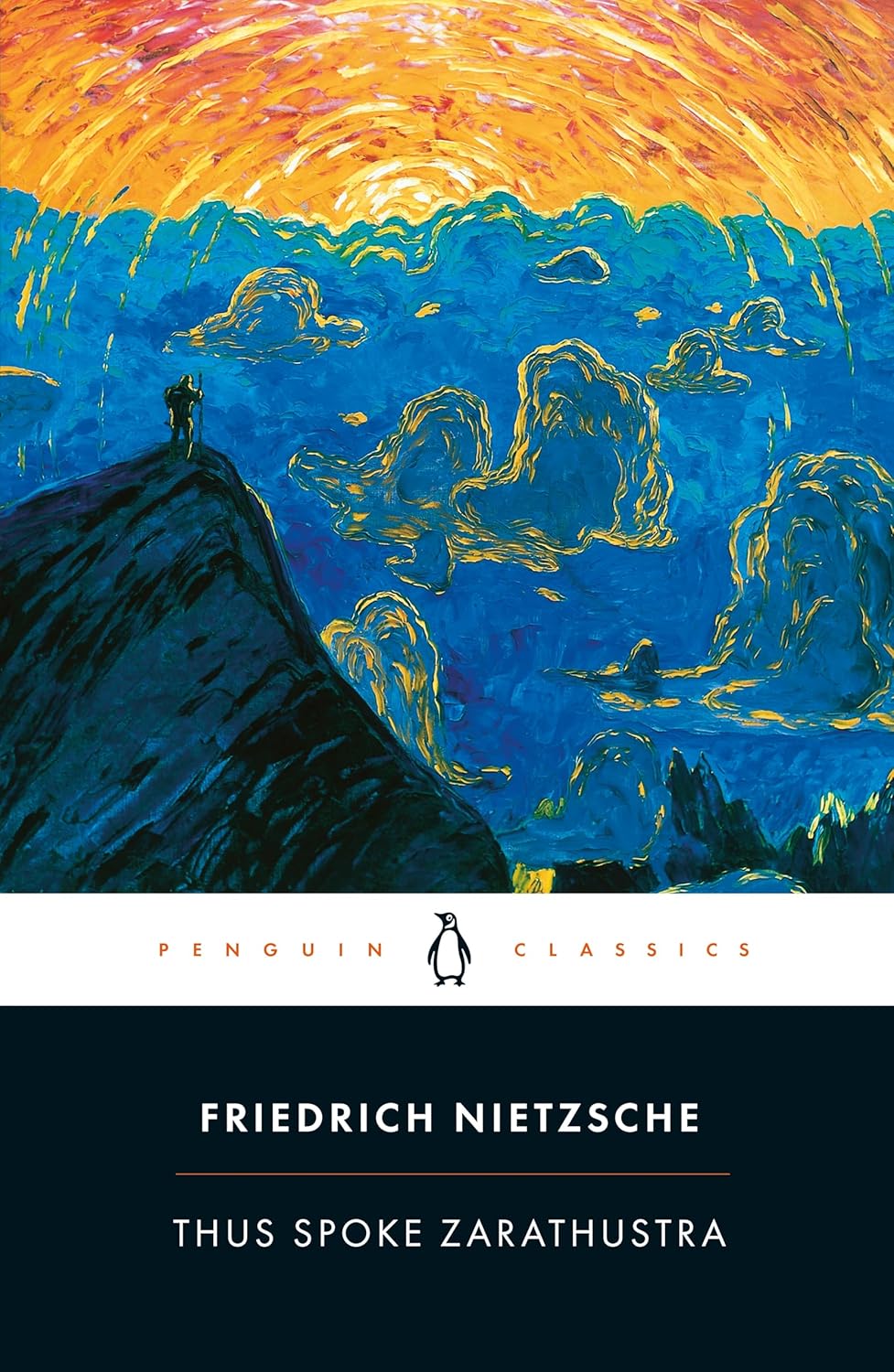
They meet an invalid, or an old man, or a corpse — and immediately they say: “Life is refuted!” But they are only refuted, and their eye, which seeth only one aspect of existence.
If you only know one of Nietzsche’s works, this is probably it. Nietzsche himself considered it his magnum opus, and while technically a novel, the thin plot does little more than serve as a framing device through which the author can sermonize on his often provocative philosophy.
Thus Spoke Zarathustra follows the titular philosopher as he grapples with a variety of philosophical issues. Even though he shares a name with a historical prophet, Nietzsche’s character espouses diametrically opposed viewpoints to those of his ancient namesake. He instead considers the wide variety of problems that arise following the “death of god” and the collapse of traditional value systems. Among these is the problem of nihilism and the perception that life is miserable and pointless.
It’s a stance that Nietzsche refused to let go unchallenged even as he must agree that there is no objective reality to base truth on. As Zarathustra states, if the meaning and values God provided are dead and gone, new meaning and values will have to come from somewhere. Why not from us? In a meaningless world, one must create meaning.

One of Zarathustra’s solutions is to create value without reference to discredited metaphysical systems, something that the Übermensch would be capable of at some future time. (Yes, the novel is also the original home of Nietzsche’s famed concept.) However, Zarathustra fully admits this is difficult and may never come to pass.
Other points Nietzsche explores are how to understand facts in a world without an objective viewpoint, the theory of “eternal recurrence,” and his rejection of those who reject life itself.
Partly written as a send-up of the allegorical novel and meandering style of many a mystic or religious figure (including the original Zarathustra), the text is difficult to understand and open to a wide variety of interpretations. Several of those interpretations have proven controversial from the get-go, and debates on whether Nietzsche’s philosophy was monstrous were underway before the Nazis got their hands on it. Because of this, the novel’s reception has continued to fluctuate.
Nietzsche’s next two books, Beyond Good and Evil and On the Genealogy of Morality were both attempts to express similar ideas in a more analytic style.
The Stranger by Albert Camus (1942)
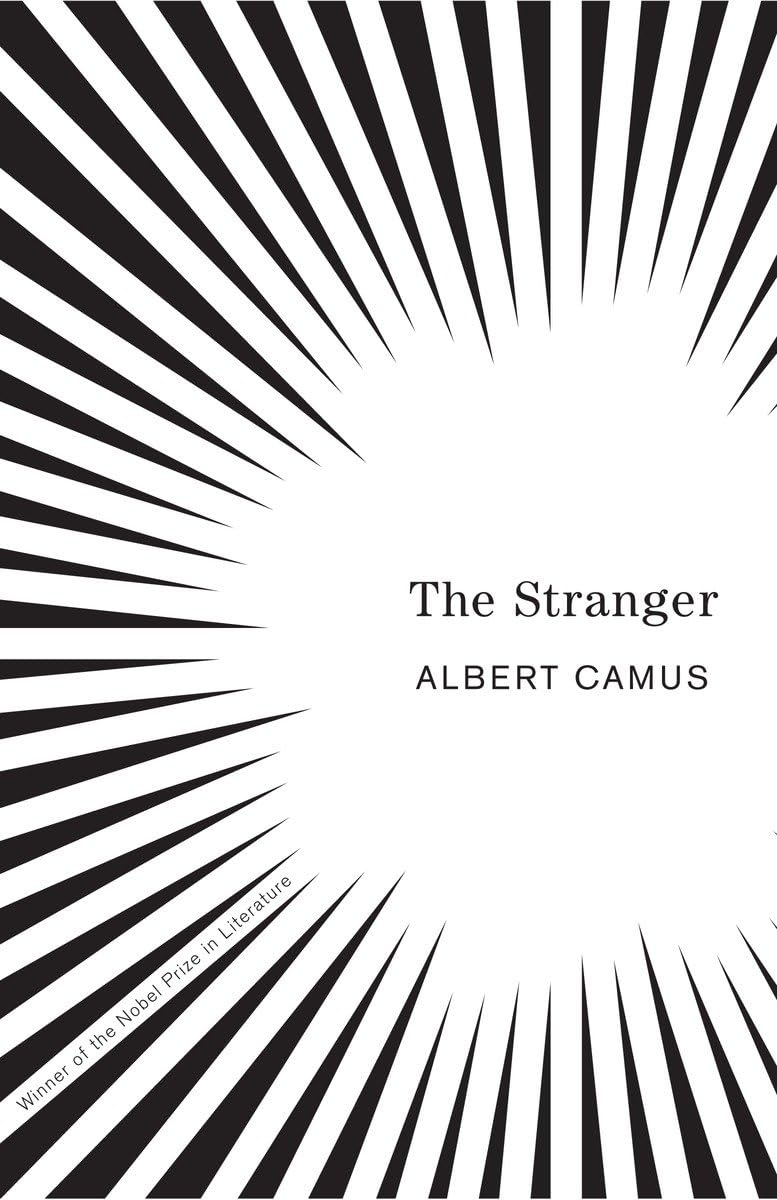
And I felt ready to live it all again too. As if the blind rage had washed me clean, rid me of hope; for the first time, in that night alive with signs and stars, I opened myself to the gentle indifference of the world.
Another potential answer to nihilism lies in absurdism, a school of thought closely associated with the existentialist fellow-traveler Camus. The philosopher suggests that upon confronting the void of meaning in the world, one should revolt against it. Rather than creating meaning, you should consider its absence and cry out “So what?” And this cry is the inspiration for The Stranger.
The novella follows a French colonist in Algeria named Meursault, a man who is extremely indifferent to reality. The tale begins with him noting his mother died yesterday or “perhaps the day before.” He finds little to enjoy in life and comes across as listless as he describes the world around him in samey beige tones. He accidentally kills an Algerian man for reasons he is uncertain of and is eventually sentenced to death for it.
It is only shortly before his death that he fully comes to embrace the fact that life can be pointless and supremely valuable. The indifference that characterized him throughout the novel is finally shaken — even if a touch delayed. While most people would find their impending death a total downer, Meursault rebels and embraces life as a good absurdist should. It may seem paradoxical to embrace life because it will end soon, but for Camus, that’s the point.
Notes from Underground by Fyodor Dostoevsky (1864)
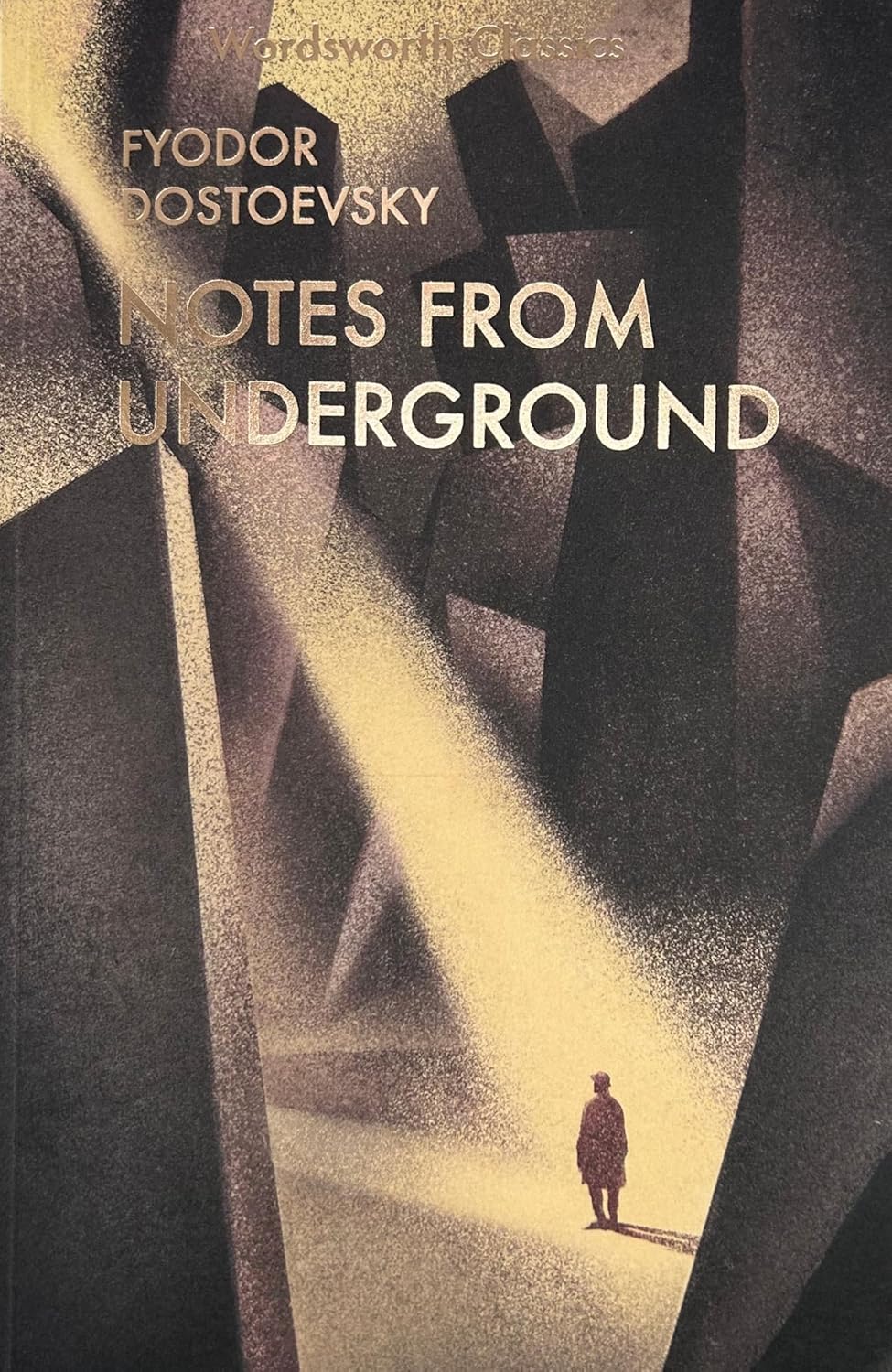
To be acutely conscious is a disease, a real, honest-to-goodness disease.
Many great philosophies — and serious critiques of those philosophies — can be found in novels, and our next entry is by every existentialist’s favorite Russian author. Throughout his career, Dostoevsky explored a number of the philosophies that were emerging in Russia during the 19th century, particularly those with intellectual foundations that concerned him.
You see, unlike his philosophical fans, Dostoevsky was a conservative, hyper-religious, and nationalistic thinker. He viewed the irrationality latent in all people as an active hindrance to building a utopia, and Notes from Underground focuses on what he saw as one such irrationality: nihilism.
In the book, an unnamed, reclusive main character — often simply called the “Underground Man” — offers a series of philosophical musings on society and the human condition before providing a biographical account of how he came to be in his present condition. A “hyper-conscious” person, he is uncannily insightful about modernity and humanity, yet unable to connect with others.
The Underground Man is something of a caricature of a nihilist. Despite his obvious intelligence, he is miserable, insufferable, and self-sabotaging because Dostoevsky thought this was the natural endpoint of that mode of thought. This point is often overlooked alongside the fact that the Underground Man is an unreliable narrator of his own life. He isn’t always wrong, but Dostoevsky warns that his final conclusion and general attitude are something we should all be wary of.
The Castle by Franz Kafka (1926)
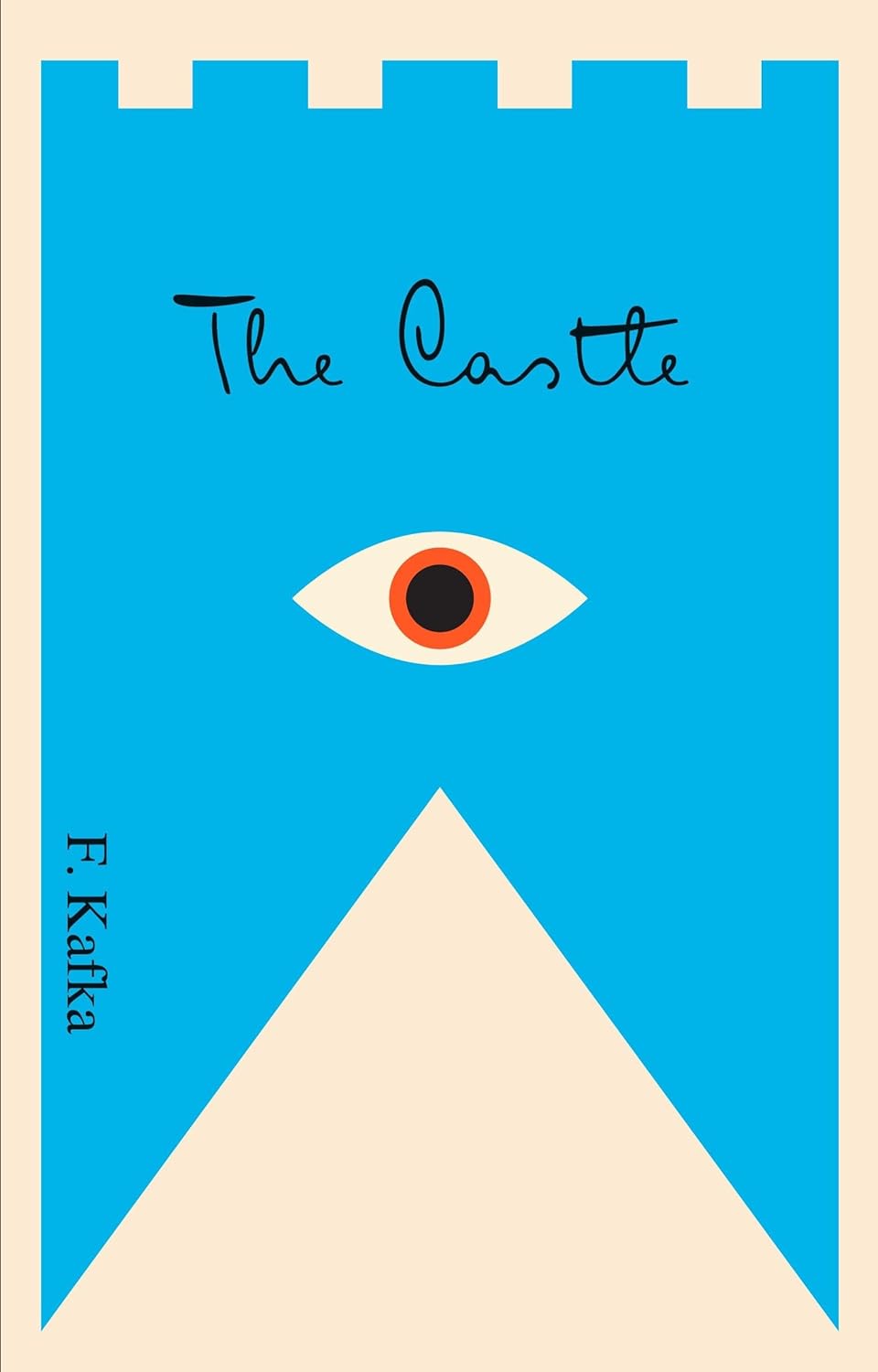
K. was often in danger of considering his situation hopeful.
If there’s one author who can make a reader feel like life is a meaningless void, it’s Kafka. His final novel, The Castle, explores themes similar to those in his other works while offering a distinctive look at nihilism. It also has a dark, surreal edge not as prominent in his other works.
The text begins with “K,” a land surveyor, responding to a summons calling him to a distant village. The village is governed by an unseen bureaucracy housed in a nearby castle, whose decrees and activities the citizens praise as both flawless and mysterious.
Informed that he was summoned to the strange village by mistake, K attempts to penetrate the bureaucracy to speak with the person who signed his summons. Despite the supreme difficulties and being able to leave at any time, K continues to try to find meaning in his summons.
While interpretations of the book vary, it can be read as a broad analysis of nihilism. K is dropped into a strange world governed by unknowable powers by accident. He then struggles against meaningless decrees and actions that are immediately rationalized by others and remains convinced that everything will be worth it if he can only find the reason why he’s there.
Like most of Kafka’s writings, The Castle was published after his death and against his wishes. Kafka was reportedly unsure what to do with the story and never finished it, leaving the problems he raises throughout unresolved. The novel famously — and perhaps fittingly — ends mid-sentence.
All Quiet on the Western Front by Erich Maria Remarque (1929)
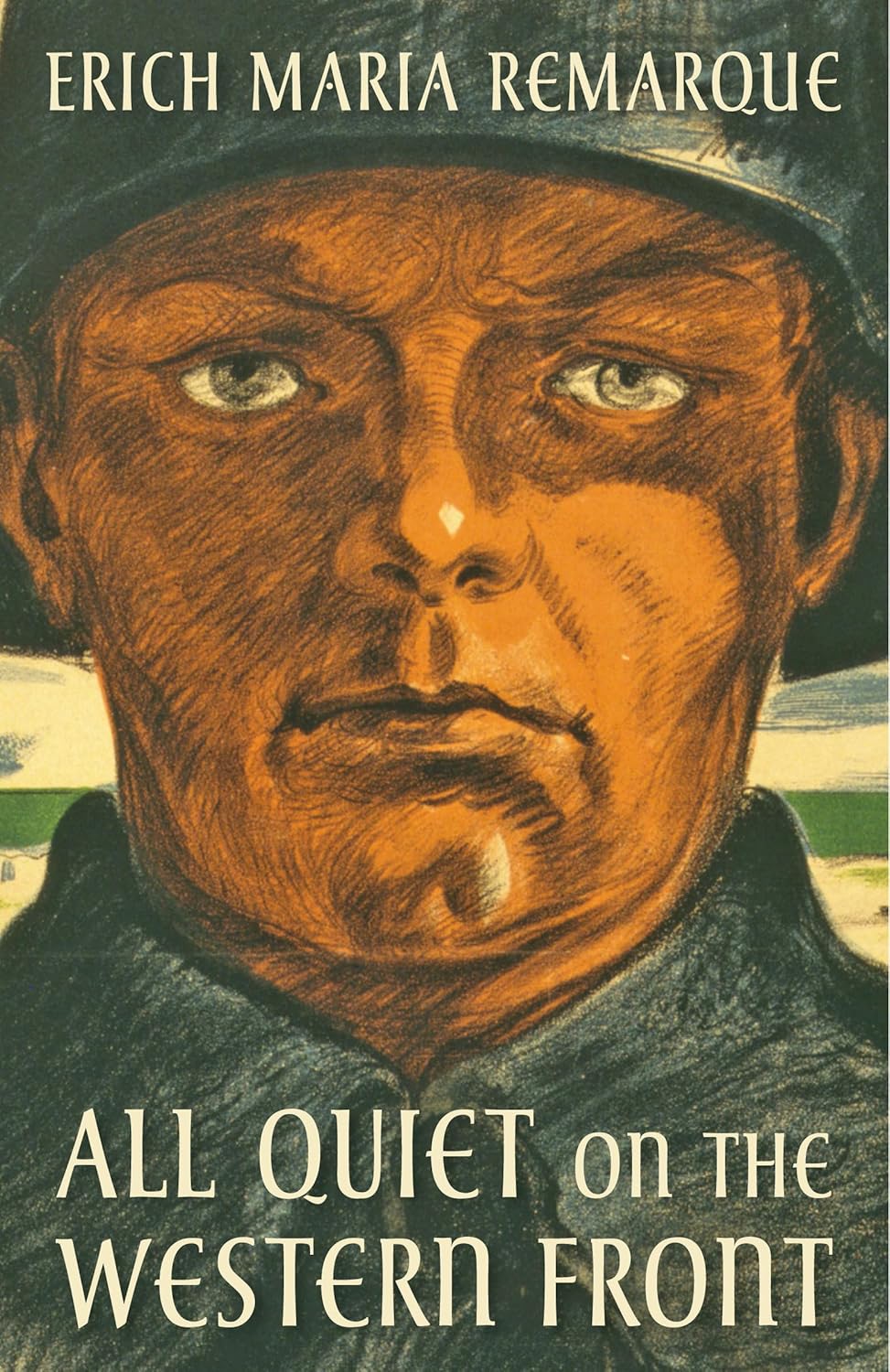
We were eighteen and had begun to love life and the world; and we had to shoot it to pieces. The first bomb, the first explosion, burst in our hearts. We are cut off from activity, from striving, from progress. We believe in such things no longer, we believe in the war.
Our last book goes in a different direction. It isn’t a philosophical novel or an authorial filibuster by a proto-existentialist. All Quiet on the Western Front is a masterpiece by Remarque, a WWI vet who turned his experiences into the quintessential war story. While our previous books may ask where nihilism comes from or what to do with it philosophically, All Quiet drops readers into the nihilistic horrors of war and a world that has sent its youth off to die.
The novel follows Paul Bäumer, a high school student who enlists in the Imperial German Army alongside his classmates. Their collective excitement for the adventure soon turns into trauma and despair as nameless battles are fought for inches of mud piled up with bodies. The young men who once found so much meaning and value in nationalism and duty soon find themselves left suffering in a meaningless void that is never filled. Value is swept away by machine-gun fire and left to rot in shell holes. Platoons of soldiers drop dead on days when the army declares nothing interesting to have happened.
Several of the other books on this list try to offer alternatives to nihilism or ways to find meaning. This one doesn’t. It can’t. The cast, most of whom die, quickly realize that not only were the values they had before the war impossible to hold in the face of the carnage, but that nothing else seems to hold up well either.

The Power of Play


