For more than a century now, writers have attempted to put into words what it was like to serve in the trenches of the First World War: the chaos, the horror, the futility. Ernest Hemingway famously said that “the only true writing that came through during the war was in poetry,” which conveyed metaphorically what could not yet be put into prose.
After the war, his novel A Farewell to Arms (1929) and other classics such as Erich Maria Remarque’s All Quiet on the Western Front (1929) and Ford Madox Ford’s Parade’s End tetralogy (1924–28) set the standard for both literature and later film. These works stripped away the nationalist romance and confronted head-on the physical and psychological toil the war took on those who fought it. More recently, Sam Mendes’ film 1917 (2019) made headlines for representing one soldier’s journey through No Man’s Land in what, thanks to clever editing, appears to be a single, uninterrupted take.
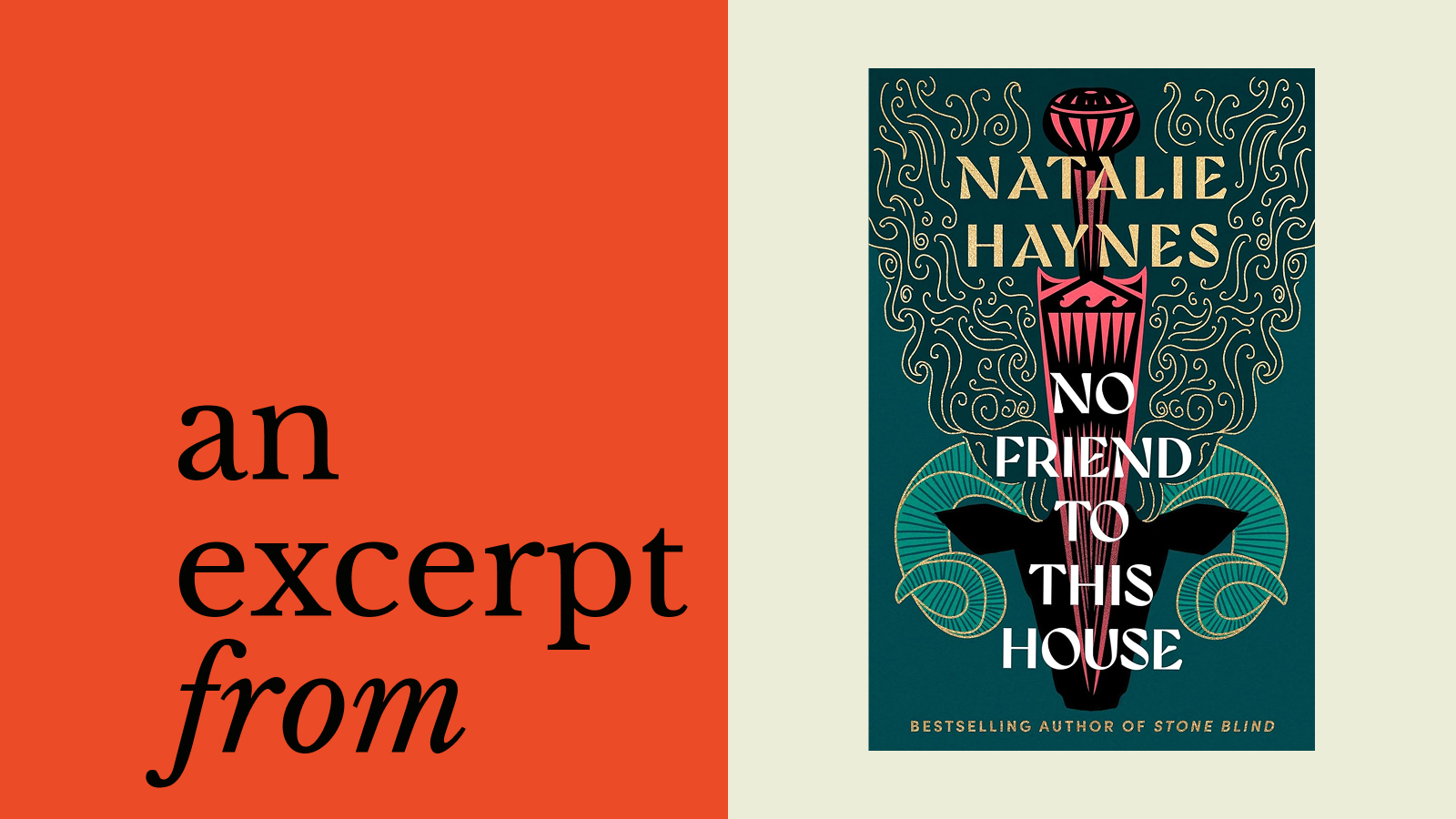
Daniel Kraus’s Angel Down (2025) takes a similar approach, accomplishing through prose what 1917 does through visuals. Instead of an uninterrupted take, the story is told over the course of one uninterrupted sentence. It’s a stunning example of stream of consciousness, a writing style which allows the reader to lose themselves inside a character’s mind.
Joining Big Think for an interview, Kraus — also known for developing the story of The Shape of Water alongside director Guillermo del Toro — explains how he wrote his Pulitzer Prize-winning novel without getting lost himself.
Thinking, fast and not slow
Angel Down takes place during the Meuse-Argonne offensive, when American forces carved a bloody path through German defenses in northern France. Private Cyril Bagger narrowly escapes an artillery shell while digging graves. When the dust settles, all is quiet save for an agonizing, ceaseless scream originating from somewhere beyond the trenches. Vainglorious Major General Lyon Reis hears it, too, and sends Bagger and his four other disposable subordinates on a quest to find and silence the mysterious screamer. To their surprise, this screamer is not a shell-shocked soldier but an angel shot out of heaven (hence the novel’s title). And it can grant any wish on Earth.
Kraus locked down the premise of Angel Down before he settled on its style. At first, he wrote the story the same way he had written his other novels. That is, with punctuation.

“I began experimenting with the prose because I felt the story deserved some kind of uniqueness that regular sentences weren’t giving it,” he tells Big Think. “I gave some thought to my overarching theme — the circularity of war, the wheel that never stops turning — and I thought that perhaps I could mirror it by writing a sentence that loops back on itself and never ends.”

The novel’s stream-of-consciousness style informs the personality and voice of its protagonist. Bagger isn’t a patriot. He’s a career con artist and repeated draft dodger who can’t wait to “get back to fleecing fools along the Mississippi.” He also has a complicated relationship with his dead father, a preacher, and a secret soft spot for the orphan Arno, to whom he reads pulp novels like Treasure Island and Son of Tarzan. Bagger is attentive, opinionated, and good with words but has an emotional range: His inner monologue can be crass and condescending, but also contemplative, sardonic, and sentimental — sometimes all at once.
“I do think there are fast thinkers and slow thinkers,” Kraus says of his protagonist’s thought processes. “Bagger is a fast thinker, lending himself to the speed of the prose.” And the speed can be dizzying. Take the following passage. At this point in the story, the characters are playing rock-paper-scissors to decide who has to risk their lives looking for the screamer, and the others are ignorant that Bagger has a foolproof method for reading hands and faces:
“… it’s really the same game, rock crushes kaiser, paper covers tsar, the scissors of the Entente snips Europe into new configurations, — and Popkin comes at Bagger like a hellbeast, purple-ringed eyes, nostrils pink and crusted, face a flaky agglomeration of red clay, brown blood, black mud, and orange tobacco, everything shellacked with sweat, the lummox breathing like a fish, a furor that makes it easy for Bagger to see the future, one, human nature is to replace a losing weapon, two, but Popkin will overthink it to the extent he can think at all, three, — and Popkin’s scissors is dispatched by Bagger’s rock …”
Or this one, when, moments later, Bagger realizes he has to play against Arno:
“… and here’s the scammer’s tightrope, to really scam someone you need to get to know them, but the worst thing you can do is to get to know someone too well, Bagger watches [soldiers] make the mistake every day, an offered cigarette, a smile of acceptance after some expulsion of fear or bodily fluid, the trading of photographs, this sweetheart for that, friendship is what Army leaders count on, that a buddy’s struggle becomes your struggle, and for them you’ll gladly die, — and it’s propaganda, the same pablum peddled by every cop who’s ever dragged Bagger off a riverboat by his collar, don’t you care about your fellow man, Mr. Bagger, not really sir, what has this so-called fellow man ever done for me…”
The process of writing in stream-of-consciousness style differs from writing in ordinary, punctuated prose. In Kraus’ case, removing periods from his toolkit forced him to rely on the natural rhythm of Bagger’s internal monologue to guide him and his readers through the text. Establishing this rhythm was easier said than done; at the start of each writing session, Kraus says he had to read back several pages just to get into the groove. But once he locked in, the story seemed to chart its own course.
As he explained in an interview with the Chicago Review of Books: “It feels like you’re on the rails of something that you can’t control.”
What is meant by reality?
It’s likely not a coincidence that stream of consciousness developed as a narrative technique shortly after World War I. Though its modernist champions like Virginia Woolf and James Joyce, author of the quintessential stream-of-consciousness novel Ulysses (1922), did not fight in the war themselves, they were nonetheless influenced by its destruction. Gone were the prewar beliefs in a cosmic order and the grand narratives that revealed the preconditioned meaning of existence. Literary writing would be not unlike the mind of the shell-shocked soldier: fragmented, hypervigilant, attuned to, and at times disoriented by, the uncertainty and arbitrariness that characterize modern life.
Reality is thick and deep, too thick and too deep, and at the same time too fluid to be cut with any convenient carving-knife. The novelist who would be close to reality must confine himself to this knowledge first hand.
Mary Sinclair
Generally speaking, modernist writers began placing less emphasis on plot and grew more interested in emotion and psychology: in how people experienced and made sense of the world, rather than the world itself. Along came other, adjacent interests: the vulnerability of the body, the nonlinearity of time, the fallibility of memories, and the deeper meaning of fantasy and dreams. Where authors of previous centuries had set off with certain assumptions about human nature, society, or the universe itself, those writing after the Great War were certain of nothing but their uncertainty.
“Reality,” May Sinclair, the novelist who is thought to have coined the term stream of consciousness, once wrote, “[is] too fluid to be cut with any convenient carving knife.” Instead of outer reality, writing shifted towards exploring inner reality.
Angel Down is believable and immersive largely because its style reflects its subject. Both war and stream of consciousness can be described as overwhelming, disorienting, suffocating, and unrelenting.
“I wanted to skid a lot with my writing,” Kraus says, “to slide right up to the edge of crashing because it mirrored how my characters were skirting around death.”
Bagger’s monologue — breathless and haphazard, as though he wrote everything down while under enemy fire, convinced there would be no time for revision — is little different from the angel’s scream, which he fears “won’t ever end, just like the war won’t ever end.”

The Power of Play