What is Big Think?  

We are Big Idea Hunters…

We live in a time of information abundance, which far too many of us see as information overload. With the sum total of human knowledge, past and present, at our fingertips, we’re faced with a crisis of attention: which ideas should we engage with, and why? Big Think is an evolving roadmap to the best thinking on the planet — the ideas that can help you think flexibly and act decisively in a multivariate world.

A word about Big Ideas and Themes — The architecture of Big Think

Big ideas are lenses for envisioning the future. Every article and video on bigthink.com and on our learning platforms is based on an emerging “big idea” that is significant, widely relevant, and actionable. We’re sifting the noise for the questions and insights that have the power to change all of our lives, for decades to come. For example, reverse-engineering is a big idea in that the concept is increasingly useful across multiple disciplines, from education to nanotechnology.

Themes are the seven broad umbrellas under which we organize the hundreds of big ideas that populate Big Think. They include New World Order, Earth and Beyond, 21st Century Living, Going Mental, Extreme Biology, Power and Influence, and Inventing the Future.

Big Think Features:

12,000+ Expert Videos

1

Browse videos featuring experts across a wide range of disciplines, from personal health to business leadership to neuroscience.

Watch videos

World Renowned Bloggers

2

Big Think’s contributors offer expert analysis of the big ideas behind the news.

Go to blogs

Big Think Edge

3

Big Think’s Edge learning platform for career mentorship and professional development provides engaging and actionable courses delivered by the people who are shaping our future.

Find out more
Close

In Africa, a Pigeon Takes on the Internet
September 10, 2009, 12:22 PM
Pigeon_messengers__harper_s_engraving_

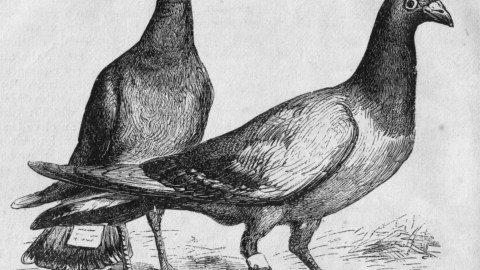
The promise of broadband Internet in Africa just took an ugly publicity hit—from a pigeon. The BBC reports that a carrier pigeon was able to deliver four gigabytes of data (in the form of a memory stick) from Howick to Durban, South Africa in significantly less time than the ASDL service of the South African web firm Telkom took to transfer the data digitally. Many South Africans reported on and discussed the race over Facebook and Twitter, in a sign that—even though there is a long way to go—the Internet is already taking hold on the continent despite its slow speed. In fact, some of the most significant vehicles through which the Internet is improving lives in Africa require little data and are effective even over very slow broadband connections.

Alec Ross of the United States State Department talked to us in detail about how exactly the Internet, especially social media, is changing lives in developing countries: it is spreading important medical information, educating farmers about crop conditions, and even protecting vulnerable women from violence and rape. However slow the Internet is, a huge percentage of those in the developing world have come to rely on on it.

Jonathan Zittrain, the co-director of Harvard's Berkman Center for Internet & Society, looked at technology in Africa through the lens of the One Laptop Per Child Program. He appreciated the utility of existing “sterile” technologies like Twitter, but was even more excited about the potential of “one nerd out of 2,000” in a developing country to create something using Internet technology that revolutionizes lives.

 

In Africa, a Pigeon Takes o...

Newsletter: Share: