What is Big Think?  

We are Big Idea Hunters…

We live in a time of information abundance, which far too many of us see as information overload. With the sum total of human knowledge, past and present, at our fingertips, we’re faced with a crisis of attention: which ideas should we engage with, and why? Big Think is an evolving roadmap to the best thinking on the planet — the ideas that can help you think flexibly and act decisively in a multivariate world.

A word about Big Ideas and Themes — The architecture of Big Think

Big ideas are lenses for envisioning the future. Every article and video on bigthink.com and on our learning platforms is based on an emerging “big idea” that is significant, widely relevant, and actionable. We’re sifting the noise for the questions and insights that have the power to change all of our lives, for decades to come. For example, reverse-engineering is a big idea in that the concept is increasingly useful across multiple disciplines, from education to nanotechnology.

Themes are the seven broad umbrellas under which we organize the hundreds of big ideas that populate Big Think. They include New World Order, Earth and Beyond, 21st Century Living, Going Mental, Extreme Biology, Power and Influence, and Inventing the Future.

Big Think Features:

12,000+ Expert Videos

1

Browse videos featuring experts across a wide range of disciplines, from personal health to business leadership to neuroscience.

Watch videos

World Renowned Bloggers

2

Big Think’s contributors offer expert analysis of the big ideas behind the news.

Go to blogs

Big Think Edge

3

Big Think’s Edge learning platform for career mentorship and professional development provides engaging and actionable courses delivered by the people who are shaping our future.

Find out more
Close

How Video Games Help Doctors Diagnose Disease
May 5, 2012, 8:35 AM
Video%20game%20ss

What's the Latest Development?

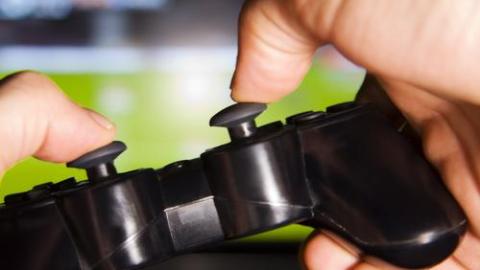
A video game developed at UCLA allows non-professional volunteers to accurately diagnose the presence of malaria in patients' red blood cells, aiding medical professionals in this time consuming process. Players are presented with a six-by-eight grid of neutral and infected cells representing a patient's biopsy, the object of the game being to neutralize the infected cells while preserving all the remaining healthy ones. Having gamers diagnose malaria not only saves time but researchers behind the new game say it improves the accuracy of results in the developing world where diagnosis tools are not always in plentiful supply.

What's the Big Idea?

Another game, called FoldIt, which also uses the power of crowdsourced science, has been developed at the University of Washington in which "players wrestle with ways in which proteins fold themselves into different configurations." Understanding the role that proteins play in disease can help scientists to create new, synthetic proteins as part of drug research. FoldIt players even helped to crack the pathogen code of an AIDS-like virus in monkeys which had stumped medical professionals for over a decade. With respect to the malaria game, a 1.25% variation in diagnosis accuracy compared with health professionals suggests crowdsourcing diagnoses is a realistic future.

Photo credit: Shutterstock.com



How Video Games Help Doctor...

Newsletter: Share: