What is Big Think?  

We are Big Idea Hunters…

We live in a time of information abundance, which far too many of us see as information overload. With the sum total of human knowledge, past and present, at our fingertips, we’re faced with a crisis of attention: which ideas should we engage with, and why? Big Think is an evolving roadmap to the best thinking on the planet — the ideas that can help you think flexibly and act decisively in a multivariate world.

A word about Big Ideas and Themes — The architecture of Big Think

Big ideas are lenses for envisioning the future. Every article and video on bigthink.com and on our learning platforms is based on an emerging “big idea” that is significant, widely relevant, and actionable. We’re sifting the noise for the questions and insights that have the power to change all of our lives, for decades to come. For example, reverse-engineering is a big idea in that the concept is increasingly useful across multiple disciplines, from education to nanotechnology.

Themes are the seven broad umbrellas under which we organize the hundreds of big ideas that populate Big Think. They include New World Order, Earth and Beyond, 21st Century Living, Going Mental, Extreme Biology, Power and Influence, and Inventing the Future.

Big Think Features:

12,000+ Expert Videos

1

Browse videos featuring experts across a wide range of disciplines, from personal health to business leadership to neuroscience.

Watch videos

World Renowned Bloggers

2

Big Think’s contributors offer expert analysis of the big ideas behind the news.

Go to blogs

Big Think Edge

3

Big Think’s Edge learning platform for career mentorship and professional development provides engaging and actionable courses delivered by the people who are shaping our future.

Find out more
Close

How the 1% Brainwashed the 99%
June 15, 2012, 3:34 PM
Occupy%20protest%20ss

What's the Latest Development? 

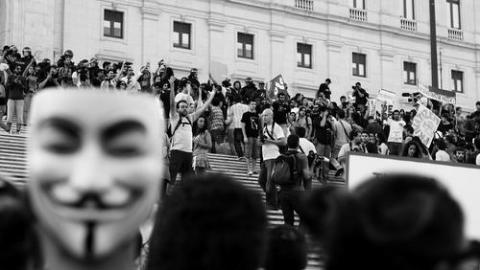
In Joseph Stiglitz's new book, "The Price of Inequality," the Nobel economist argues that new social science research has given power elites a greater understanding of how ideas affect society and that they have used that knowledge to cover up the gross wealth inequality now plaguing the country. "Fairness, like beauty, is at least partly in the eyes of the beholder, and those at the top want to be sure that the inequality in the United States today is framed in ways that make it seem fair, or at least acceptable. If it is perceived to be unfair, not only may that hurt productivity in the workplace but it might lead to legislation that would attempt to temper it."

What's the Big Idea?

While the national political conversation is focused squarely on economics, much of what passes for a debate of ideas is merely the recitation of propaganda, says Stiglitz. As a result, the public remains misinformed. "In a recent study, respondents on average thought that the top fifth of the population had just short of 60 percent of the wealth, when in truth that group holds approximately 85 percent of the wealth. ... Only 42 percent of Americans believe that inequality has increased in the past ten years, when in fact the increase has been tectonic. Misperceptions are evident, too, in views about social mobility. Several studies have confirmed that perceptions of social mobility are overly optimistic."

Photo credit: Shutterstock.com


How the 1% Brainwashed the 99%

Newsletter: Share: