What is Big Think?  

We are Big Idea Hunters…

We live in a time of information abundance, which far too many of us see as information overload. With the sum total of human knowledge, past and present, at our fingertips, we’re faced with a crisis of attention: which ideas should we engage with, and why? Big Think is an evolving roadmap to the best thinking on the planet — the ideas that can help you think flexibly and act decisively in a multivariate world.

A word about Big Ideas and Themes — The architecture of Big Think

Big ideas are lenses for envisioning the future. Every article and video on bigthink.com and on our learning platforms is based on an emerging “big idea” that is significant, widely relevant, and actionable. We’re sifting the noise for the questions and insights that have the power to change all of our lives, for decades to come. For example, reverse-engineering is a big idea in that the concept is increasingly useful across multiple disciplines, from education to nanotechnology.

Themes are the seven broad umbrellas under which we organize the hundreds of big ideas that populate Big Think. They include New World Order, Earth and Beyond, 21st Century Living, Going Mental, Extreme Biology, Power and Influence, and Inventing the Future.

Big Think Features:

12,000+ Expert Videos

1

Browse videos featuring experts across a wide range of disciplines, from personal health to business leadership to neuroscience.

Watch videos

World Renowned Bloggers

2

Big Think’s contributors offer expert analysis of the big ideas behind the news.

Go to blogs

Big Think Edge

3

Big Think’s Edge learning platform for career mentorship and professional development provides engaging and actionable courses delivered by the people who are shaping our future.

Find out more
Close

Smartphones Increase Fuel Efficiency
August 25, 2011, 12:00 PM
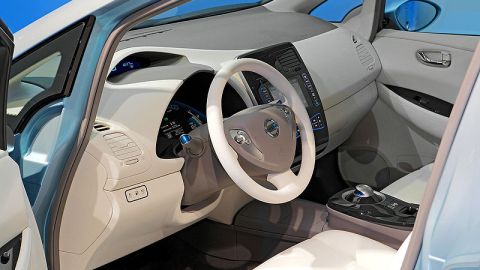
Nissan_leaf

What's the Latest Development?

Researchers from M.I.T. and Princeton have created a network of dashboard-mounted phones that collect data on traffic lights and tell drivers how to avoid inefficient stopping and starting, saving time and fuel. "By reducing the need to idle and accelerate from a standstill, the system saves gas: In tests conducted in Cambridge, Mass., it helped drivers cut fuel consumption by 20 percent." The system takes advantages of dashboard mounts intended for G.P.S. navigation and uses smartphones to collect data through their cameras. 

What's the Big Idea?

Meeting the nation's energy goals of reducing dependence on foreign oil while cutting consumer costs increasingly means adapting new technology to make more efficient fuel systems. "Cars are responsible for 28 percent of the energy consumption and 32 percent of the carbon dioxide emissions in the United States, says Emmanouil Koukoumidis, a visiting researcher at MIT who led the project. 'If you can save even a small percentage of that, then you can have a large effect on the energy that the U.S. consumes,' Koukoumidis says."


Smartphones Increase Fuel E...

Newsletter: Share: