What is Big Think?  

We are Big Idea Hunters…

We live in a time of information abundance, which far too many of us see as information overload. With the sum total of human knowledge, past and present, at our fingertips, we’re faced with a crisis of attention: which ideas should we engage with, and why? Big Think is an evolving roadmap to the best thinking on the planet — the ideas that can help you think flexibly and act decisively in a multivariate world.

A word about Big Ideas and Themes — The architecture of Big Think

Big ideas are lenses for envisioning the future. Every article and video on bigthink.com and on our learning platforms is based on an emerging “big idea” that is significant, widely relevant, and actionable. We’re sifting the noise for the questions and insights that have the power to change all of our lives, for decades to come. For example, reverse-engineering is a big idea in that the concept is increasingly useful across multiple disciplines, from education to nanotechnology.

Themes are the seven broad umbrellas under which we organize the hundreds of big ideas that populate Big Think. They include New World Order, Earth and Beyond, 21st Century Living, Going Mental, Extreme Biology, Power and Influence, and Inventing the Future.

Big Think Features:

12,000+ Expert Videos

1

Browse videos featuring experts across a wide range of disciplines, from personal health to business leadership to neuroscience.

Watch videos

World Renowned Bloggers

2

Big Think’s contributors offer expert analysis of the big ideas behind the news.

Go to blogs

Big Think Edge

3

Big Think’s Edge learning platform for career mentorship and professional development provides engaging and actionable courses delivered by the people who are shaping our future.

Find out more
Close

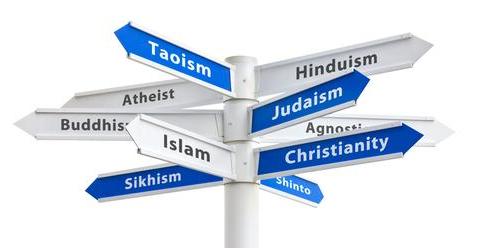
Does Religion Have a Monopoly on Hope?
July 6, 2012, 10:15 AM
Religion%20ss

What's the Latest Development?

The modernist French author André Gide once said that man can live forty days without food but only one second without hope. Today, this sentiment is echoed by religious figures and politicians who advance their beliefs on the grounds that they confer hope in a cruel world. The connection between religion and hope typically functions in two distinct ways: "One is that a purely secular worldview cannot provide the same degree of hope that religion can, and that many desire. The second is that we need this kind of hope to live. If both were true, it would be a powerful argument for the necessity of religion, irrespective of its truth."

What's the Big Idea?

To the first claim, that only religion can provide hope, British philosopher Julian Baggini responds that secular atheists do in fact have access to transcendent hope by naturalizing religion. "Our hopes should be based on becoming more 'acutely conscious' of 'the future of this planet after our deaths', in which 'devastating environmental and other catastrophes' could unfold." Baggini also negates the second claim, that hope is necessary for life. Hope, he says, is something people do when action is no longer a viable option. And action, at least some cursory amount, is necessary for life. Perhaps it is as Ben Franklin said: "He that lives upon hope will die fasting."

Photo credit: Shutterstock.com


Does Religion Have a Monopo...

Newsletter: Share: