Artful Choice
-
Today marks my last blog for Artful Choice. It has been an exciting year of writing about decisions small and big and the forces that help shape them and make them what they are—and Big Think has provided a truly wonderful home, a welcoming and vibrant platform for which I couldn’t be more grateful ... Read More
-
Amidst the growing momentum of the election season, I catch myself thinking, with a worried look on my face: at the end of the day, what does a voting decision actually come down to? The reason for my worry is simple. I’ve spent a little too much time with the research of Princeton’s Alexander ... Read More
-
The crowd surges around you, lurching forward in one overpowering swell. There’s panting and shoving, sharp elbows and raised voices, clawing and tearing, frenzied looks and frazzled nerves. Light blaring in your eyes, tinny music blasting in your ears. And the nagging feeling that somewhere ... Read More
-
Can we be aware without actually paying attention? In other words, can our brains somehow imbibe visual information from the outside world without any conscious effort on our part? It would certainly be nice if that were the case. As it happens, the necessity of visual attention for visual ... Read More
-
These days, it seems like wherever you turn, there’s a story of a researcher who has gone over to the dark side. There was Marc Hauser at Harvard, who resigned after he’d been accused of eight counts of scientific misconduct. There was Frank Fischer, the Rutgers political scientist who committed ... Read More
-
I’ve been thinking a lot this week about just how powerful our beliefs about ourselves can really be. For now, I’m not worried about aging—the subject of Monday’s article—but I am worried about those areas where I may, unbeknownst to myself, be holding back my own development, or at the very least ... Read More
-
As we make sense of the world around us, our minds often take shortcuts, generalizing, cutting corners, making connections and engaging in inferences as they integrate all of the incoming information into a cohesive whole. And as we make sense of people, we typically engage in the exact same ... Read More
-
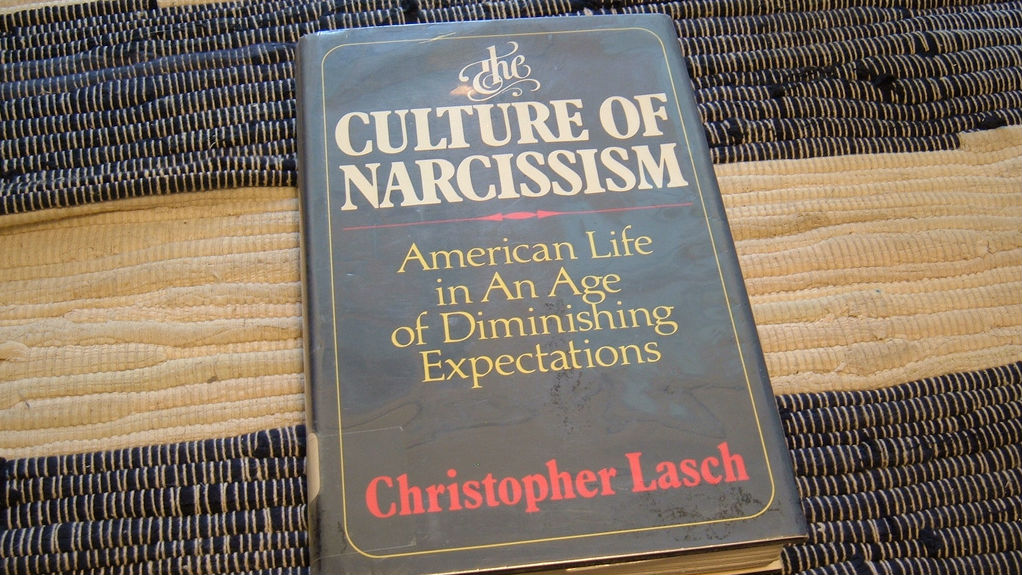
In most circumstances, narcissism doesn’t go over well. We tend not to like individuals who exhibit arrogance or too much dominance or hostility—all traits associated with the narcissist. But there’s one big exception to the rule: leadership. For some reason, when we rate narcissists on leadership ... Read More
-
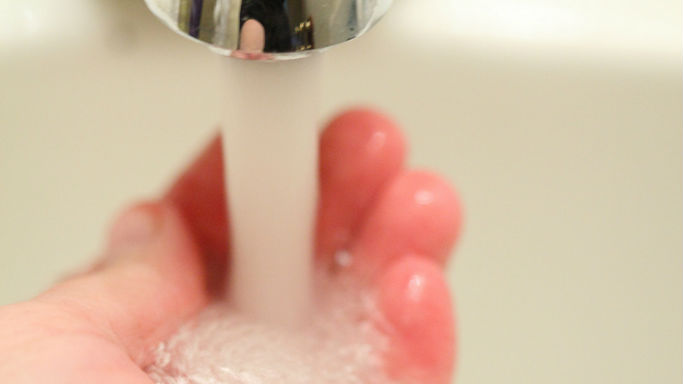
This past Saturday, October 15th, marked a momentous occasion in the history of cleanliness: the fourth annual Global Handwashing Day. Yes, it exists. Established by the Global Public Private Partnership for Handwashing with Soap in 2008, it has since been celebrated by schools, families, and ... Read More
-
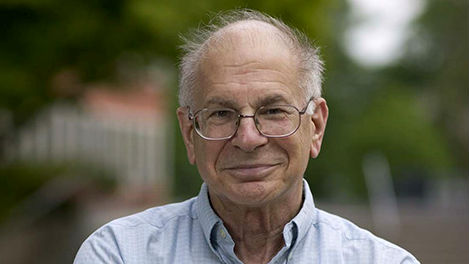
Editor's Note: This article was originally posted in October, but has been reposted here to illuminate the research approach of Daniel Kahneman, a recent guest on Big Think. On Monday evening, I went to see Daniel Kahneman give a talk on his new book, Thinking, Fast and Slow. Kahneman ... Read More
-
Last December, a series of provocative studies appeared in Science. The finding: imagine eating a food, over and over and over, and you will eat less of it when you are actually given the opportunity to do so. At first glance, it seems completely counterintuitive. Don’t we get hungry when we watch ... Read More
-
Today, another Ig-Nobel Prize installment, this time from the actual winner in Psychology, Karl Halvor Teigen. The question: why do we sigh? Is a sigh, as that all-time greatest song in the all-time greatest film suggests, just a sigh? Or is it a signal of something more? In a series of studies ... Read More
-
Yesterday evening, the (in)famous IgNobel prizes were awarded to ten lucky winners. And today, I’d like to honor the winner in Literature (though the nature of the theory is such that it may as well have been Psychology, as is often the case), Dr. John Perry. The achievement: the theory of ... Read More
-
Two people are talking to each other. One nods his head to emphasize a point. The other follows suit, just a moment later. One crosses his foot over his knee. Soon, the other is doing the same. One shifts to the right. The other, across from him, shifts to the left, mirroring the movement. A few ... Read More
-
Recently, while working on a piece about memory and smell, I came upon a concept that I’d never before heard about: blind smell. I’d read often enough about blindsight, the ability of individuals who are blind to detect visual stimuli even though they have no conscious experience of seeing, but ... Read More
About Artful Choice
Artful Choice is a blog written by Maria Konnikova about the psychology of decision making and its impact on the choices we make, from the very little (flat or sparkling?) to the very big (and will you have fries with that?). It is also an exploration of the wholeness of the human mind, from our perception of the world to our reactions to and interactions with it. It aims to increase the mindfulness of our decision making, so that we understand enough about our minds, ourselves, and our decision processes to make our choices thoughtfully, artfully, and with appropriate care. Maria can be reached at maria.konnikova [at] bigthink [dot] com.
Links
Recent Posts
-
12/07
-
11/30
-
11/23
To Buy or Not to Buy: A Black Friday Guide to Improving Shopping Decisions
-
11/16
-
11/10
Re-examining Significant Research: The Problem of False-Positives
-
11/04
Thinking Makes It So: How We Think about Mistakes Affects How We Learn from Them
-
10/31
-
10/24
The Narcissistic Leader: Not as Good as He (Or You) May Think
-
10/17
Clean Hands, Clean Minds: The Psychological Impact of Physical Cleanliness
-
10/12