How We Outsource Carbon Emissions
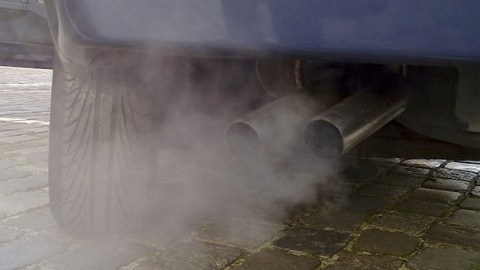
When it comes to greenhouse gases, it’s not what we make, it’s what we consume. The Economist recently published the results of a paper that was in The Proceedings of the National Academy of Sciences suggesting that the developed countries are responsible for an even larger amount of greenhouse gases than we thought. While it looks like the developed world has been cutting emissions, in fact we have simply been shifting them to the developing world.
In the paper, Glen Peters of the Center for International Climate and Environmental Research in Oslo and his colleagues look at carbon dioxide emissions around the world between 1990 and 2008. Carbon dioxide emissions actually fell in most of the developed world, as the so-called “Annex B countries”—the 34 countries that pledged in the Kyoto Protocol to reduce their emissions an average of 5.2% from 1990 levels—tried to make their emissions targets. All told, emissions of carbon dioxide in Annex B countries fell by around a billion tons. That’s a reduction of about 2%—well short of their Kyoto target, but still a significant amount.
Good news, right? The problem is that the Annex B countries aren’t actually consuming less, but have simply outsourced their carbon dioxide emissions to the developing world, by using more goods produced in developing countries that don’t have binding emissions targets under the Kyoto Protocol. In effect, the developed world is playing an environmental shell game, in which rather than consume less or consume more efficiently produced goods, they are simply paying poorer countries—largely China, and to a lesser extent India and Brazil—to emit their greenhouse gases for them. In their paper, Peters et al. found that the increase in emissions caused by buying more goods from developing countries largely offset any reduction in emissions in the Annex B countries. Reductions in Europe in particular were more than wiped out the buying more goods from developing countries. The other side of this is that China—the world’s second largest emitter of greenhouse gases—and the rest of the developing world actually has a much smaller carbon footprint than it appears to, since it’s the developed countries that actually consume much of what they make.
The U.S., of course, is one of just a handful of countries—and the only major producer of greenhouse gases—that hasn’t ratified the Kyoto Protocol. Increased emissions from the U.S. more than offset the net reductions made in the Annex B countries, even before you take into account its increased trade with the developing world. As long as the U.S., which is still the largest of emitter of greenhouse gases, doesn’t make a real effort to rein in its emissions, there may be little the rest of the world can do. But this research does make it clear that an effective climate treaty will have to focus less on what individual countries emit, and more on what they actually consume.
Photo credit: Ruben de Rijcke