What is Big Think?  

We are Big Idea Hunters…

We live in a time of information abundance, which far too many of us see as information overload. With the sum total of human knowledge, past and present, at our fingertips, we’re faced with a crisis of attention: which ideas should we engage with, and why? Big Think is an evolving roadmap to the best thinking on the planet — the ideas that can help you think flexibly and act decisively in a multivariate world.

A word about Big Ideas and Themes — The architecture of Big Think

Big ideas are lenses for envisioning the future. Every article and video on bigthink.com and on our learning platforms is based on an emerging “big idea” that is significant, widely relevant, and actionable. We’re sifting the noise for the questions and insights that have the power to change all of our lives, for decades to come. For example, reverse-engineering is a big idea in that the concept is increasingly useful across multiple disciplines, from education to nanotechnology.

Themes are the seven broad umbrellas under which we organize the hundreds of big ideas that populate Big Think. They include New World Order, Earth and Beyond, 21st Century Living, Going Mental, Extreme Biology, Power and Influence, and Inventing the Future.

Big Think Features:

12,000+ Expert Videos

1

Browse videos featuring experts across a wide range of disciplines, from personal health to business leadership to neuroscience.

Watch videos

World Renowned Bloggers

2

Big Think’s contributors offer expert analysis of the big ideas behind the news.

Go to blogs

Big Think Edge

3

Big Think’s Edge learning platform for career mentorship and professional development provides engaging and actionable courses delivered by the people who are shaping our future.

Find out more
Close

Why We Don't Like Seeing Photographs of Ourselves

July 29, 2012, 11:45 AM
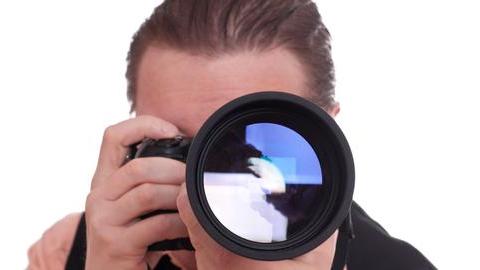
Photographer%20ss

What's the Latest Development?

You know the feeling. You've been tagged in a Facebook photo, but that person with a contorted face only bares a passing a resemblance to the person you know from the bathroom mirror each morning. Photographer Duncan David believes that because mirrors generally tell us how we look, we feel a sense of rejection when a photograph doesn't conform to the self-image we've grown accustomed to. In fact, David's hunch is supported by a 1977 study in which people were shown to prefer self-portraits that conformed more to their mirror image than with their true image. 

What's the Big Idea?

So what is so special about the way we look at ourselves in the mirror? Nothing extraordinary, except that we've gotten use to how we look that way. Called the mere-exposure effect, people are known to develop a preference for a stimulus based solely on his or her repeated exposure to it. "Of course, the great thing about the mere-exposure effect is that it's an individual experience—and that's something you should take comfort in the next time you're lamenting over your slightly-off appearance in a photograph. The truth is, if photograph-you looked like mirror-image you, everyone else would think you look bizarre."

Photo credit: Shutterstock.com


Why We Don't Like Seeing Ph...

Newsletter: Share: