What is Big Think?  

We are Big Idea Hunters…

We live in a time of information abundance, which far too many of us see as information overload. With the sum total of human knowledge, past and present, at our fingertips, we’re faced with a crisis of attention: which ideas should we engage with, and why? Big Think is an evolving roadmap to the best thinking on the planet — the ideas that can help you think flexibly and act decisively in a multivariate world.

A word about Big Ideas and Themes — The architecture of Big Think

Big ideas are lenses for envisioning the future. Every article and video on bigthink.com and on our learning platforms is based on an emerging “big idea” that is significant, widely relevant, and actionable. We’re sifting the noise for the questions and insights that have the power to change all of our lives, for decades to come. For example, reverse-engineering is a big idea in that the concept is increasingly useful across multiple disciplines, from education to nanotechnology.

Themes are the seven broad umbrellas under which we organize the hundreds of big ideas that populate Big Think. They include New World Order, Earth and Beyond, 21st Century Living, Going Mental, Extreme Biology, Power and Influence, and Inventing the Future.

Big Think Features:

12,000+ Expert Videos

1

Browse videos featuring experts across a wide range of disciplines, from personal health to business leadership to neuroscience.

Watch videos

World Renowned Bloggers

2

Big Think’s contributors offer expert analysis of the big ideas behind the news.

Go to blogs

Big Think Edge

3

Big Think’s Edge learning platform for career mentorship and professional development provides engaging and actionable courses delivered by the people who are shaping our future.

Find out more
Close

Today's Lesson in Societal Collapse, Courtesy of the Mayans
August 22, 2012, 10:30 AM
Shutterstock_59786647_scaled

Article written by guest writer Kecia Lynn

What's the Latest Development?

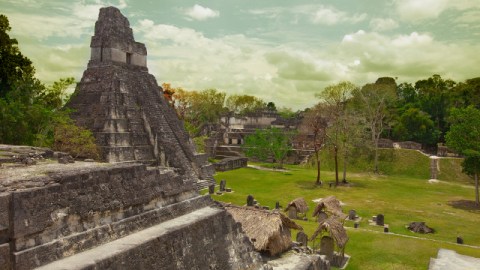
The 9th-century collapse of the Lowland Maya civilization in Mexico's Yucatan Peninsula had much to do with both climate change and human-made environmental stressors, say the co-authors of an article published yesterday in the online early edition of Proceedings of the Natural Academy of Sciences. Prior to the collapse, the Mayans had lived in harmony with the environment for over 2000 years, building and maintaining production and water networks that carried them through at least two dry periods. However, as time went on, large-scale deforestation exacerbated and intensified the droughts. With a shift in trade routes that drastically affected the local economy, "the decision was made to vacate the central lowlands rather than maintain the investment."

What's the Big Idea?

Social scientists B.L. Turner and Jeremy A. Sabloff write: "The Maya case lends insights for the use of paleo- and historical analogs to inform contemporary global environment change and sustainability...Complex system interactions generated the collapse and depopulation of the [Central Maya Lowlands] and fostered its long-term abandonment. This lesson -- increasingly voiced in the literature -- should be heeded in the use of analogs for sustainability science."

Photo Credit: Shutterstock.com


Today's Lesson in Societal ...

Newsletter: Share: