What is Big Think?  

We are Big Idea Hunters…

We live in a time of information abundance, which far too many of us see as information overload. With the sum total of human knowledge, past and present, at our fingertips, we’re faced with a crisis of attention: which ideas should we engage with, and why? Big Think is an evolving roadmap to the best thinking on the planet — the ideas that can help you think flexibly and act decisively in a multivariate world.

A word about Big Ideas and Themes — The architecture of Big Think

Big ideas are lenses for envisioning the future. Every article and video on bigthink.com and on our learning platforms is based on an emerging “big idea” that is significant, widely relevant, and actionable. We’re sifting the noise for the questions and insights that have the power to change all of our lives, for decades to come. For example, reverse-engineering is a big idea in that the concept is increasingly useful across multiple disciplines, from education to nanotechnology.

Themes are the seven broad umbrellas under which we organize the hundreds of big ideas that populate Big Think. They include New World Order, Earth and Beyond, 21st Century Living, Going Mental, Extreme Biology, Power and Influence, and Inventing the Future.

Big Think Features:

12,000+ Expert Videos

1

Browse videos featuring experts across a wide range of disciplines, from personal health to business leadership to neuroscience.

Watch videos

World Renowned Bloggers

2

Big Think’s contributors offer expert analysis of the big ideas behind the news.

Go to blogs

Big Think Edge

3

Big Think’s Edge learning platform for career mentorship and professional development provides engaging and actionable courses delivered by the people who are shaping our future.

Find out more
Close

New Nanotechnology Drug Busts Heart Attack-Causing Clots
July 7, 2012, 1:30 PM
Nanobot%20new%20ss

Article written by guest writer Rin Mitchell

What’s the Latest Development?

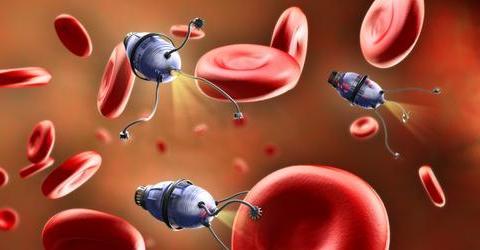
Researchers have found a way to unclog obstructed blood vessels that lead to heart attacks and strokes. These obstructions can lead to shear stress, "attracting platelets that form blood clots." The body contains natural clot producing mechanisms, and scientists “used an approved clot-targeting therapy called tissue plasminogen activator, or tPA, and found that the system allowed for use of less than one-fiftieth the normal dose to dissolve clots.” Medicines used in hospitals to unclog vessels are given in larger doses, which cause serious side effects like excessive bleeding. The drug delivery method “called shear-activated nanotherapeutics, is a bundle of tiny drug-coated particles that travel together until they reach the obstruction, when the shear stress causes them to break apart and attack clots.” The low dosage required will allow more patients to be treated with the medicine. 

What’s the Big Idea?

According to the Centers for Disease Control and Prevention, heart disease and stroke is one of the leading causes of death among Americans. Scientists have found ways to target platelets that form blood clots due to a force of shear stress, by the use of a low-dose drug delivery method that activates when the condition takes place. Researchers believe the system could possibly be used to deliver any drug for various diseases. However, only mice have been tested and it will be years before trial studies will be conducted on humans.  



New Nanotechnology Drug Bus...

Newsletter: Share: