Idealism, Blumenthal and the Media
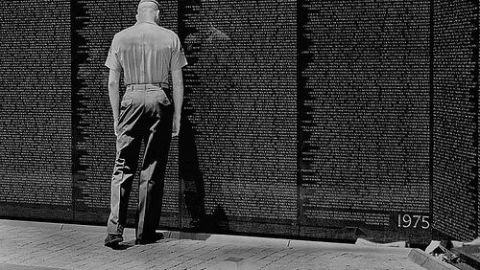
Much is being made about Richard Blumenthal’s Senate race because of a New York Times article published last Monday which accuses Blumenthal of lying about his military record: claiming on camera that he had served in Vietnam when in fact he had not. Blumenthal was a member of the Marine Corp Reserves during Vietnam and was never called up for duty. At issue is the standard we hold our politicians and our media to, and in both cases, our standards seem to have been set too low.
Dan Kennedy at Media Nation has expressed his disappointment in the Times’ initial reporting on Blumenthal because the newspaper only posted the section of the video in which Blumenthal says he served in Vietnam. In fact, only moments earlier in the same video, Blumenthal says he “served in the military during the Vietnam era”, which does perhaps suggest he served in Vietnam, but falls short of the lie the Times piece implicates him in.
That Blumenthal has in the past emphasized his connection to the Vietnam War using suggestive phrasing seems clear not only from what Blumenthal has said about himself, but from the number of local newspaper stories that reported he had indeed served in Vietnam. To be sure, military records are public, and reporters in these instances fell short of their responsibilities to fact check sources.
Now confronted with his past remarks, Blumenthal says he “misspoke” which, according to the London Times’ columnist Dominic Lawson, is American political speak for squirming out of a lie. Lawson does have a point. Too often “misspeak” is a polite euphemism politicians use when they have said something untrue, or in other words, when they have lied.
Maureen Dowd in her column at the New York Times is more forgiving of Blumenthal. He’s human, she says, and humans exaggerate their past when memory mixes with desire, specifically the desire to be someone greater than the actual person in real life.
I recently stumbled on a lecture given by Viktor Frankl, an Austrian psychiatrist and Holocaust survivor, which seems applicable here. Frankl, quoting Geothe, says that “if we take man as he is”, as Maureen Dowd has done rather proudly, “we make him worse, but if we take man as he should be we make him capable of becoming what he can be.”
Frankl is defending idealism and were we to hold our politicians and media to higher standards, there is no place they could go but up.