What is Big Think?  

We are Big Idea Hunters…

We live in a time of information abundance, which far too many of us see as information overload. With the sum total of human knowledge, past and present, at our fingertips, we’re faced with a crisis of attention: which ideas should we engage with, and why? Big Think is an evolving roadmap to the best thinking on the planet — the ideas that can help you think flexibly and act decisively in a multivariate world.

A word about Big Ideas and Themes — The architecture of Big Think

Big ideas are lenses for envisioning the future. Every article and video on bigthink.com and on our learning platforms is based on an emerging “big idea” that is significant, widely relevant, and actionable. We’re sifting the noise for the questions and insights that have the power to change all of our lives, for decades to come. For example, reverse-engineering is a big idea in that the concept is increasingly useful across multiple disciplines, from education to nanotechnology.

Themes are the seven broad umbrellas under which we organize the hundreds of big ideas that populate Big Think. They include New World Order, Earth and Beyond, 21st Century Living, Going Mental, Extreme Biology, Power and Influence, and Inventing the Future.

Big Think Features:

12,000+ Expert Videos

1

Browse videos featuring experts across a wide range of disciplines, from personal health to business leadership to neuroscience.

Watch videos

World Renowned Bloggers

2

Big Think’s contributors offer expert analysis of the big ideas behind the news.

Go to blogs

Big Think Edge

3

Big Think’s Edge learning platform for career mentorship and professional development provides engaging and actionable courses delivered by the people who are shaping our future.

Find out more
Close

A Modest Proposal: A Day of Atonement for all the World's Religions

September 16, 2012, 12:00 AM
Israeliran

Innocence of Muslims is a bizarre YouTube film made by an obscure group of American citizens with deep pockets and pretty lousy production values. The film is clearly offensive to Muslims for its depiction of the Prophet Muhammad as a homosexual who supports extramarital sex and pedophilia. 

Those insults certainly do not justify the murder of the US ambassador to Libya, Chris Stevens and other diplomats. 

Let's also keep in mind that "riots have a thousand fathers," as Brian O'Neill argued recently on Big Think. The Youtube video, according to O'Neill, was "the match dropped in the tank of kerosene; it was the whisper that led to the rumor that led to the war." The main problem in Yemen and Egypt and Libya, O'Neill says, is "bored young men, full of testosterone and frustration, with the sickening sense of going nowhere fast."

I think O'Neill's analysis is correct. Nevertheless, a small group of perpetrators succeeded in reigniting what some see as a clash of civilizations. So what can the rest of us do to diffuse the situation? 

What's the Big Idea?

In a recent appearance on Big Think, School of Life co-founder and author Alain de Botton proposed a solution that may seem novel because we happen to act on it so rarely. When you have offended someone, you need to apologize. In Judaism, a day is set aside just for this purpose, and Botton says Judaism is "one of the wiser religions in this regard." Yom Kippur, or the Day of Atonement, is the holiest day of the year for Jews. It begins at sunset on September 25 this year. 

Botton says this ritual is so important because we're simply not good at apologizing on our own. It's awkward at best, and at its worst an apology can lead to "an escalation in anger." And yet, a structured occasion to apologize, such as Yom Kippur, allows for apologies to be received in the right context, in which forgiveness is both asked for and received promptly.

And so in the current context we might push Botton's argument to its logical conclusion: should there be a day of atonement between all of the world's religions?

Watch the video here:

What's the Significance?

In the political context, apologies are often seen as signs of weakness. That may be unfortunate, but let's not be naive about the realities of diplomacy. Nations are not people, and we should not expect them to act like people. However, there are more tools that citizens possess today than ever before to get their leaders to listen to them. Here's one heartening example:

Israel-Loves-Iran is a viral campaign that is made up of Israelis and Iranians alike posting pictures and messages to each other, such as this one from an Iranian soldier:

I love Israeli people, I love peace. & I’m not ready [to] die [in] your war.

While technology can be used for many purposes, it is hard not to side with the utopians on this issue. As Peter Diamandis pointed out to Big Think, for centuries people from different groups killed each other simply because they saw each other as less than human. As technology has brought people closer together, Diamandis argues, we have come to see just how much we're alike. We may even find out, for instance, that we share the same maternal DNA. And that is why Diamandis says "we are at the most peaceful time of human history ever," despite our inclination to be utter pessimists from reading today's headlines. 

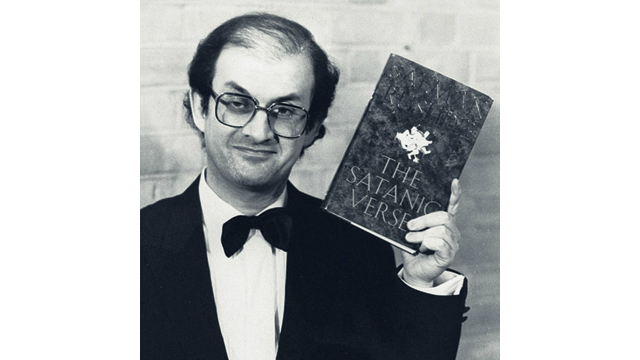
So what to do about the small percentage of people who fanatically resist technology and continue to cause problems for the rest of us, who want peace? Salman Rushdie says we should bring technology to them, by "dropping Nintendo consoles from the air and Big Macs" instead of bombs. 

Image courtesy of Shutterstock

Follow Daniel Honan on Twitter @Daniel Honan

More from the Big Idea for Sunday, September 16 2012

Today's Big Idea: Atonement

Today marks the start of Rosh Hashanah, the first of the high holy days in Judaism, to be followed by Yom Kippur, the Day of Atonement, at sunset on September 25.  According to School of Life f... Read More…


A Modest Proposal: A Day of...

Newsletter: Share: