The left side of your brain is the rational thinking side of your brain. This side deals mainly with mathematics, logic, and science. The right side however is the intuitive thinking side of your brain. It controls your ability to think creatively, and see the whole picture, so to speak. Using it in conjunction with the left side of your brain allows you to see life from many different perspectives. a person in touch with the right side of their brain is also

in touch with their nature, their instincts (yes humans have them), and their feelings.

It also deals with the brains ability to understand religion.

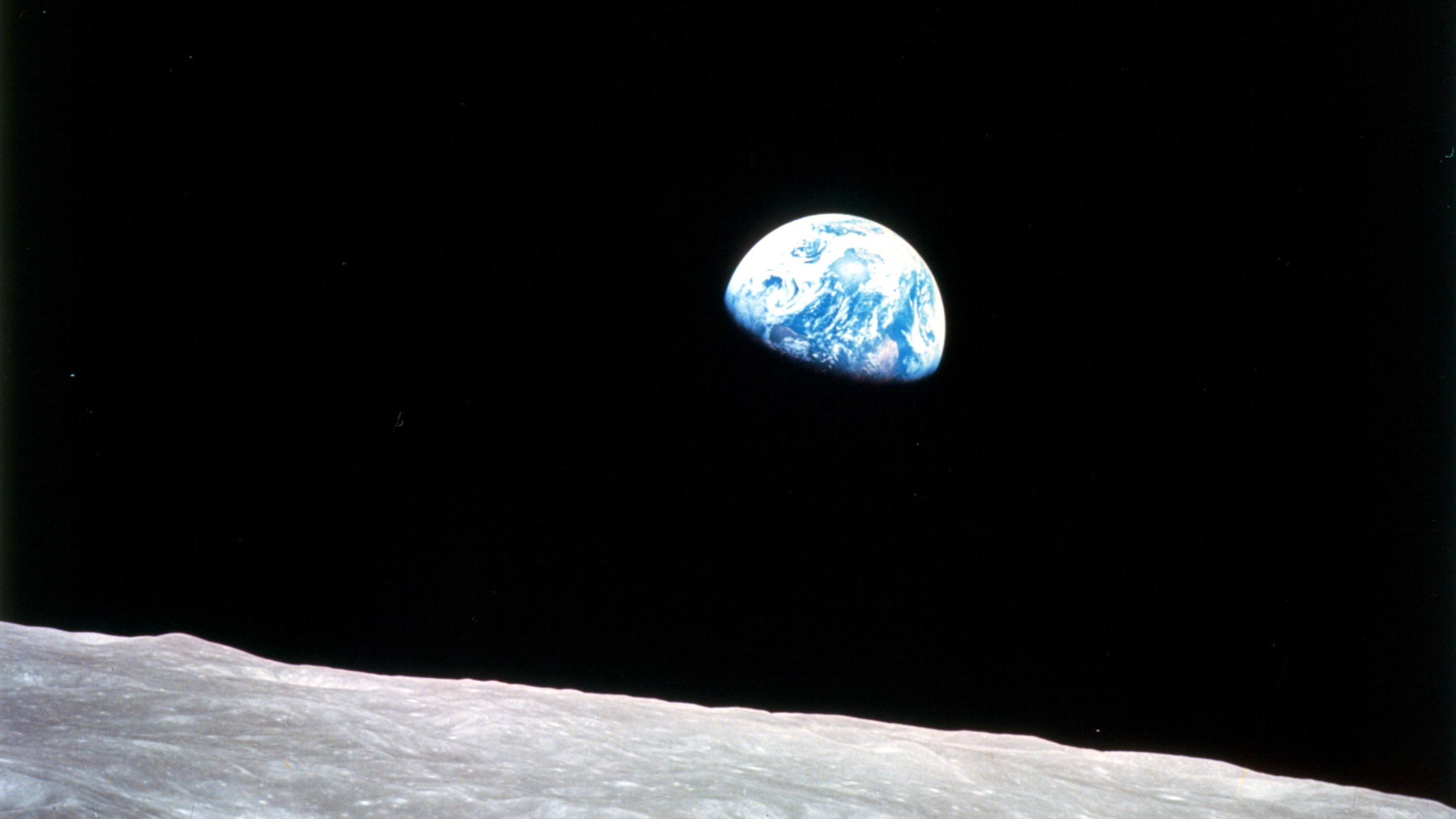
Is it too far off to think that the parabel of creation sounds a lot like the fairy tale of the fiery behemoth of an energetic reaction which rationalists and scientists have come to believe as the most plausible theory of the creation of the universe and cosmos (Big Bang)?

For instance,

"The analogy between the rational story of a universal physical descent by light into the asymmetry of mass, time, gravitation, and charge, and the subsequent process of recovery via conservation laws, and the intuitive tradition of a cosmic "fall" into manifestation and sin, followed by the recovery of lost souls, is startlingly complete. Whether we are talking about the conversion of particles to light or bodies to spirits, the conservation of souls or the conservation of symmetry, the gravitational rescue of the physical system or the spiritual redemption of humanity, the process is so similar, on both the individual and cosmic scales, that we can only believe that rational and intuitive minds have embraced a single reality. - John A. Gowan"

Science explains the origin of the universe as a massive burst of energy which is both non-dimensional and of infinite proportions. Something so grand in scale that science has no actual facts or details. This is science's way of saying they have no clue what actually happened, just a general idea of what it would take. Religion explains this event as creation by a supreme being(s) using a series of parabels to describe a scene that if thought about rationally would make no sense to modern humanity, and easily passed off as just a fairy tale. But if thought about creatively, one can assume that both theories are not far off from one another as each explains the exact same sequence of events, in its own way.

It is in this knowledge that I conclude that without Science, there would be no religion, and without religion, there would be no science. For one half of our brain percieves intuition and creativity, and the other half rationalism and logic, it makes sense to believe that both are percieving the exact same reality just in different ways, using drastically different trains of thought to explain it.

Discuss

Default_normal

Rob Blotnicky on June 13, 2008, 3:16 AM

Hehe. I voted for myself.

User_roxn_44a1ec161

sciencesaves on June 13, 2008, 4:36 AM

Welcome. Interesting analogy, but they’re not really comparable. We have evidence to back up scientific claims, but no evidence to back up religious claims.

Sorry if I over-simplify. I realize that you’re presuming both are theories, but religion doesn’t qualify as a theory, in my opinion.

User_rpew_e0eeab77b

HerbieP on June 13, 2008, 6:32 AM

Rob where do you imagine the concept of right brain/left brain division of labour came from? Did the right brain imagine it or did the left brain investigate it with scientific method?

User_rbip_0ad99edba

Jeff Delano on June 14, 2008, 12:12 AM

The left side of your brain can determine the external infinite and prove it universally and the right side of your brain can perceive the internal infinite and prove it to the individual.

Religion is an attempt to prove humans spiritual belief universally, thus it has failed and has caused a lot of grief, although I wont deny that religion has helped several people cope with their existance and has spawned several positive acts as well.

To me, true spirituality can only be proven within the self and the right side of their brain.

I like this idea a lot Rob.

Default_normal

Musycks on June 14, 2008, 12:52 AM

No they are not the same.. the concepts in the quotes are only abstract and/or poetic ways of rendering information… therefore like every other attempt to codify thought or intuition in ‘spiritual’ terms, it all comes from inside our heads. Just as ‘god’ can now mean absolutely anything to anyone, if we keep robbing words of meaning then explanations will lose their potency. Confusing scientific terms with myths and spiritual touchstones is not helpful.

Simplistically religious dogma divides where spirtuality attempts to operate outside that model.
Science needs no such arbitrary explanations mostly, and has proved a far better way forward than religion could ever hope to be.

User_rgrk_5b38e75cb

Denys Artasevych on June 14, 2008, 1:45 AM

I think you guys are a bit to quik to shut this idea down. Mainlly because you are thinking about the science dogma struglle in modern times.

But lets look at it from a more objective perspective. What is religion? How did it form? Well primitive men were sting around their fires at night, they would look around themselves and begin to wonder, begin to ask questions? Well the roots of science are very similar. Basically the roots of both religion and sciense lie in curiosity, and questioning, basically philosophy.

But were does religion go wrong. Well religion takes these questions, these unknowns and replaces them with abstracions of the known. Again as i have mentiones it is much like stereotyping. The problem is, as we all know stereotypes are likelly wrong, but ocasionally there is a grain of truth lodged in them. Religion is much the same.

Carl Jung pointed out the all too clear conection between reincarnation and the law of concervation of energy. Clearlly the ancients using, of all things their reasoning stumbled upon a scientific truth, but again much like stereotyping they filled the gaps in their understanding with what they did know. Thus reincarnation.

Science.Much in the same mannere rose out of philosophical questioning. And we must remember science is not really a new practice, the dicipline goes back to the ancient greeks, but that is simplly what we have recorded. Science unlike its all to sure, dogmatic sibling, is open to gaps in knowledge and only allows for assumptions theories. by doing so science attempts to eliminate the stereotyping aspect, and serch for the truth without ever aserting it.

This is exactlly why i think science is superior (rletivelly) to religion, and agnostocism is superior (reletivelly) to a distinct stanse. And this is why im not a big fan of Hitchens, Dawkins and all our militant atheist mates. Because as soon as we create a dogma of suposed “truth” around science we turn it into a religion. Any scientific theory must always be left as such, as soon as we become so sure that we have the “truth” and call things scientific facts without abslolute proof we are doing a disservice to the most basic principles of science. Which leads to bulding a dogma about certain unquestionable scientific theories, again turning sience into religion. We must always continue to question gravity, absurd as it may sound.

User_ryhf_e1566c976

Pastor Jennifer on June 14, 2008, 1:36 PM

I think RobBlotnicky is trying to express, from the other side of the table so to speak, what I said in a previous post.
It is critical that we find a middle ground between religion and science, even if I do believe they are only minimally compatible, but let’s hang onto that thin thread. I reiterate philosopher Paul Kurtz’s contention:
Science has provided an understanding of the vast and mysterious cosmos, religion is “dramatic existentialist poetry,” a product of humankind’s creative imagination designed to overcome fear and uncertainty with hope and love.
I will keep on repeating it as my mantra of reconciliation and mutual respect to both sides of this debate.

User_rsjh_7abf6fcfe

gfds fds on June 15, 2008, 12:06 AM

roakes: Most religions also have a very disciplined process of questioning, hypothesis, experiment and observation, conclusion and peer review. You don’t notice because any nut who wants to can declare him/herself a religious expert. The process is similar, not the same.

That being said, I do not think that religion and science are the same at all. They ask different questions for one thing. They also seek different kinds of answers. I’m not saying that they don’t interact. They should be mutually critical. But they are very distinct.

User_ryhf_e1566c976

Pastor Jennifer on June 15, 2008, 2:40 AM

Roakes:

I think I make a tenuous connection at best, but I’m hanging on to it. You know you are preaching to the choir with me on this one!
BTW There are 3 very interesting one week long seminars at State University of New York in July/August you might be interested in around the theme: From Religion to Science:
Module 1 The Anatomy of Religion
Module 2 The Humanist Perspective
Module 3 Ethics without Religion: Being and Doing
Take a trip to the good ol’ USA and see all that individualism and craziness first hand .. and the dollar is so cheap right now!


User_rgrk_5b38e75cb

Denys Artasevych on June 15, 2008, 3:10 AM

I would like to hear what you guys, particularilly the atheists think about what i said in paragraphs 5 and 6 of my last comment.

Again what i think makes science so great is that it never professes truths unless those truth can be complletlly justified. Again Do you not think that taking certain scientific evidence and making theories “truths”, and even speculating on others “truths” such as nonexistance of god using those theories, dogmatizes science, and makes it a religion.

PJ
Damn i would love to go to some of those seminars, sadlly im just too broke. Do you know of anything interesting going on around Minneapolis?

User_rsjh_7abf6fcfe

gfds fds on June 15, 2008, 4:04 AM

Not an atheist, but I see what you mean in your previous post. Most serious scientists that I know are very agnostic about scientific theory. About the only thing that I have run across that can completely reliably be called “truth” in the way that you are using the word is very abstract mathematics, and thats only because we get to set the rules.

User_roxn_44a1ec161

sciencesaves on June 15, 2008, 9:23 AM

tiak, “Most religions also have a very disciplined process of questioning, hypothesis, experiment, observation, conclusion and peer review.”

You can’t be serious.

I respect your intelligence, but I think your viewpoint of religion is completely biased by all your study of such. People can become convinced of the validity of damn near anything if they’re exposed to it for long enough. Perhaps it’s time to get away from all the fiction. It’s impossible to defend religion vs. science.

Don’t get bogged down with the religious ego-trip, you’re a good man without all that nonsense.

User_rsjh_7abf6fcfe

gfds fds on June 15, 2008, 5:13 PM

ss, I think that you are comparing scientific scholars with religious laypeople. If I were to do the same in reverse, compare religious scholars with scientific laypeople, I could well come to the conclusion that those who hold to a ‘science only’ viewpoint are easily swayed by the unproven opinions of a few (how many laymen have actually performed any experiments or worked through the formulas that really lye behind our scientific framework—have thoroughly investigated the proof).

You are right that I define religious scholarship differently than most, but I think I am closer than general opinion to comparing apples to apples. I went to school for seven years, and my internship will last for another two (1 down!) before I will be considered qualified to be eligible for ordination in a role as a practical theologian. To be considered a scholar in my field would require another two to three years of study. It is of those scholars I speak when I talk about a rigorous process, but I feel they are a closer equivalent to research scientist than the guy who ordains himself and cons people into building him a church.

Something that I think we agree on: While there are nuts that claim to be scientists, the structure of the field is much better equipped to discredit them than the multitude of quacks who have no qualification, but teach religion.

Default_normal

Musycks on June 16, 2008, 12:39 AM

Tiak… ordained as a practical theologian?! holy cow… don’t tell Dawkins!:)

User_ryhf_e1566c976

Pastor Jennifer on June 17, 2008, 4:52 AM

tiak:
Thanks for the thoughtful post. A nice observation about the ability of science to weed out the charlatans vs. the inability of religionists to do the same in their field. In the American faith free-for-all there doesn’t seem to be a lot of hope. But on one positive note, there is the Senator Grassley investigation into the lifestyles of the rich and religious: the dubious money-making empires of Kenneth Copeland, the Hinns, Creflo Dollar etc.

I digress, but if anyone wants to roll on the floor laughing I have a movie of Kenneth Copeland in action …

http://www.wittenburgdoor.com/copeland-laughs

or even more bizarre, the Hinns (one of them completely drunk, the other practically going apopleptic and collapsing

http://www.wittenburgdoor.com/doortv-hinns

or Bishop Eddy Long spraying his sperm onto the womb of his congregation (his words not mine) And oh how the ladies in the congregation get in a flutter over that!

http://www.wittenburgdoor.com/eddie-long-sperm

User_roxn_44a1ec161

sciencesaves on June 17, 2008, 11:42 PM

tiak, What exactly will you be “employed” in? Will you teach theology, or be involved in a religious organization in some capacity? What do you want/expect to accomplish with this knowledge? I admire your desire to help people, but I think theology is becoming a lost art, and you seem to be more philosophically inclined. What are your options? (apologies for sounding like a concerned parent!) I’m curious.

PJ, That is hilarious, Hinn’s wife is a complete joke, what morons. Somebody put them out of their misery. I don’t even want to comment on Long, or Copeland. Send in the media stalkers to follow them around for a few days so we can get some more laughs watching their hypocrisy when they think they’re not on camera.

User_rsjh_7abf6fcfe

gfds fds on June 19, 2008, 12:35 PM

SS, I would love to teach. Those jobs are hard to come by though (and the politics would probably kill me). I will be a pastor of a local church, but some of us are redefining what this means a bit.

Right now, I am running a recovery ministry. It’s kind of an overtly Christian AA, but we deal in a much broader range of problems. I hope to remain in this appointment for as long as I can. No matter your faith or non-faith, it is beautiful when an addict puts down the needle or an abuse victim can finally say with conviction, “I did not deserve it.”

User_ryhf_e1566c976

Pastor Jennifer on June 25, 2008, 2:01 PM

Tiak:
Thank you for helping the addicted. Did you know that the atheists are also running programs that offer alternatives to the AA paradigm. It doesn’t require an insistence upon a higher power as the first step. For many people this is a fundamental stumbling block to going further in overcoming their addictions. Both approaches should be available if we really want to help everybody.

User_ryhf_e1566c976

Pastor Jennifer on June 25, 2008, 2:05 PM

The incest survivor groups have pretty much advanced beyond the AA formulations… one more layer of authority rejected in favor of self respect.

User_rsjh_7abf6fcfe

gfds fds on June 25, 2008, 10:52 PM

I can see how that could be particularly helpful for someone dealing with incest. In the greater community we’ve got a lot of different groups that deal especially with drug issues from many different angles. So far we have been able to put doctrines and faith differences aside and agree that helping the person overcome their issues is the mission of all of our organizations.

The one thing that I think that we all agree on and that makes the programs work is that our problems are dealt with in caring community. It is good to not have to face your problems alone.


Add a Comment

You must be logged in to comment. Log in or Register