NaNoWriMo and Literary Spontaneity
National Novel Writing Month (NaNoWriMo) is drawing to a close, and with it the brave and caffeine-addled efforts of over 200,000 writers worldwide. Unabashedly privileging “enthusiasm and perseverance over painstaking craft”—that is, “quantity over quality”—the event challenges participants to produce 50,000 words of fiction during the month of November. Those who take the plunge can encourage and commiserate with one another via online forums; those who finish their drafts can upload them to the official website and earn a certificate of achievement.
In other words, NaNoWriMo is as unpretentious as it is possible for a literary event to be. Wisely, it chooses to bill itself not as a crucible for great fiction but as a kind of extended writing exercise. “You will be writing a lot of crap,” the website acknowledges, but “by forcing yourself to write so intensely, you are giving yourself permission to make mistakes. To forgo the endless tweaking and editing and just create.” Above all, NaNoWriMo-ites are hoping to buck the bogeyman of the empty page. They subscribe to the philosophy ringingly endorsed by Van Gogh:
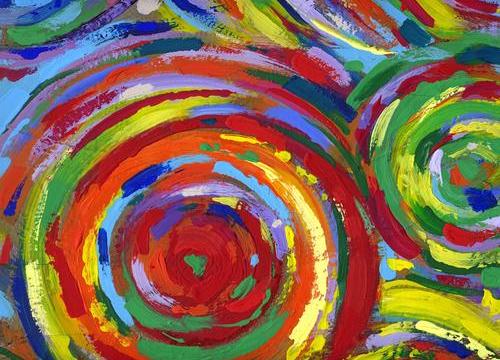
Many painters are afraid in front of the blank canvas, but the blank canvas is afraid of the real, passionate painter who dares and who has broken the spell of `you can’t’ once and for all.
Life itself, too, is forever turning an infinitely vacant, dispiriting blank side towards man on which nothing appears, any more than it does on a blank canvas. But no matter how vacant and vain, how dead life may appear to be, the man of faith, of energy, of warmth, who knows something, will not be put off so easily. He wades in and does something and stays with it, in short, he violates, “defiles”—they say. Let them talk, those cold theologians. (Letter to Theo van Gogh, October 1884, Johanna van Gogh-Bonger trans.)
Speaking of the cold theologians, NaNoWriMo is also a bonding ritual, a mass banding-together against the doubters every writer encounters. “Let them talk,” its collective spirit seems to say. “We’re going ahead and doing this.” There may be no getting around the essential loneliness of writing, but sometimes it helps to be alone together. And what better medium for solitary communion than the Internet, of which NaNoWriMo is so pure a product?
Besides, while it’s unlikely that 50,000 cranked-out words will find their way into the canon, it’s entirely possible that some of the material NaNoWriMo generates could turn into something great. Although the literary virtue of “spontaneity” is sometimes misunderstood—achieving it takes dozens of drafts*—it’s true that a certain spirit of free play is needed to get any creative endeavor rolling. Provided the month of novel writing is followed by many months of novel rewriting, NaNoWriMo can and does spur legitimate breakthroughs. (At least one major bestseller, Sara Gruen’s 2006 Water for Elephants,began as a NaNoWriMo project.)
I’ve never participated in NaNoWriMo myself, nor have I ever tried to write a novel (unless you count the ungodly thing I birthed at age fifteen), but I salute all those who do. May the muse see them safely and gloriously through the thirtieth. In their honor, I’ve written this humble post in a single sitting, and will try to forgo my endless tweaking once it’s published.
*Yeats on revision: “…a line will take us hours maybe; / Yet if it does not seem a moment’s thought, / Our stitching and unstitching has been nought.” A friend of Churchill’s said that “Winston has spent the best years of his life composing his impromptu speeches.”
[Image courtesy Suite 101.]