Do We Really Want Artists in America?
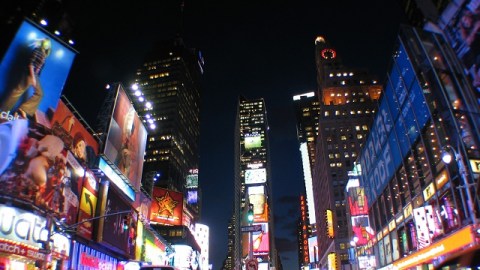
In this Age of the Austerians, anything considered non-essential is being denied the financial means to survive. Despite mountains of research findings, arts programs in schools fall under the austerity ax faster than any other extracurricular. When I echoed multimedia artist Laurie Anderson’s idea that the White House needs an artist-in-residence, at least one commenter (and how many others?) smirked and questioned my sanity. Now an organization called ArtistsWanted.org is trying to bring together the supply of unknown artists with the demand for art. By putting their contest winner’s work on a billboard in Times Square in New York City (shown above), ArtistsWanted.org believes that they can finally make it possible for artists to make money doing the thing they love. But the real question is whether there really is a demand for art and artist in America?
According to an article by Melena Ryzek in The New York Times, ArtistsWanted.org is just the latest in a series of ventures trying to harness the power of the internet to create the latest wave of art world stars. Behance.net, EveryArt.com, and others have already tapped whatever market there is, but none has made an attempt to work in the non-cybersphere such as “Art Takes Times Square.” The grand prize winner wins $10,000 in addition to the publicity campaign on the Times Square digital billboards. Twelve runners up and winners of “category awards” also receive time on the billboards. Even one of the buyers of the art on the site will win a “collector’s award” that includes a stipend to travel to New York City and see the billboards in person.
Vicki DaSilva, an artist and art teacher who specializes in “light graffiti” and “light painting” by making single frame time exposure photographs at night, won the grand prize. DaSilva is actually credited with coining the term “light graffiti.” On one hand, it’s awesome that she’s finally finding an audience. On the other hand, it’s sad that she’s been working for 30 years in pursuit of this moment. How many others have waited just as long, or longer, and didn’t win?
When I first read about ArtistsWanted.org and their kin, my mind went immediately to baseball statistical guru Bill James’ essay “Shakespeare and Verlander.” “American society could and should take lessons from the world of sports as to how to develop talent,” James suggests. James sees the magic formula for sport talent development as “First, we give them the opportunity to compete at a young age. Second, we recognize and identify ability at a young age. Third, we celebrate athletes’ success constantly. We show up at their games and cheer. We give them trophies. When they get to be teenagers, if they’re still good, we put their names in the newspaper once in a while. Fourth, we pay them for potential, rather than simply paying them once they get to be among the best in the world.” None of those four elements holds true in the world of young artists. As much as these sites try to rectify the wrongs done to artists, I find it difficult to see how they can fight against the systemic problems of how America treats the arts and artists. Vicki DaSilva’s a great story, but her equivalent in the baseball world is a minor league pitcher who has dominated on the AAA level and finally got to the big leagues, but had to dominate for 30 years before getting the chance. It’s inconceivable in baseball, but totally understandable in the arts. Why?
What we need is a stimulus package for artists, but also a stimulus package for artists’ profile in American culture as something essential rather than purely decorative. My son’s school had a wonderful art show evening where the students’ art covered the walls for friends and family to admire. A big deal was made and the effect was powerful on the kids. Unfortunately, that night and that school are the exceptions now. Until artists are truly wanted by us and feel that way from an early age, no billboards, no matter how big or well positioned, will change the current state of neglect.