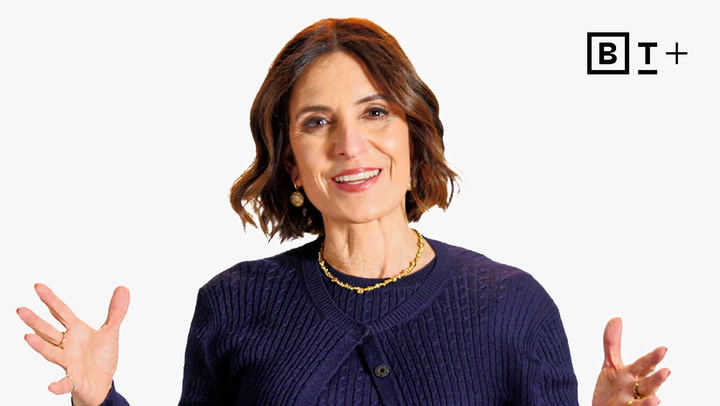
In her video, workplace expert Amy Gallo emphasizes the importance of providing verbal cues and addressing misunderstandings promptly in remote settings to enhance communication, reduce tension, and preserve relationships.
Workplace expert Amy Gallo addresses the challenges of negativity in the workplace, emphasizing the importance of recognizing biases, avoiding harmful gossip, and fostering a collaborative mindset to enhance psychological safety and camaraderie among colleagues.
In her video lesson, workplace expert Amy Gallo shares three principles for resolving conflicts: define your goals, focus on what you can control, and experiment with different approaches to find what works best in diverse workplace dynamics.
In this video lesson, TOPGUN graduate Guy Snodgrass emphasizes the importance of proactive planning and scenario analysis to anticipate challenges in life and career, encouraging discussions with experienced mentors to navigate potential setbacks effectively.
In this video lesson, former fighter pilot Guy Snodgrass shares strategies for maintaining composure under pressure, emphasizing that calmness fosters a steady environment, enhances decision-making, and encourages effective communication within teams facing adversity.
While the movie Top Gun epitomizes ’80s cool, the real TOPGUN program focuses on teaching vital lessons for managing the pressures of being a fighter pilot, as shared by Commander Guy “Bus” Snodgrass in his video lesson on career strategies.
Albert Einstein’s warning against uniform thinking highlights the dangers of groupthink, which can stifle innovation and growth; organizational psychologist Adam Grant emphasizes the importance of diverse perspectives and strategies to counteract the HIPPO Effect in leadership.
Businesses must recognize their profound responsibilities to society when engaging with AI, as its influence on privacy and decision-making can reshape industries and everyday life, necessitating a comprehensive understanding of various fields to anticipate potential consequences.
In a video lesson, Professor Yuval Harari emphasizes the need for safeguards against AI’s potential to undermine public trust and democratic dialogue, advocating for transparency in AI identities and corporate accountability to combat misinformation while preserving genuine human expression.
In a video lesson, Professor Yuval Harari emphasizes that, like children learning to walk, AI development requires self-correcting mechanisms and collaborative efforts among institutions to effectively manage risks and address potential dangers as they arise.
Professor Yuval Harari discusses how AI’s relentless, “always-on” nature contrasts with human needs for rest, potentially disrupting our daily rhythms, privacy, and decision-making processes as power shifts from humans to machines.
In this video lesson, Professor Yuval Harari explains that true AI, unlike basic automation, evolves by learning from habits to offer unparalleled customization, such as a coffee machine that predicts your preferences and even invents new drinks.
As AI rapidly transforms our reality and reshapes engagement with information, Professor Yuval Noah Harari urges us to pause and critically consider the implications of coexisting with non-human intelligence, emphasizing the need for responsible leadership and safeguarding our humanity.
The emergence of AI like AlphaGo, which developed unexpected strategies in the ancient game of Go, challenges our understanding of machines as mere tools, prompting profound questions about coexisting with an intelligence that can create and innovate beyond human comprehension.
Code-switching, a natural behavior adjustment based on context, becomes unhealthy when it requires suppressing one’s identity to avoid discrimination, as explored by inclusion strategist Ruchika Malhotra, who highlights its psychological toll and suggests methods to identify unconscious biases.
Irish author George Bernard Shaw highlighted that patriotism often stems from a belief in the superiority of one’s own country, a mindset echoed by inclusion strategist Ruchika Malhotra, who advocates for cultural humility in leadership to foster inclusivity and learn from diverse global perspectives.
Inclusion strategist Ruchika Malhotra emphasizes that true impact in promoting diversity, equity, inclusion, and belonging (DEIB) requires humility, purposeful action, and a shift from individual character to addressing systemic biases, urging individuals to embrace discomfort and cultivate a growth mindset.
Leadership expert Simon Sinek emphasizes that worthy rivals inspire improvement through process-focused competition, a principle restaurateur Will Guidara applied at Eleven Madison Park, encouraging professionals to learn from competitors to foster innovation and enhance their own offerings.
In a crisis, leaders must pause to acknowledge five hard truths—about the severity of the situation, the inevitability of secrets surfacing, the potential for negative portrayals, the likelihood of accountability, and the opportunity for organizational improvement—to develop resilient strategies for effective management.
In her video lesson, Professor Suzy Welch outlines a structured hiring approach to combat biases and improve candidate assessment by identifying common pitfalls, such as Nice Guy and Fangirl Syndromes, while recommending practices like collaborative decision-making and focused questioning.
Jesse Eisenberg emphasizes that true leadership involves humility—prioritizing the skills and expertise of team members over one’s own, fostering an environment where everyone can excel and contribute effectively to achieve the best outcomes.
Constructive criticism often falls short in practice, but Daniel C. Dennett offers rules for intelligent dissent that emphasize clarity, acknowledgment of the target’s ideas, and agreement on shared points before presenting any criticism to foster a more respectful dialogue.
The mere-exposure effect, explained by Robert Zajonc, reveals that repeated exposure to stimuli fosters familiarity and bias, influencing our preferences and beliefs, which writer Derek Thompson explores in a video lesson highlighting its implications for individuals and organizations.
The “Replicability Crisis,” particularly in behavioral sciences, raises concerns about the validity of scientific studies, prompting psychology professor Gary Marcus to advocate for critical reading of research and the use of essential questions to evaluate reported results.
Cognitive psychologist Steven Pinker emphasizes that to achieve a realistic understanding of the world, we must prioritize data and trends over emotionally-driven headlines and anecdotes, as news media can distort our perception of reality.
In this lesson, developmental psychologist Howard Gardner outlines ten classifications of intelligence, encouraging viewers to reflect on their own strengths and those of their colleagues while considering whether to focus on enhancing strengths or addressing weaknesses.
Cognitive biases can cloud decision-making even for the intelligent, so Annie Duke suggests forming group charters based on The Mertonian Norms to ensure transparency, universalism, disinterestedness, and organized skepticism in evaluating decisions and information.
Julia Galef highlights the sunk cost fallacy, where past investments cloud decision-making, urging individuals to focus on future outcomes rather than wasted resources, and recommends regular self-analysis to avoid this cognitive bias in both personal and professional contexts.
International poker champion Liv Boeree advises that when faced with a decision, first assess your instinctive response, then analyze logically; if both conclusions align, decide easily, but if not, trust the logical analysis while remembering that gut instincts can be misleading.
In a video, international poker champion Liv Boeree outlines three common decision-making pitfalls—confirmation bias, status quo bias, and the sunk cost fallacy—and offers strategies to counteract them for improved reasoning and outcomes.