science

One researcher called it “the ultimate in the miniaturization of machinery.”

Is “science broken” or self-correcting? And who is going to do the grown-up thing and fix the game (instead of scoring points within it)?

Rabbi Darren Levine explains how the psychology of happiness intersects with religious practice.
▸
8 min
—
with

In 1936, a school girl named Phyllis wrote a letter to Albert Einstein to ask whether a person could believe in both science and religion. He was quick to reply.

Imagine data delivered by light. This is an important benchmark toward the development of a whole new computer.

The findings of this study are stunning: in a 16-hour waking day, adults are sedentary for 12.3 hours.
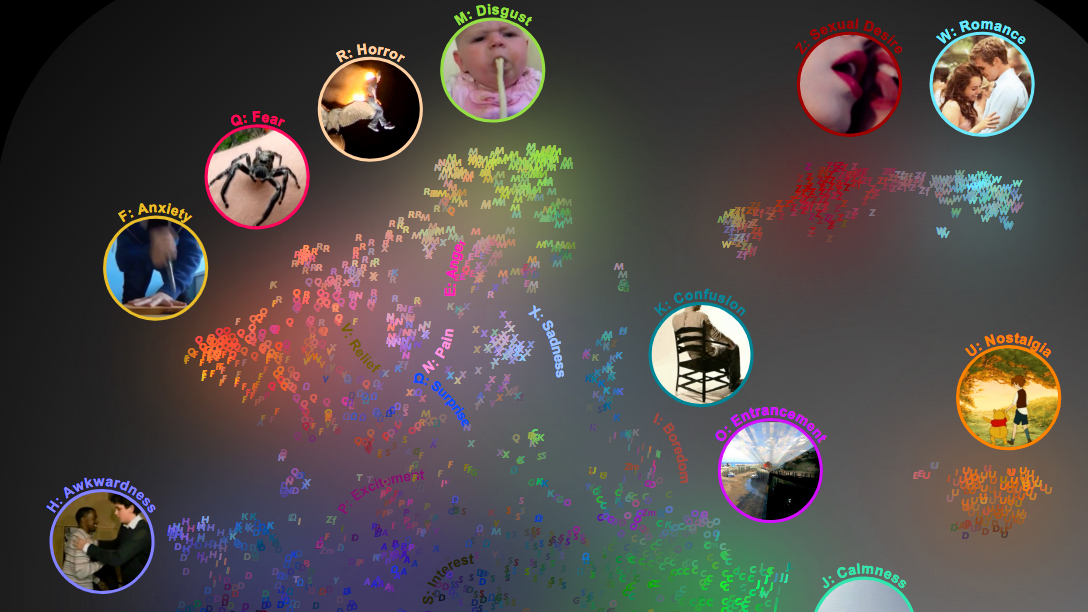
This conceptual framework is the most advanced representation of human emotions to date.

Get lost in a good book. Time and again, reading has been shown to make us healthier, smarter, and more empathic.

All science begins with a leap of intuition, says Richard Dawkins, but we can only ever find objective truths by knowing when to let evidence take over from emotion.
▸
4 min
—
with

Your mind doesn’t run parallel tasks, it has to trade off one focus for another. The good news is that mindfulness meditation can hone your attention span, and reduce stress and anxiety.
▸
6 min
—
with

What do you make of the image above? Day Glow slippers under a black light? Colorful sleeping bags for a trio of Minions? March of the Radioactive Penguins? Of course, it’s none of the above.

Does happiness require a rebellion against evolution?

Scientists solve the mystery of an ancient Babylonian tablet, rewriting history. They think the tablet has much to teach us.

Albert Einstein’s famous thought experiments led to groundbreaking ideas.

Richard Dawkins responds to the Alt-Right, Trump’s policies, and discusses the evil potential of ideology.
▸
5 min
—
with

A new study finds that cognitive functioning of women is affected by gender-role attitudes within their country.

Greatest job ever? NASA will pay six-figures to a Planetary Protection Officer.

A paper argues that the younger generation is no better at technology and multitasking than older people.

A new study finds that talking to yourself in the third person may help deal with stress.

New research by Professor Dan Graur shows that only a quarter of the human genome is functional.

Northwestern University researchers discover the unexpected origins of half the atoms in our bodies.

Researchers succeed in an 80-year-old quest to find the elusive “angel particle”.

Scientists discover a counterintuitive property of quantum particles called “backflow”.

Theoretical physicist and cosmologist Lawrence M. Krauss spoke at CSICon 2016 about scientists’ attempt to look back in time to the beginning of our universe.

19% of American soldiers returned from Vietnam addicted to heroin. 95% of them recovered without relapse. How?

Research on ghost sightings reveal underlying manifestations that affect us in weird ways.

Health psychologist Kelly McGonigal discusses a three-step process to shift your mindset when anxiety creeps in.

Primatologists and praying farmers show us why it takes a flexible brain, and many perspectives, to unlock truly groundbreaking science.
▸
8 min
—
with

It illustrates the dangers of rip currents.

A new study challenges what we understand about the workings of time.