Antonelli talks about connections and open-source design.
Question: Is there a zeitgeist in today’s design community?
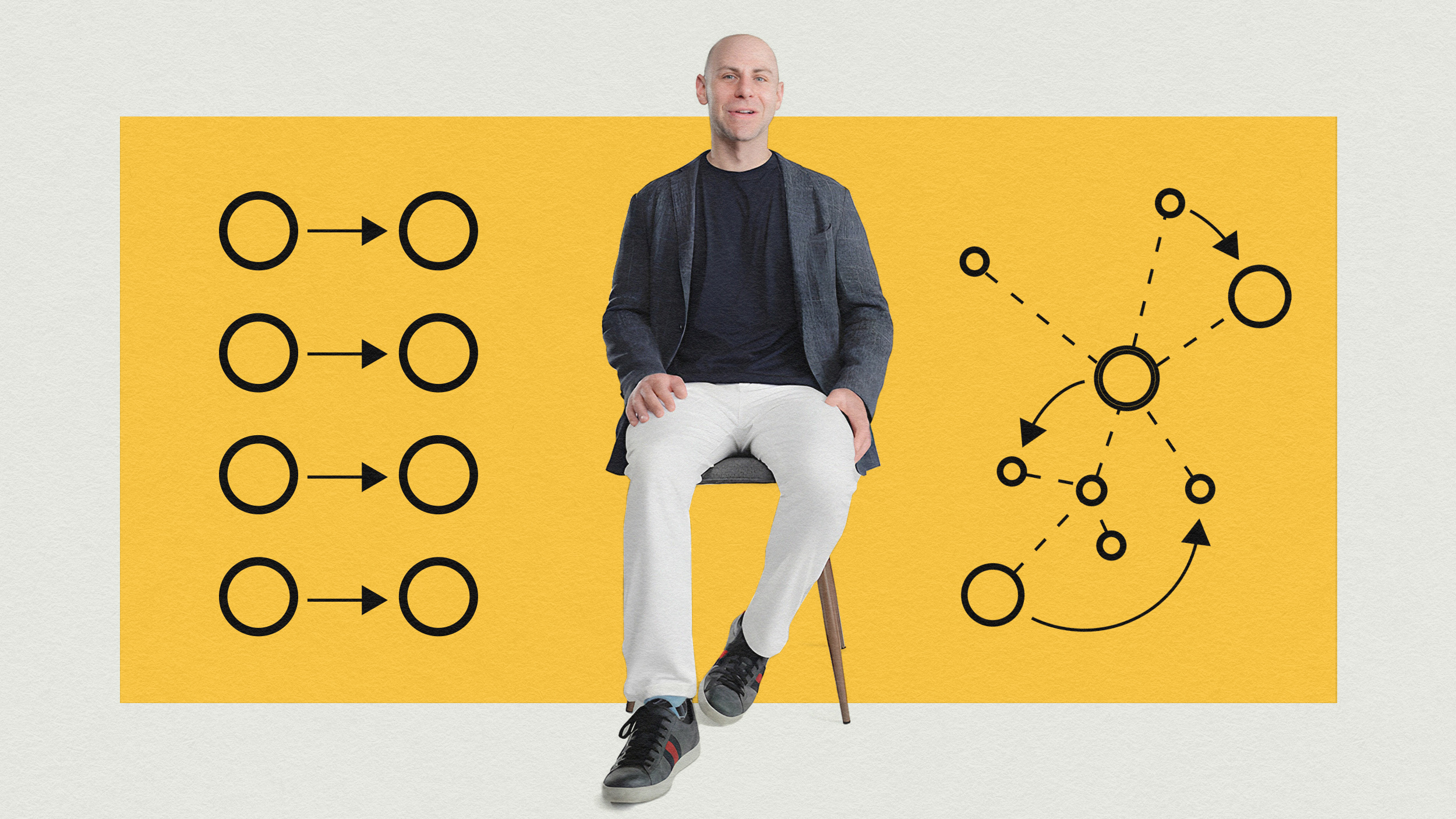
Antonelli: The message that I see really being transmitted is a message that I’m trying to convey also in the exhibition – connection. You know it’s very funny because ___________ had this famous motto. They were saying, “Connections, connections, connections.” They were starting to talk about connections and modularity in furniture. But in truth if you look at the most interesting forms, and expressions, and philosophies of today, open source, right? Very important. The whole study of the idea of copyrights and how to open them and still maintain some creative, you know, protection for artists and some way to make some money and live. It’s all about reaching out and making sure . . . you know connecting minds so that, you know, more minds are better than one; and really have a communication that is bound to change the world. So that’s what I see as a zeitgeist among designers. I don’t know about artists, but designers certainly are moving that way. You know different regions in the world have different . . . different worries and different issues. So I would say that definitely the object or the subjects of design can change. For instance in SAFE I had . . . Coming from South Africa I had these amazingly interesting designs for condom applicators because they had the issue of trying to convince people to use condoms so as to curb the AIDS epidemic, right? Very simple example. There are local problems. There are other problems in China. And China and Japan, you know, at that time had the SARS epidemic, so they had really interesting drawings . . . designs for masks . . . for safety masks. So definitely the subject can change. And also the source can change. For instance coming from India, you see a lot of crafts-orientated design because there’s still a lot of crafts there. But it’s utilitarian craft. It’s not decorative art. It’s about people melting bronze to do very specific objects; or people doing water purifiers that are made of ____________, of clay because that’s more affordable for the market there. So there are local issues, but I would say that the communication really is on a universal scale. You know the communication is really about the economy of the world; about human . . . the centrality of human issues as opposed to a view instead of the world that is detached from human beings.