Paul Rieckhoff: Our Veterans Are Not “Ticking Time Bombs”
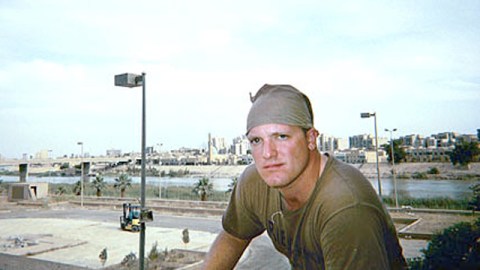
Our veterans are much more economically diverse than most people imagine, says Paul Rieckhoff, founder of Iraq and Afghanistan Veterans of America. “They’re not all broke and uneducated and from a housing project or trailer park.” Himself a graduate of Amherst College and a former Wall Street employee, Rieckhoff served as an infantry platoon leader in Iraq from 2003 to 2004. Since then he has become an advocate for veterans’ rights and a critic of the war in Iraq.
In his Big Think interview, Rieckhoff told us that veterans need help transitioning after their time in the service. He emphasizes that they have tremendous skills and leadership abilities and could easily be reintegrated into the civilian workforce with a just a little more support. They are not all “ticking time bombs,” says Rieckhoff. “We have to break the crazy, volatile, Rambo veteran stereotype that was really perpetuated after Vietnam.” Part of this image problem is related to the way veterans are portrayed in popular films, he says. Hollywood depicts them as “either a villain or a victim—one or the other.” For a more accurate portrayal, you have to look to documentaries like “Restrepo” by Sebastian Junger.
Rieckhoff also told us that the troubling spike in army suicides is indicative of a larger failure by the government and the public to support the troops. Soldiers are being sent for repeated tours, which takes a tremendous toll on families, and when they finally return home their prospects might be dim—divorce rates and unemployment are both disproportionately high among veterans. There hasn’t been the history of philanthropy for veterans affairs like there has been for, say, poverty or AIDS, but it is our duty as Americans to do more, Rieckhoff says. “When you send folks to war there’s a moral obligation to care for them coming home”
Because we have a volunteer army—essentially a warrior class—the American public doesn’t have to feel any of the effects of the war. “This is damaging to our social fabric,” says Rieckhoff. He doesn’t necessarily think there should be a draft or any mandatory service, but something must be done to involve the American people. A national call to action by the President is one idea, he says.
Rieckhoff also weighed in on some of the pressing issues in the news. Julian Assange, founder of WikiLeaks, has “blood on his hands,” he told us. He also said that it’s ridiculous to think that there will be any resistance when the military repeals Don’t Ask Don’t Tell: “Our military is highly professional and will execute on the orders put down to them.”