Keats_-_bacteria Can Bacteria Solve the Mysteries of the Universe?

“Scientists keep trying to formulate a theory of everything, and all they get are headaches. Clearly we're overthinking things. Our brains are too complex to comprehend the underlying simplicity of the universe. Cyanobacteria are not burdened by all that gray matter.”

Jonathon Keats, experimental philosopher


History as a Series of Creative Hiccups

It is a truth universally acknowledged that the most elusive puzzles often have the simplest solutions. And that our own assumptions and habits of thinking are our biggest obstacle to solving them. In each generation, our most brilliant thinkers lay the foundations on which lesser lights will build a new, bloated bureaucracy of the mind – until the next big movement comes along to demolish it. 

Is this the way of things? Long periods of stagnation punctuated by bloody revolutions? Creative thinking is essential to human progress – yet we seem to have trouble sustaining it for extended stretches. And no matter how hard we “brainstorm” or try to “think outside of the box,” the patterns seem to repeat themselves. 

Enter experimental philosopher and conceptual artist Jonathon Keats – a kind of tightrope walker over the chasm of Possibility. This is a man who has copyrighted his own brain on the grounds that its neural networks are a kinetic sculpture he created by thinking. He opened an “anti-bank” in an attempt to counteract the global recession with a mirror economy based on antimatter, issuing paper currency in denominations of 10,000 positrons and higher. Keats has even attempted to introduce legislation in the state of California: the Law of Identity – which, sadly, did not pass – would have stated that “A = A, or: every entity is identical to itself.” 
  

The Point of Art

From his porn theater for plants (showing films of bees pollinating flowers) to his attempt to genetically engineer god in a petri dish, Keats turns science and everyday reality inside out, making the Twilight Zone manifest. His experiments provoke laughter, debate, bewilderment, even outrage. Read these reactions from two Big Think readers to Keats’ Copernican Revolution in the Arts, which would replace masterpieces like the Mona Lisa with less “anthropocentric” works of a uniform beige : 

The point of art isn't to tell us what we know, it's to tell us to aspire to more than what we know.  This stuff is terrible.

Mr. Keats is adding to the repertoire of his own theatre of the absurd. Erase Van Gogh? That would be a nihilistic crime against the best in human nature."


Commenter 1 believes that art has a single “point,” which Keats has missed. Commenter 2 believes that Keats personally plans to destroy all classical art. What the artist is actually doing is playing freely with familiar ideas and images – in other words, being creative. And it is this creativity – this freedom of thought – that ultimately offends both readers. 


The Microbial Academy of Sciences

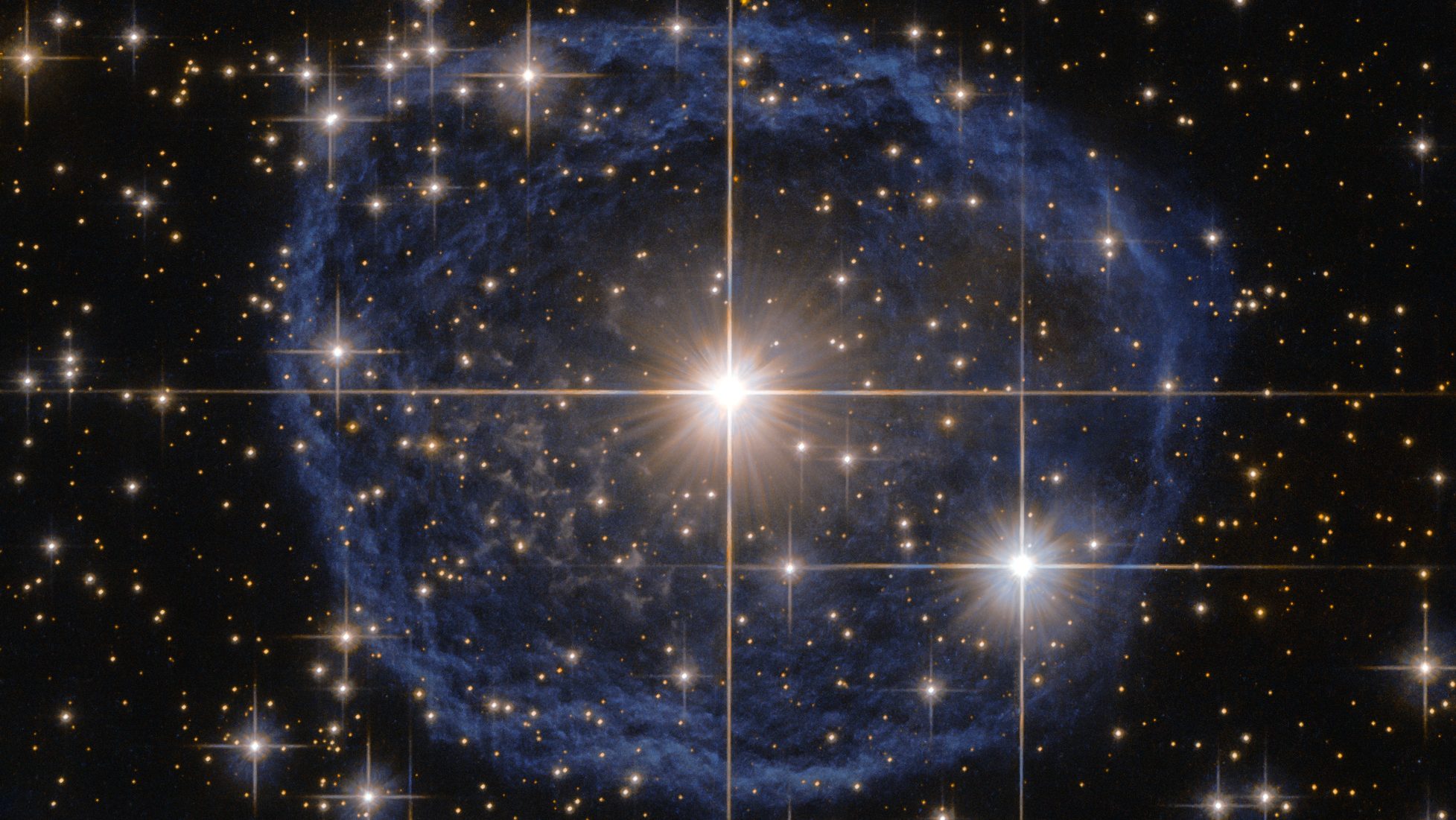
Among disciplines, theoretical physics has never had much of a creativity problem. It is home to some of the wildest imaginings of science. Still, the successive frameworks within which it has operated – from Ptolemaic to Newtonian to Einsteinian to our present era of Chaos and String Theory – have explained some aspects of of the universe while unintentionally limiting our ability to think about others. Perhaps Jonathan Keats can help us there. At his new Microbial Academy of Sciences, billions of independent researchers (bacteria) will gaze at video feed from the Hubble telescope and (possibly) ponder the mysteries of the universe. There is some likelihood, says Keats, that the organisms’ simple structure will enable them succeed where we have failed - in understanding how it all fits together. 

blog comments powered by Disqus

Share This Story

About Think Tank

675 Posts since 2010

A place where Big Think's editors and expert contributors look at ideas that are in the news.

Recent Posts