What is Big Think?  

We are Big Idea Hunters…

We live in a time of information abundance, which far too many of us see as information overload. With the sum total of human knowledge, past and present, at our fingertips, we’re faced with a crisis of attention: which ideas should we engage with, and why? Big Think is an evolving roadmap to the best thinking on the planet — the ideas that can help you think flexibly and act decisively in a multivariate world.

A word about Big Ideas and Themes — The architecture of Big Think

Big ideas are lenses for envisioning the future. Every article and video on bigthink.com and on our learning platforms is based on an emerging “big idea” that is significant, widely relevant, and actionable. We’re sifting the noise for the questions and insights that have the power to change all of our lives, for decades to come. For example, reverse-engineering is a big idea in that the concept is increasingly useful across multiple disciplines, from education to nanotechnology.

Themes are the seven broad umbrellas under which we organize the hundreds of big ideas that populate Big Think. They include New World Order, Earth and Beyond, 21st Century Living, Going Mental, Extreme Biology, Power and Influence, and Inventing the Future.

Big Think Features:

12,000+ Expert Videos

1

Browse videos featuring experts across a wide range of disciplines, from personal health to business leadership to neuroscience.

Watch videos

World Renowned Bloggers

2

Big Think’s contributors offer expert analysis of the big ideas behind the news.

Go to blogs

Big Think Edge

3

Big Think’s Edge learning platform for career mentorship and professional development provides engaging and actionable courses delivered by the people who are shaping our future.

Find out more
Close

Why We All Cheat & Steal, If Just a Little Bit
June 3, 2012, 7:30 AM
Liar%20ss

What's the Latest Development?

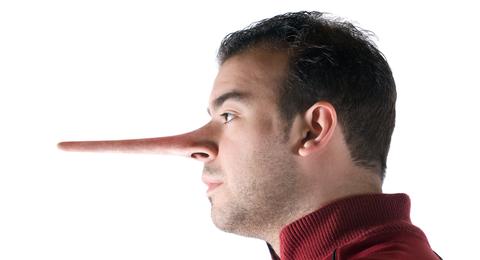
Despite high-profile cases of gross dishonesty like Bernie Madoff and Rodger Clemens, which we like to think of as the rotten apples who spoil the otherwise-good bunch, it turns out that just about everyone has a tendency to cheat the system, if just a little bit. When behavioral economist Dan Ariely ran an experiment asking individuals to complete mathematical tasks in exchange for a cash payment, he found that people "completed" more tasks when they knew no experimenters would be checking their results. In real-world situations, the cumulative effects of small cheaters outweighs the actions of the isolated sociopaths. 

What's the Big Idea?

Researchers also found that the kinds of measures used to deter crime, such as increasing police presence and stiffening legal penalties, are not likely to affect the conscience of those who believe 'I'm only fudging a little'. A moral reminder, however, quickly makes people more honest. In a follow up experiment, when Ariely's team moved the signature line on an insurance form from the bottom to the top of the page, reminding people to be honest before they were tempted to get creative with the truth, rates of dishonesty quickly fell. While very few people cheat to a maximum degree, it is not unusual for good people to cheat here and there. 

Photo credit: Shutterstock.com


Why We All Cheat & Steal, I...

Newsletter: Share: