What is Big Think?  

We are Big Idea Hunters…

We live in a time of information abundance, which far too many of us see as information overload. With the sum total of human knowledge, past and present, at our fingertips, we’re faced with a crisis of attention: which ideas should we engage with, and why? Big Think is an evolving roadmap to the best thinking on the planet — the ideas that can help you think flexibly and act decisively in a multivariate world.

A word about Big Ideas and Themes — The architecture of Big Think

Big ideas are lenses for envisioning the future. Every article and video on bigthink.com and on our learning platforms is based on an emerging “big idea” that is significant, widely relevant, and actionable. We’re sifting the noise for the questions and insights that have the power to change all of our lives, for decades to come. For example, reverse-engineering is a big idea in that the concept is increasingly useful across multiple disciplines, from education to nanotechnology.

Themes are the seven broad umbrellas under which we organize the hundreds of big ideas that populate Big Think. They include New World Order, Earth and Beyond, 21st Century Living, Going Mental, Extreme Biology, Power and Influence, and Inventing the Future.

Big Think Features:

12,000+ Expert Videos

1

Browse videos featuring experts across a wide range of disciplines, from personal health to business leadership to neuroscience.

Watch videos

World Renowned Bloggers

2

Big Think’s contributors offer expert analysis of the big ideas behind the news.

Go to blogs

Big Think Edge

3

Big Think’s Edge learning platform for career mentorship and professional development provides engaging and actionable courses delivered by the people who are shaping our future.

Find out more
Close

The Great Technology Slow Down
August 11, 2011, 9:00 AM
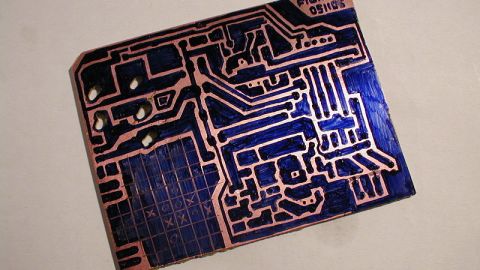
Circuit_board

What's the Latest Development?

As the number of transistors on a single microchip continues to increase, and the power of computing along with it, the energy needed to run the next generation of computers may be too demanding to achieve. According to a paper presented this summer at International Symposium on Computer Architecture, as more transistors are placed on a single chip, more of them will have to power down to avoid overheating. The initial consequences of overheating are incorrect computing results after which the chip might fuse and become useless. 

What's the Big Idea?

The energy problems now facing technological and computer advancement put into doubt a famous prediction made in the 1970s by Intel co-founder Gordon Moore. Moore predicted that the number of transistors that could be placed on a single microchip would double every two years. This trend still holds, but if the necessary power isn't available to support all the transistors, the exponential rate of computer advancement people have taken for granted ever since Moore made his prediction may slow considerably for the foreseeable future. 
 

The Great Technology Slow Down

Newsletter: Share: