What is Big Think?  

We are Big Idea Hunters…

We live in a time of information abundance, which far too many of us see as information overload. With the sum total of human knowledge, past and present, at our fingertips, we’re faced with a crisis of attention: which ideas should we engage with, and why? Big Think is an evolving roadmap to the best thinking on the planet — the ideas that can help you think flexibly and act decisively in a multivariate world.

A word about Big Ideas and Themes — The architecture of Big Think

Big ideas are lenses for envisioning the future. Every article and video on bigthink.com and on our learning platforms is based on an emerging “big idea” that is significant, widely relevant, and actionable. We’re sifting the noise for the questions and insights that have the power to change all of our lives, for decades to come. For example, reverse-engineering is a big idea in that the concept is increasingly useful across multiple disciplines, from education to nanotechnology.

Themes are the seven broad umbrellas under which we organize the hundreds of big ideas that populate Big Think. They include New World Order, Earth and Beyond, 21st Century Living, Going Mental, Extreme Biology, Power and Influence, and Inventing the Future.

Big Think Features:

12,000+ Expert Videos

1

Browse videos featuring experts across a wide range of disciplines, from personal health to business leadership to neuroscience.

Watch videos

World Renowned Bloggers

2

Big Think’s contributors offer expert analysis of the big ideas behind the news.

Go to blogs

Big Think Edge

3

Big Think’s Edge learning platform for career mentorship and professional development provides engaging and actionable courses delivered by the people who are shaping our future.

Find out more
Close

Is it Economical to Mine Asteroids for Resources?

September 26, 2012, 12:00 PM
Asteroid%20and%20earth%20ss

What's the Latest Development?

NASA has awarded funding to a team of researchers on a mission to determine if mining asteroids for precious metals, and perhaps water, is economically sound. The study was motivated by the introduction of Planetary Resources, a new business proposed by Peter Diamandis, the American engineer who founded the X Prize Foundation. Researchers will ask: "What kinds of mission and spacecraft design are necessary? Is the right kind of mining technology available? And most importantly, is there even a viable business model for doing it in the first place?" 

What's the Big Idea?

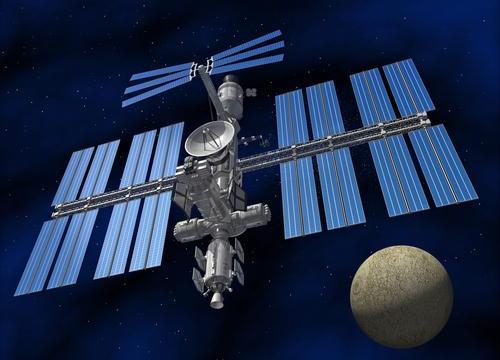
Given the overhead costs, an asteroid mining business is clearly not viable at the moment. Such a project would presume a telescope in Venus' orbit to scout for near-Earth asteroids (containing substantial mineral resources) and regular commercial access to a service base located in a Lagrange point from which to launch the missions. "The assumptions lead to a spacecraft design, possibly using a solar-thermal propulsion system, that launches to a NEO from the Lagrange point station, mines and processes the material at the asteroid and then returns it to the Lagrange point for shipment back to Earth."

Photo credit: Shutterstock.com


Is it Economical to Mine As...

Newsletter: Share: