What is Big Think?  

We are Big Idea Hunters…

We live in a time of information abundance, which far too many of us see as information overload. With the sum total of human knowledge, past and present, at our fingertips, we’re faced with a crisis of attention: which ideas should we engage with, and why? Big Think is an evolving roadmap to the best thinking on the planet — the ideas that can help you think flexibly and act decisively in a multivariate world.

A word about Big Ideas and Themes — The architecture of Big Think

Big ideas are lenses for envisioning the future. Every article and video on bigthink.com and on our learning platforms is based on an emerging “big idea” that is significant, widely relevant, and actionable. We’re sifting the noise for the questions and insights that have the power to change all of our lives, for decades to come. For example, reverse-engineering is a big idea in that the concept is increasingly useful across multiple disciplines, from education to nanotechnology.

Themes are the seven broad umbrellas under which we organize the hundreds of big ideas that populate Big Think. They include New World Order, Earth and Beyond, 21st Century Living, Going Mental, Extreme Biology, Power and Influence, and Inventing the Future.

Big Think Features:

12,000+ Expert Videos

1

Browse videos featuring experts across a wide range of disciplines, from personal health to business leadership to neuroscience.

Watch videos

World Renowned Bloggers

2

Big Think’s contributors offer expert analysis of the big ideas behind the news.

Go to blogs

Big Think Edge

3

Big Think’s Edge learning platform for career mentorship and professional development provides engaging and actionable courses delivered by the people who are shaping our future.

Find out more
Close

Discovering the Biology of Race
June 16, 2012, 9:00 AM
Biologyrace

Article written by guest writer Rin Mitchell

What’s the Latest Development?

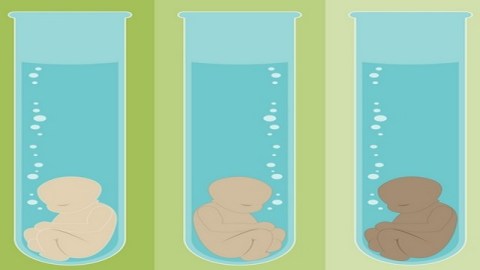
It is believed that the current medical approach that focuses on "race-oriented genetic precursors of disease" is negligible work. It is suggested that there needs to be another way to conduct laboratory studies that will call attention to "comparative ill-health of people of color, the poor, and the medically undeserved." According to the article, students who were questioned in a study believe that daily events contribute to bodily changes and have an effect on declining human health or the resistance to diseases, “events that the political economy ensures are more or less common depending on which racial categories one is assigned to.” Three professionals have written books that examine how genetics create "new biological states via processes.” The first author focuses on how science and medicine group race. The author points out how race plays a major importance in medical practiceso much so that the machines are wired with race identifiers. The second author confirms biology and race go hand in hand, but believes in the possibility that biology is a product of racerather than the other way around. She focuses her case study on black and white women with breast cancer in Chicago. The third author doesn’t touch on race, but instead places his focus on epigenetics, “the study of gene modifications induced by local changes in the environment.” 

What’s the Big Idea? 

Biomedical research continues to point out the difference in health outcomes for different races, but it is a "fruitless labor.” It is believed that scientists need to change their approach in their investigation. The meaning of race may continue to linger, but the most important thing to focus on right now is conducting significant research and addressing health inequality. 

 

Discovering the Biology of ...

Newsletter: Share: