What is Big Think?  

We are Big Idea Hunters…

We live in a time of information abundance, which far too many of us see as information overload. With the sum total of human knowledge, past and present, at our fingertips, we’re faced with a crisis of attention: which ideas should we engage with, and why? Big Think is an evolving roadmap to the best thinking on the planet — the ideas that can help you think flexibly and act decisively in a multivariate world.

A word about Big Ideas and Themes — The architecture of Big Think

Big ideas are lenses for envisioning the future. Every article and video on bigthink.com and on our learning platforms is based on an emerging “big idea” that is significant, widely relevant, and actionable. We’re sifting the noise for the questions and insights that have the power to change all of our lives, for decades to come. For example, reverse-engineering is a big idea in that the concept is increasingly useful across multiple disciplines, from education to nanotechnology.

Themes are the seven broad umbrellas under which we organize the hundreds of big ideas that populate Big Think. They include New World Order, Earth and Beyond, 21st Century Living, Going Mental, Extreme Biology, Power and Influence, and Inventing the Future.

Big Think Features:

12,000+ Expert Videos

1

Browse videos featuring experts across a wide range of disciplines, from personal health to business leadership to neuroscience.

Watch videos

World Renowned Bloggers

2

Big Think’s contributors offer expert analysis of the big ideas behind the news.

Go to blogs

Big Think Edge

3

Big Think’s Edge learning platform for career mentorship and professional development provides engaging and actionable courses delivered by the people who are shaping our future.

Find out more
Close

By Century's End, With 10 Billion People, Earth Could Be a "Hellhole"

August 8, 2012, 2:36 PM
Overpopulation%20ss

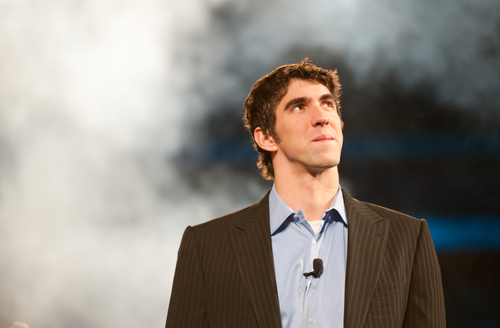
What's the Latest Development?

Stephen Emmott, head of computational science at Microsoft Research in Cambridge, UK, and professor of computational science at Oxford, UK, has built a 75-minute presentation called Ten Billion, in which he forecasts what the world might be like if current environmental degradation and population expansion continues until the end of the century. Perhaps reminiscent of Al Gore's An Inconvenient Truth, the figures Emmott presents are startling: "A global population that was 1 billion in 1800 and 4 billion in 1980 will probably have grown to 10 billion by the end of this century; the demand for food will have doubled by 2050; food production already accounts for 30% of greenhouse gases – more than manufacturing or transport..."

What's the Big Idea?

"...a world population of 10 billion will need 960 new dams, each of them the size of the world's largest in China's Three Gorges, plus 15,000 nuclear power stations and/or...11 million wind farms." Describing himself as a rational pessimist, Emmott says of possible solutions to the impending crisis: "We're fucked." The problem, it seems, is our inability to locate blame within ourselves. If an asteroid were hurtling toward the Earth, the world's resources would quickly be marshaled to alter the asteroid's path or mitigate its damage. "But there is no asteroid. The problem is us."

Photo credit: Shutterstock.com


By Century's End, With 10 B...

Newsletter: Share: