FEATURE

The Globalization of Art

As the world flattens, artists of all stripes are turning it into a global canvas. They stand on a worldwide stage as their audience widens to every corner of the planet. How is this brave new world affecting the makers, the purveyors, and the consumers of art? Can art really change the world?
0
0

Description: Can -- and should -- local culture be preserved?

Transcript: One of the interesting things about working with people who are based across the world is the way that you have to modify ideal behavior, or the way that you communicate to suit that local environment.  And I think that, especially in Asia where people are often coming from their totally different cultural background with totally different expectations of how you might behave . . . I think that that’s both one of the challenges of what . . . what we do, but also one of the wonderful kind of abilities to engage with others.  While there might not be one specific instance, I would say that it’s more about learning how to kind of . . . how to fit in in a different way. 

Question: Can local culture be preserved?

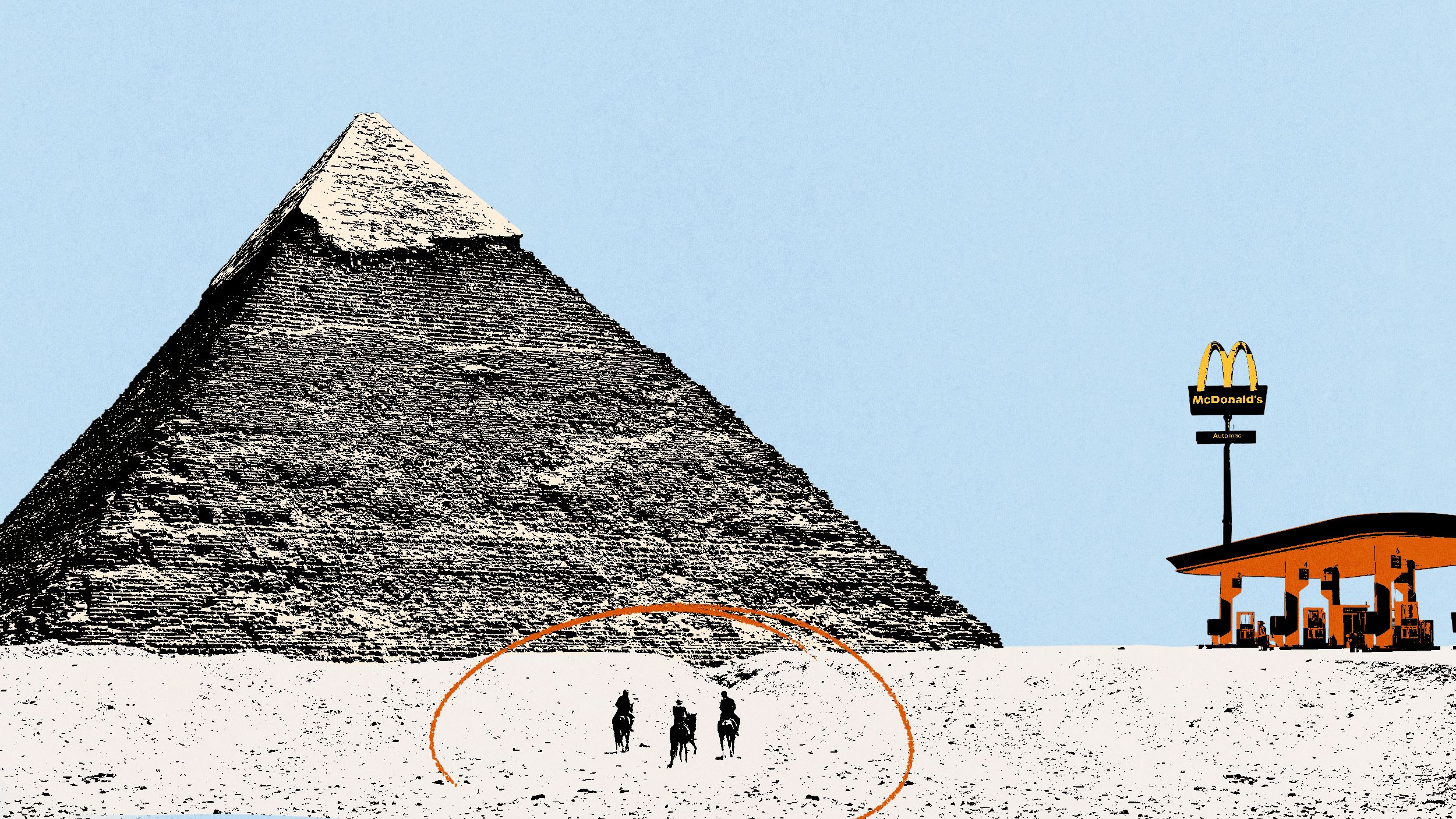
Transcript: When globalization first started to be talked about – and of course it originally began as an economic model – I think that so many people felt like local cultures would disappear. Now it’s true to say there is something of a . . . a kind of global economy; that when we go to different cities around the world, we do find McDonald’s and we do find Starbucks. But I think the flip side of that has been that people also have sort of retained local cultures, or to inflect these kind of global organizations in local ways. So the Starbucks that you might go to in Italy will be different from the Starbucks that you go to in China. And so I think that while that might seem kind of a superficial interpretation of the global/local kind of question, I think on the one hand there are those who . . . who are able to be global citizens, if you like. But I think we also have to be . . . we also have to remind ourselves that this is a minority of the kind of world population. And that for so many other people it’s simply a local situation. It’s a local culture. It’s . . . it’s . . . Globalization hasn’t had an impact on everyone. And so I think that we will never see, as far as I can see, the disappearance of a local culture because that is what I think people really want; that the global culture is what I see as an imperative of something that we . . . or kind of a necessity of what we all have to deal with. But local isn’t _______ working on a local level, really ______ disappear.

Question: Should we try to preserve local culture?

Transcript: Well I think preservation is a . . . is a kind of interesting question, because when . . . oftentimes when one seeks to preserve something, it . . . it might prevent it from evolving or changing. So although there is very good work done – especially in the field of government, NGO agencies, also even foundations – to support the preservation of culture . . . and often that cultural tradition might be in the form of dance, or movement, or something like that perhaps more so than on the visual arts side. But I think we have to be really careful about this idea of preservation, that it doesn’t actually limit the ability to . . . for these kind of traditions to evolve and change in response to a kind of changing environment.

Recorded on: 7/11/07


1
1

Description: An international market makes new discoveries possible.

Transcript: Well architecture, as I said, through communication, through publication, through Internet, through web sites, is communicated, and is part of the globalization of . . . of what’s taking place in the world today. I saw the work of a young architect in Argentina – extraordinary work. Really amazing. Terrific. And I was just thrilled because . . . just to find it, to know about it. I don’t know this person, but I really respect this person’s work. And I think that kind of discovery and that kind of information perhaps wasn’t possible 10 or 15 years ago.

Recorded on: 9/17/07

0
0
How appropriate is modern architecture in the Middle East?
0
0

Description: De Pury predicts that Brazil, Turkey and Indonesia are going to produce some great art.

Transcript: What is interesting is whenever you have an economic activity that develops in a place, you have parallel to that a very strong creative art birth. For instance in the early ‘90s when the new technologies became very strong in Seattle and the areas, and you had the whole grunge music that happened in the same place . . . And that’s no coincidence. You had groups like Nirvana, Sound Garden, Pearl Jam, and all of that – that became big, and then it became a worldwide movement. Or if you have such a vibrant situation in China for instance, today, it is to do also with the strong economic development. So you can safely assume that those places that have the strongest economic development in the years to come will equally produce some of the most interesting art. So Brazil – Brazil is an extraordinary place, and some great, great art is being produced in Brazil today. So we see it in our web site. You see the global interests. You can actually calculate how many hits you get from each country. You see that interest coming out of places like Brazil for contemporary art is massive; or the interest that we get out of countries like Indonesia, huge; Turkey, massive. And so these are some of the places that are going to produce some of the best art.

Recorded on: 2/7/08


1
0

Description: Cembalest notes that Thomas Krens' influence extends beyond the Guggenheim into the museum world in general.

Question: Now that Thomas Krens is stepping down, what direction will the Guggenheim take?

Transcript: I’m not sure what direction they are going to head, but I think that what we are going to see is that there has been really a very large influence of Thomas Krens on the museum world in general. I know that doesn’t answer your question, because by the time that comes out, frankly they could have to hired someone and it won’t really make any sense, but I’ll say that there were things that--for example, branding, when he came in from Yale School of Organization and Management and he was talking about branding and everyone said “Ah, this is completely inappropriate for the world of fine arts museums.” Now they all talk about branding. For example, the star--the legacy of this idea of the starchitect is a little mixed and, in fact, after this success of the Bilbao Guggenheim, there were plans for all kinds of other Guggenheim in Austria, Rio, in Mexico, in Taiwan all of them attached to starchitects, and none of them happened.

Question: Why did that happen?

Transcript: Because all of these projects again are combinations of finance, diplomacy, politics, local governments; they’re very hard to get off the ground and in the end a place like Bilbao where there is a provincial government which really had a lot of money. That was a very special case. In some place like Rio where there is not that kind of money, because the standard of living in Brazil is very different than the standard of living in northern Spain, it’s much harder to get something like that off the ground.

Recorded on: 1/14/08


0
0

Description: Europeans are discovering 20th-century American design - and driving up prices.

Transcript: I think that it’s still absurdly underrated in terms of its market value. I think that what we are seeing now is that in this blurring of boundaries between design, art, and craft, the uncertainties that we all have – the curators and professionals in my field have in branding or typecasting design, art, and craft, and what is it. I mean you can see that in the Museum of Art and Design – their decision to change their name from the American Craft Museum – what we are discovering however, and I think what Europeans are discovering right now is all of these great American furniture designers in the ‘60s and ’70s who in many cases worked in very isolated circumstances – the kind of proverbial hippie in the woods. California had dozens and dozens of brilliant furniture designers who exhibited only in California in the ‘60s and ‘70s. And if they exhibited nationally it was at a place like the Renwick in Washington, D.C. Right now for the first time, I really feel that we are beginning to understand an international, post-war, organic kind of woodworking vibe that is predominantly American but has contributions from France, from Denmark, from Brazil. But it’s the Americans who are being, you know, increasingly sought after. And it’s hilarious that there is five or six furniture designers working in, say, New Hope, Pennsylvania and Lambertville, New Jersey; who, you know, 10 years ago a work by Paul Evans – a guy who worked in New Hope – I mean I couldn’t give the piece away. It would be $2,000, you know, for a sideboard of his that is now worth $250,000. So . . . And who is driving that market? The Europeans.

Recorded on: 1/30/08


0
0
Erasing the difference between the original and the serial model.
1
0

Description: Browne says we're past the point of no return.

Question: Is there a global style?

Transcript: Yeah. The world . . . I think the world has become a really small place because it is. I mean you can see everything about anyone. The Internet has kind of really brought the whole world into . . . into everyone’s living room. So I think it is. It’s very universal. Everything has become very small.

Question: Will we see a resurgence of local styles?

Transcript: I don’t know. I think we’ve . . . I think we’ve passed the point of like returning, so . . . No. I think it’ll . . . I think it’ll always be accessible to everyone in regard to this . . . you know, the style of . . . I think in a way there will always be . . . I think the memories of that true American style that was, for me, that ‘50s and ‘60s sack suit from Brooks Brothers. I mean that was a true American style. But in a way there’s a lot of people that have adopted that right now. And it’s the same thing with designers here in America – you know the European influences. I think we’ve gone past the point of like . . . Unless you really pull back and wanna do it, I think the world has become very universal in that way.

Recorded on: 10/29/07


2
1
Rising from an abandoned city, hip hop captured the voice of a generation.
2
0

Description: Legend teams up with Jeffrey Sachs to raise awareness among college students.

Transcript: Well we have the Show Me Poverty Action Tour, which is something that Jeffrey Sachs and I are doing together with our respective teams. We decided that more college students need to be aware of what is going on in the area of sustainable development and action to fight poverty. And we wanted to enlist their help in becoming involved; using their innovative, I think, fertile minds to . . . and really harnessing their optimism and their energy to get around an issue that I think is one of the most important issues of our time – which is sustainable development, and specifically really alleviating the extreme poverty that’s so prevalent in many places around the world. And we decided, Jeffrey and I, that it was enough of a priority for us to take time out of our busy schedules and what we do normally to spread this message to these college students. We’ve been to Tulane. We’ve been to Columbia. We’re going to Boston. We’re going to Miami, Florida. And I love it. It’s been fun. We did it actually yesterday at Columbia, and I truly enjoy speaking to the students. We mix it up. I perform a little bit during the event also just to kind of sweeten the . . . sweeten the tough message that we put . . . give to the kids. And it’s been so much fun for me. I love it. It’s inspiring. I see . . . Especially with the election this year, you just see a lot of energy among the young people right now. People have a certain level of optimism, and hope, and energy that I haven’t seen around an election since I’ve been voting and paying attention. So it’s exciting that so many young people are civic-minded and want to make the world a better place. And we wanna harness that energy for something that we think is really important, which is the fight against poverty.

We just picked one village out of the Millennium Villages which, you know . . . Millennium villages are 80 villages that Jeffrey Sachs, and Millennium Promise, and the UN are all working with, and they’re spread throughout Africa. We just chose one because we wanted to pick one project for our fund. Because I think it’s good to put it in manageable terms and, very specifically, measurable terms for fundraising so that people can be educated about what’s happening. So we decided to focus on one. We wanted to raise $1.5 million to fund a five year Millennium Village program for ________ and Tanzania. That doesn’t mean other villages are being neglected. There are 80 villages that Millennium Promise is working with. But we just chose to fund one specifically so that we could be specific with our visits, with our tracking, and show people what we’re doing. And I think it gives people a sense of ownership over a sense of community, and I think it gets them more involved when it’s specific.

Recorded on: 1/29/08

0
0
 
Have a quick thought about this conversation? Leave your comment here
Type the letters that you see
If you can't read the letters Click Here
Please make sure to read the Community Guidelines
0
Responses