Ohio State Study: Fox News Promotes Belief in False Rumors about NYC Mosque
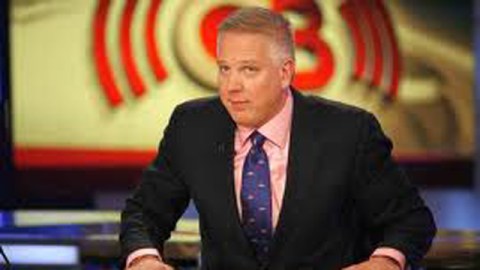
A survey analysis released today by Ohio State researchers finds that Fox News viewing contributes significantly to the spread of false rumors about the New York City mosque. Moreover, respondents who held these false beliefs were not only more likely to oppose the NYC mosque but also more likely to oppose the building of a mosque in their own communities.
The analysis, based on a survey of 750 Americans, was conducted by my brother Erik Nisbet, an Ohio State professor and expert on Islamophobia, and R. Kelly Garrett, his faculty colleague and an expert on the spread of false rumors.
The survey asked respondents if they believed any of the following four false rumors about the NYC mosque. These claims have been evaluated as false both by Politifact, a Pulitizer-prize winning service of the St. Petersburg Times, and Factcheck.org, an initiative at the University of Pennsylvania.
- Feisal Abdul Rauf, the Imam backing the proposed Islamic cultural center and mosque, is a terrorist‐sympathizer who refuses to condemn Islamic attacks on civilians.
- The Muslim groups building the proposed Islamic cultural center and mosque have deep ties to radical anti‐American and anti‐Semitic organizations.
- The proposed Islamic cultural center and mosque near Ground Zero is scheduled to open on September 11, 2011 in celebration of the 10‐year anniversary of the World Trade Center attacks.
- The money for the proposed Islamic cultural center is coming primarily from foreign financial backers associated with terrorist organizations in Saudi Arabia and Iran.
How Belief in False Rumors Varies Across News Audiences
Jeff Grabmeier, at Ohio State’s Research News Office, adeptly summarizes how the researchers then compared whether awareness and belief in these false rumors varied by respondents’ news outlet choices:
Survey participants were all asked to rate how much they relied on various media outlets for their news. They were also asked whether they heard any of the rumors and if they believed in them.
The results showed how reliance on specific media sources played a strong role in whether people were exposed to the rumors and if they believed them, Nisbet said.
People who said they relied heavily on Fox News, either online or on television, were more aware of the false rumors about the mosque and were more likely to believe these rumors compared to those with low reliance on Fox.
Findings suggest that a typical respondent who reported a low reliance on Fox News believed 0.9 rumors on average, while a similar respondent with a high reliance on Fox believed 1.5 rumors – an increase of 66 percent.
Garrett emphasized that all these comparisons in the study were made while holding constant other variables, including education, party affiliation, ideology, and other media use.
“Our analyses demonstrate that the relationships we found aren’t just a side effect of some other characteristic, such as political ideology or party affiliation,” Garrett said.
“These results suggest that even a well-educated, liberal Democrat would be more likely to believe the rumors, if he relied heavily on Fox for his news.”
Reliance on conservative talk radio had a similar effect on users as did Fox News. Those with a heavy reliance on conservative talk radio heard on average two rumors, compared to 1.5 rumors for those with a low reliance – an increase of 33 percent.
Respondents who relied heavily on CNN or NPR believed fewer false rumors, the study found. High reliance on CNN reduced the number of rumors believed by 23 percent, while heavy use of NPR reduced belief by 25 percent.
People who relied heavily on broadcast television news – ABC, CBS or NBC – were less likely to have been exposed to the rumors. Heavy reliance on those sources was linked to a 22 percent decrease in rumor exposure compared to those with low reliance on those outlets. That may be because broadcast news had fewer reports on the mosque controversy than did the cable news outlets.
Belief in False Rumors Promotes Opposition to Mosques
The spread of misinformation and false rumors by Fox News has significant implications for tolerance in American society, say the Ohio State researchers:
The findings suggest that among those who believed none of the four rumors, two-thirds are opposed to the proposed [NYC mosque]. But that increases to 82 percent among those who believed three or more rumors.
Even more dramatic is the effect that belief in these rumors has on support for mosques outside of New York, said Erik Nisbet, co-author of the study and assistant professor of communication at Ohio State University.
Results suggest that predicted opposition to building of a mosque in the respondent’s own neighborhood increased from 39 percent among people who believed none of the rumors to 63 percent among those who believed three or more of the rumors.
“These rumors have a negative effect well beyond the specific controversy in New York City,” Nisbet said.
“They seem to shape attitudes about Muslims and their role in our society, no matter where we live. That’s a big concern.”
Example of Fox News’ Glenn Beck Promoting False Rumors
A search of You Tube turns up dozens of clips featuring the types of false claims surveyed in the report. Here’s one especially revealing clip. Watch as Glenn Beck promotes false claims about Imam Rauf while arguing that the NYC mosque debate is in fact an example of too much tolerance in American society and of a mainstream news media that is unwilling to report the facts and provide context to the debate.
See also:
Full Report on Fox News and Belief in False Rumors about NYC Mosque
The Islamic Cultural Center: A Failure in Storytelling
Former CBS News Political Editor on Politics, TV News, and Education in the Glenn Beck Era
Follow Age of Engagementon Twitter.