What is Big Think?  

We are Big Idea Hunters…

We live in a time of information abundance, which far too many of us see as information overload. With the sum total of human knowledge, past and present, at our fingertips, we’re faced with a crisis of attention: which ideas should we engage with, and why? Big Think is an evolving roadmap to the best thinking on the planet — the ideas that can help you think flexibly and act decisively in a multivariate world.

A word about Big Ideas and Themes — The architecture of Big Think

Big ideas are lenses for envisioning the future. Every article and video on bigthink.com and on our learning platforms is based on an emerging “big idea” that is significant, widely relevant, and actionable. We’re sifting the noise for the questions and insights that have the power to change all of our lives, for decades to come. For example, reverse-engineering is a big idea in that the concept is increasingly useful across multiple disciplines, from education to nanotechnology.

Themes are the seven broad umbrellas under which we organize the hundreds of big ideas that populate Big Think. They include New World Order, Earth and Beyond, 21st Century Living, Going Mental, Extreme Biology, Power and Influence, and Inventing the Future.

Big Think Features:

12,000+ Expert Videos

1

Browse videos featuring experts across a wide range of disciplines, from personal health to business leadership to neuroscience.

Watch videos

World Renowned Bloggers

2

Big Think’s contributors offer expert analysis of the big ideas behind the news.

Go to blogs

Big Think Edge

3

Big Think’s Edge learning platform for career mentorship and professional development provides engaging and actionable courses delivered by the people who are shaping our future.

Find out more
Close

Want More Customers? Tell Them a Story
February 28, 2010, 8:07 PM
Storyteller

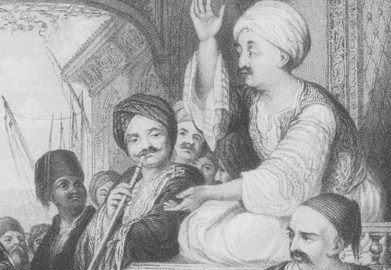
Before there were abstract concepts, and probably before there were numbers, there were stories. She did this; it made him do that; then I heard her say this. According to narrative psychologists the story is our fundamental tool for describing ourselves and the people around us.

But story-telling could be more fundamental, I think. It could be the base of all knowledge, including the latest findings on ion channels or subatomic forces. I'm often struck by the way most scientific talks that I've heard, no matter how abstract their subjects, were narrated:They presented data and ideas as stories—and not just "How odd test results made me wonder what might happen if" but, often enough, "those ion channels really want to stay open." Would anyone understand evolution we saw only patterns of probability emerging over eons? Instead, we speak of fish turning into amphibians, types of dinosaurs becoming types of birds. Stories are, as Claude Levi-Strauss would say, "easy to think with."

A fact about human nature that turns out to have a practical application for marketers: If your website asks people to register, it turns out, you'll get a much better response if you make the procedure into a simple narrative.

You can see the difference here, where Luke Wroblewski compares a standard registration form (first name, last name, email address) with a form that asks for the same information like this: "Hello, my name is [blank] [blank] and I'd like to learn more about your product. I live at [blank] in the [blank] area and I would like to hear back from you soon . . ."

Results: According to Wroblewski's source, the story form gets 25-40 percent more registrations than just-the-facts.
 

Want More Customers? Tell T...

Newsletter: Share: